


What is actually in the way? Not in the abstract, not as a rhetorical device, but as a precise, practical diagnosis. The distance between what biogas could be and what it currently is remains stubbornly, frustratingly wide. This month, that distance had a shape. Four distinct gaps, each showing up in different places, each requiring a different kind of attention. What’s striking, and genuinely encouraging, is that in each case, someone, somewhere, was closing one. The floor-building, as we’ve defined previously, is the current phase of our industry, and it hasn’t stopped. It’s just become more specific about which section of the floor needs laying next.
From Kevin Gross’s front-end engineering methodology to Ben Martin’s forensic account of Ireland’s regulatory dysfunction, from India’s long-overdue grid injection guidelines to Egypt’s first wastewater-to-biogas retrofit, from the mandatory food waste collection rollout in England to the consolidation of RNG assets under institutional capital in the US and Europe, every thread builds a story about a gap being named, or a gap being closed. Not the same gap every time. But always a gap between what biogas can do, and the conditions that would allow it to do it at scale.
If you take one thing from this month, it should be this: the sector is waiting for itself to close the implementation distance.
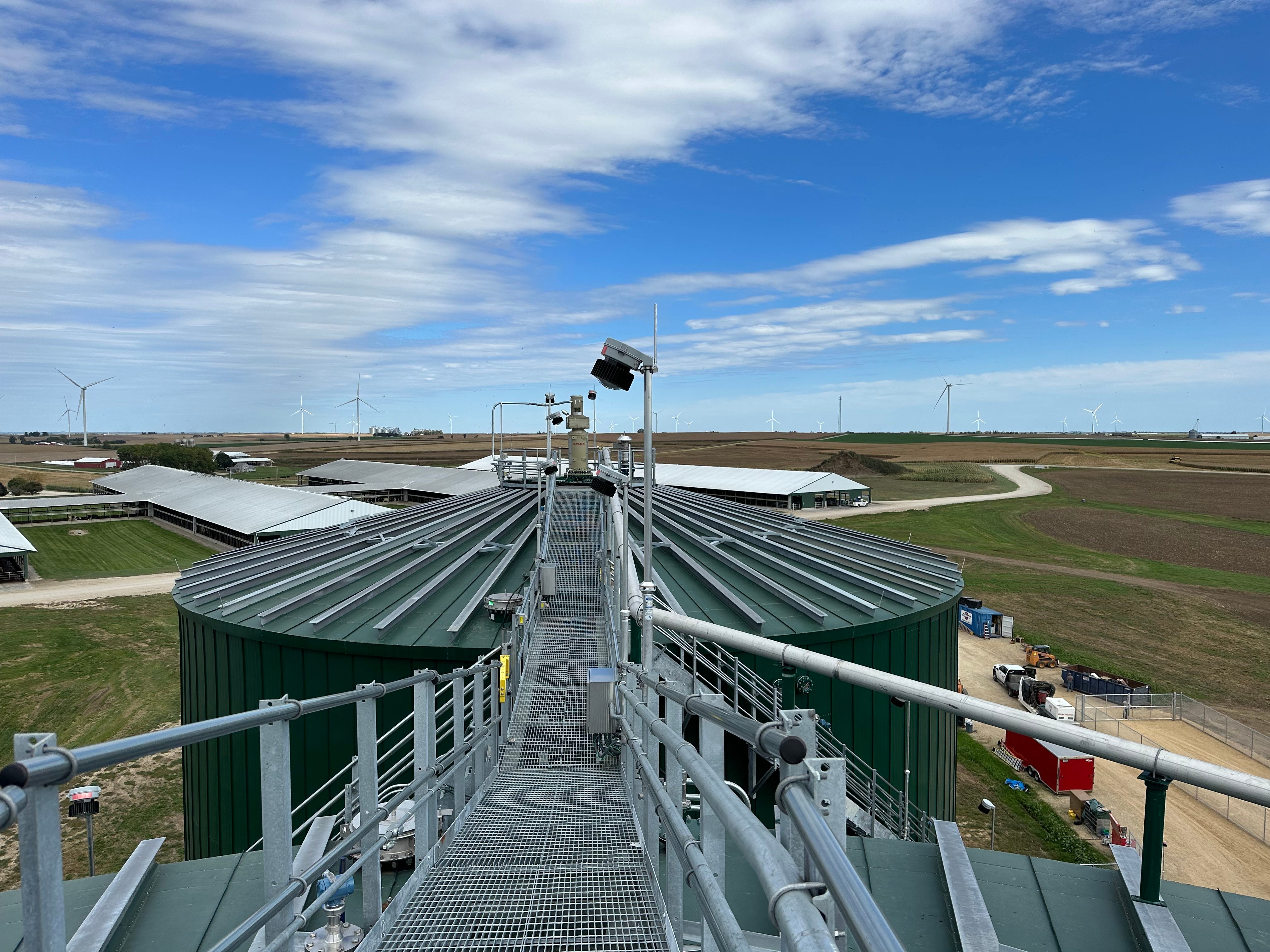
Gap One: The Front End
Kevin Gross, founder of Gross & Co., puts the scale of the US biogas opportunity in terms that should make any investor sit up. Roughly 2,600 operating biogas systems currently exist in the United States. The American Biogas Council puts the potential at 17,000. That is nearly 15,000 projects that could exist, for which the feedstocks can support, and in many cases, the offtake market is ready, and yet they don’t get built.
The reason isn’t what most people assume. In Kevin’s interpretation, it’s something more specific and more fixable: the development phase. The work that precedes financing is too slow, too expensive, and too often built on assumptions that haven’t been stress-tested against reality. When an engineer hands a developer a concept-level estimate built on defaults rather than site-specific data, the project walks into its first investor conversation already carrying structural uncertainty. The conversation stalls. The project dies in the churn.
Kevin’s response is what he calls an assumptions-first methodology: log every unknown, bound it, show what it does to the cost and performance envelope, and run engineering disciplines in parallel rather than handing work off sequentially. The result is a Class 2 estimate in roughly six weeks, approximately 85% faster than the industry norm. The insight behind it is deceptively simple: investors don’t need false certainty. They need a credible decision framework. Name the unknowns, bound them, and the conversation gets better.
That lesson doesn’t stay inside the US border. Hungary has announced ambitions for 20 to 25 new biomethane plants. Latvia’s grid injection programme was oversubscribed well beyond its initial allocation. Lithuania’s first two months of 2026 saw guarantees of origin issued at 2.4 times the rate of the same period last year. In every one of these markets, the gap between stated ambition and built capacity comes back to the same problem: pre-development rigour. The $450 billion industrial frontier Kevin describes will not be unlocked by better science alone. It will be unlocked by better front-end definition, applied consistently, at thousands of sites that currently stall before they ever reach a financier’s desk.
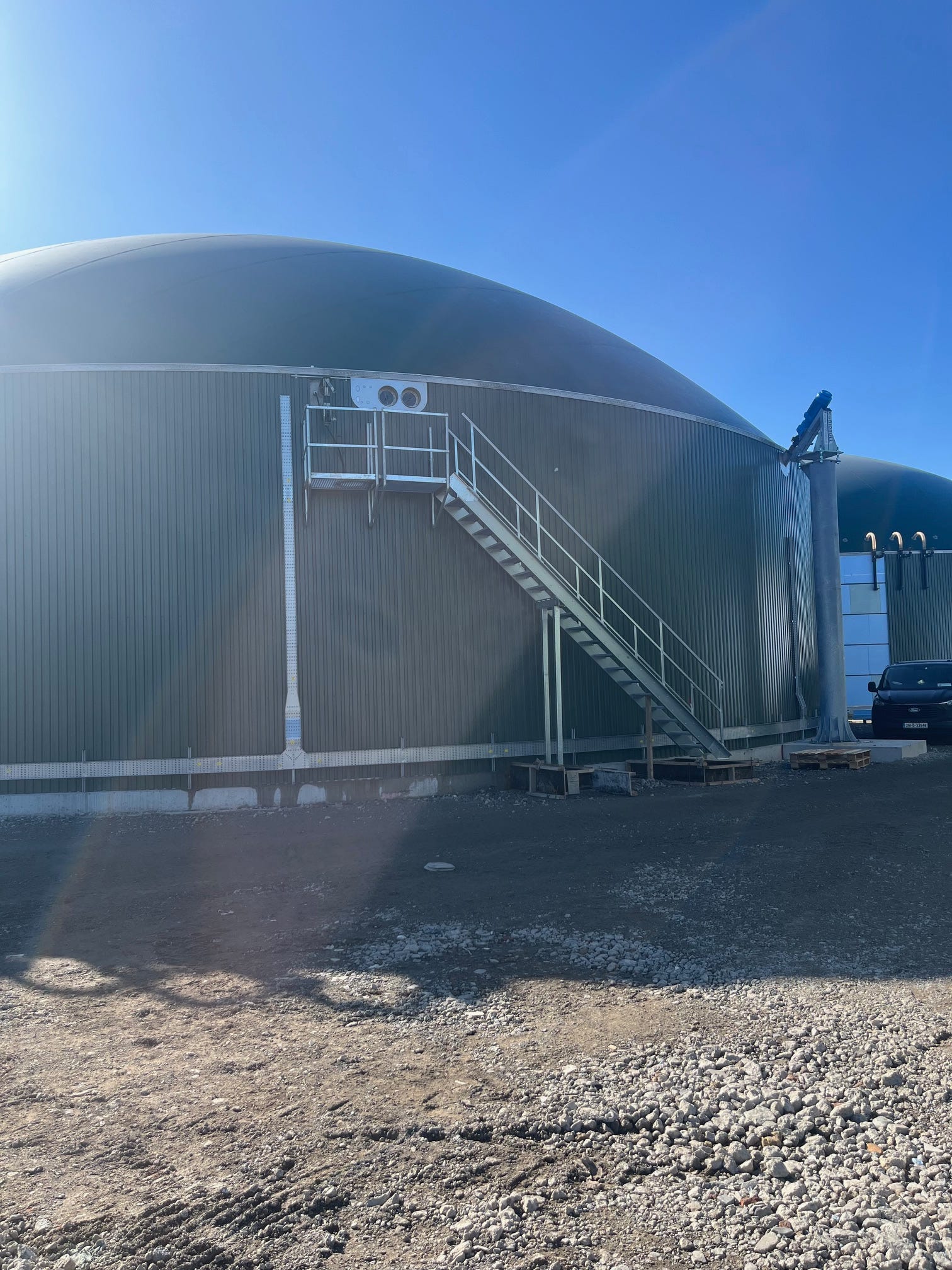
Gap Two: The Living System
Ben Martin of Redrock Bioenergy gives the implementation problem its sharpest framing, not in pre-construction, but inside the operating plant. His account of diagnosing a plant in turmoil is worth sitting with. Not because the technical specifics are unfamiliar to practitioners, but because of what the pattern of failure reveals about a sector-wide error of philosophy.
Anaerobic digestion is a living system. The four-stage biological cascade, hydrolysis, acidogenesis, acetogenesis, and methanogenesis, is carried out by distinct microbial communities in dynamic equilibrium. The methanogenic archaea at the end of the chain, the organisms producing the gas the plant exists to capture, are among the most chemically sensitive organisms in commercial industrial use. They respond to ammonia accumulation, trace element depletion, C:N imbalance, and hydraulic shear. Interrupt one stage without accounting for the downstream effects, and the resulting failure is non-linear, rapid, and expensive to reverse.
Martin’s diagnosis of where plants consistently go wrong is blunt. Most anaerobic digestion facilities are staffed as if the engineering is the asset and the biology is a given. The mechanical logic dominates. The biological logic gets treated as a secondary variable. And the suffering that follows, slow, compounding, difficult to trace, is, in most cases, entirely preventable.
The feedstock optimisation insight he walks through makes this concrete. Moving from 200,000 to 250,000 tonnes per annum by adding maize silage and ryegrass cover-crop alongside food-organics produced a 100% increase in methane output from a 25% increase in feedstock volume. The mechanism isn’t mysterious once you understand it: food waste runs high on moisture and low on carbon relative to nitrogen, which drives ammonia accumulation and methanogen inhibition. Maize silage runs at a C:N ratio that balances the digester’s working chemistry back toward stability. The biology runs healthier, volatile solids destruction improves, and gas yield per kilogram of fed material rises. The insight isn’t to add volume, it’s to understand what the microbial community actually requires, and design feeding strategy around that rather than around gate fees.
Treat feedstock as the primary design variable. Treat the biology as the team. Every position performs, or the whole thing underdelivers. That discipline, applied consistently across an industry that has too often inverted those priorities, closes a gap that no amount of capital or policy can substitute for.
Gap Three: The Architecture
Ireland is the clearest case study this month of what happens when policy framework and operational reality fail to speak to each other. The numbers are stark: a 5.7 TWh by 2030 biomethane target, two operational injection facilities producing around 75 GWh, and a commissioning rate that would need to reach approximately one new plant every ten days from now until 2030, in a country that commissioned two AD plants in an entire decade.
The easy diagnosis points to the Route to Market: the Renewable Heat Obligation delay, planning inconsistency, and grid economics. The structural problem runs deeper. Anaerobic digestion in Ireland sits across at least four government departments, none of which owns it, none of which operates on a common timeline, and none of which has delivered the integrated digestate land-bank framework that gives any project its commercial anchor. Planning doesn’t factor in feedstock catchment logic. The EPA hasn’t published end-of-waste criteria for digestate. The RHO didn’t account for RENURE timelines. Each department’s logic is internally coherent. Together, they are a gridlock.
The European Commission added a further complication: after ruling Ireland’s domestic biomethane multiplier incompatible with single market rules, it turned the same scrutiny toward France’s support framework. The pattern is now established. Support architectures built on domestic preference are precisely the ones the Commission will flag. Every member state designing biomethane policy in 2026 is now operating with explicit knowledge of that enforcement posture; the compliance gap between national ambition and EU single market rules has become the primary policy risk in European biomethane deployment.
India offered a useful counterpoint. The PNGRB’s approval of comprehensive grid injection guidelines for compressed biogas, quality specifications, safety instrumentation, metering standards, and grid access protocols is a textbook illustration of what architectural clarity does to a market. The pathway from production to end market is now defined. Brazil, by contrast, has over 1,800 biogas plants and strong production momentum, yet Fitch BMI identified underdeveloped pipeline infrastructure as the binding constraint on sector growth. The physical infrastructure layer is not a complement to policy ambition. It is the condition of it.
Gap Four: The Uncounted Ledger
The most important conversation of the month isn’t about a project, a policy, or a technology. It’s about an argument the industry consistently fails to make, and what that costs it.
The biogas sector presents itself, almost universally, as a renewable energy substitution story. The methane injected into the grid displaces fossil gas at the burner tip. That benefit is counted, priced, and supported. A second ledger goes almost entirely unacknowledged: the methane that would otherwise have entered the atmosphere from the alternative disposal pathways, landfill, manure lagoons, uncovered slurry stores, and aerobic decomposition of crop residues. Over a 20-year asset life, with methane carrying roughly 80 times the atmospheric warming potency of CO₂ on a near-term basis, the avoidance side of that ledger is frequently larger than the displacement side. Most reporting frameworks count one and ignore the other. Most support mechanisms price one and ignore the other.
The consequence of that accounting gap is structural. Biomethane gets priced as a renewable energy product when it is more precisely a methane-abatement infrastructure that produces energy as a co-product. That single reframe changes the policy logic, the carbon accounting, and the corporate offtake conversation simultaneously. A corporation managing a Scope 1 abatement commitment is buying avoided methane first; the gas molecule is attached to that abatement, not the other way around. Until the industry leads with the avoided-emissions argument, confidently, consistently, in policy submissions, offtake negotiations, and public planning consultations, the wrong levers keep getting pulled. Value keeps being left on the table.
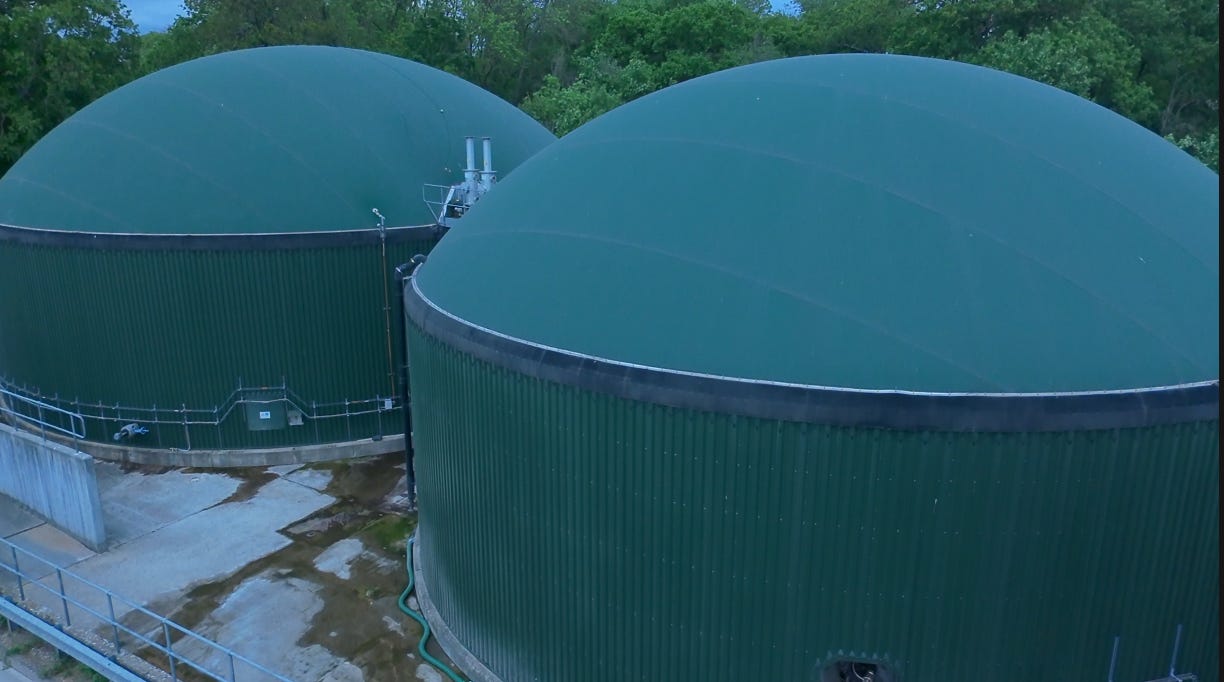
The Floor Holds
Against all of that, the proof-of-concept stories this month matter, and there are more of them than the gap stories get credit for.
Welsh Water’s Wrexham facility processes sewage sludge from across North Wales and delivers biomethane directly into the National Grid, heating homes whose residents had no idea the system existed. Energy self-sufficient, circular, invisible in the best possible way, that is embedded infrastructure, not demonstration infrastructure. Cannock Chase District’s mandatory food waste rollout gathered over 95 tonnes in its first week from 44,000 households. Spain’s HAM Group completed the rollout of biomethane across its entire network of more than 140 refuelling stations, with existing gas vehicles requiring zero modification to use it. A biomethane-powered 74-tonne truck is running Brazil’s sugar export corridor on fuel made from the vinasse residue of the crop it carries, a closed-loop fuel cycle built out of what the industry was previously treating as a disposal problem. In Egypt, a retrofit agreement transformed an existing wastewater plant into a biogas energy asset without building a single new structure.
None of these are pilots. They are demonstrations that each of the four gaps described above can be closed, that biogas infrastructure, properly architected, properly operated, honestly accounted for, and sensibly regulated, delivers exactly what it promises. The floor that was being laid last month is holding weight.
The Takeaway
Last month’s question was whether the sector was ready to build the floor. May’s answer is more specific: the floor is structural, and its weakest point is whichever gap is being left unaddressed.
Fix the front-end engineering gap and more projects make it past pre-development into something a financier can evaluate. Fix the biological operating gap and more of those projects perform for 25 years rather than degrading quietly in year two. Fix the policy architecture gap and more markets convert stated ambition into commissioned capacity. Fix the carbon accounting gap and the full climate case finally gets made, the gas produced and the methane prevented, both on the ledger, both in the room.
None of those require a scientific breakthrough. All of them require the sector to hold a more precise picture of where it is actually stuck, and apply the right kind of rigour to each gap rather than assuming that momentum in one area compensates for stagnation in another.
The headlines this month are full of energy. The discipline is in figuring out which gap you’re standing in front of and building from there.

We Are Biogas is a curated weekly newsletter covering the global biogas, biomethane, RNG, and anaerobic digestion landscape.
Want to be featured? Email: alexandra@wearebiogas.com