


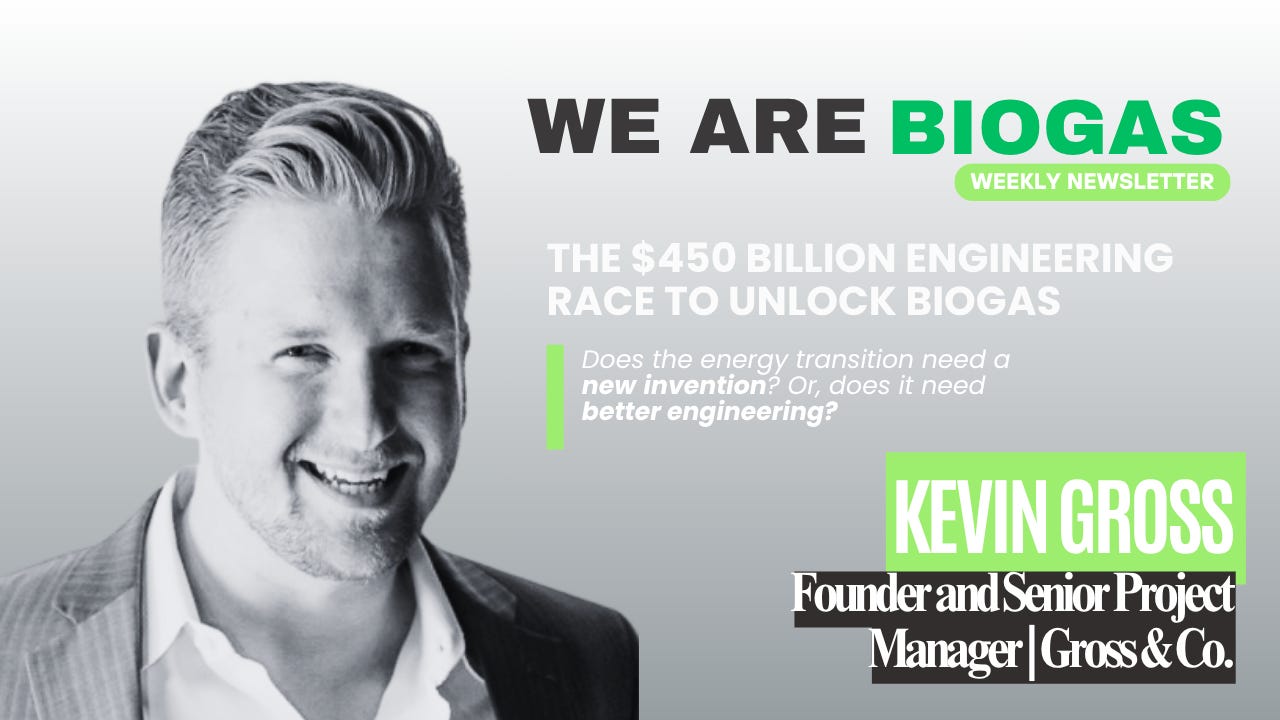
The real drama of the energy transition unfolds in the gap between potential and operational reality. It’s a gap measured in carbon credits, technology breakthroughs, and in the rigorous, often unheralded work of front-end engineering. This is the industrial friction where promising ideas go to die. Not because the science fails, but because the development process stalls. To understand how to bridge this divide, I sat down with Kevin Gross, founder of Gross & Co. Kevin has positioned his firm as a senior-led, fast-moving alternative to traditional engineering giants, driven by a singular realization: he doesn’t just see biogas as a fuel, but as a waste-to-value paradigm that is ready to scale, provided we stop tripping over our own feet during the development phase.
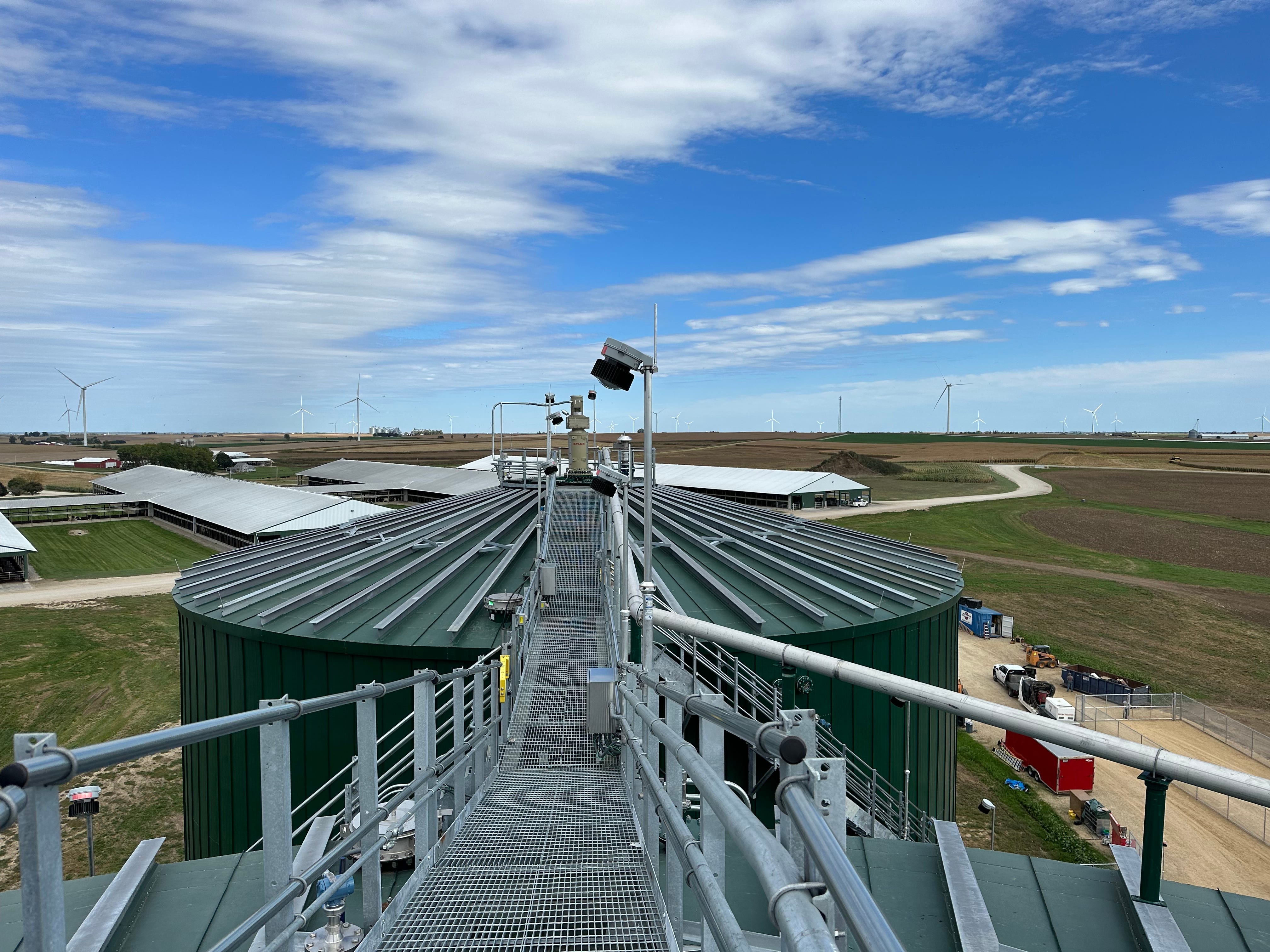
The scale of what’s at stake is difficult to overstate. The biogas industry is undergoing a high-stakes transformation from a niche secondary market into a foundational pillar of global waste management and industrial infrastructure. In 2025 alone, the United States added 70 new biogas projects, bringing the total to nearly 2,600 operating systems. Yet, according to the American Biogas Council’s 2026 data, we’ve captured only about one-quarter of our total potential. There is room for 17,000 more projects across the country. We are sitting on a $450 billion industrial frontier that is currently dormant, waiting for the right engineering key to unlock it.
The R&D Lens: Embracing the Messy
Kevin Gross didn’t come to engineering through a traditional EPC (Engineering, Procurement, and Construction) path. He started his career in cellulosic biofuels research and development, an origin story that shaped a particular way of thinking about uncertainty. This is where the philosophy of Gross & Co. begins to diverge from the pack.
“What drew me in was the idea that a waste stream is usually not just a disposal problem,” Kevin says. “With the right engineering, it can become energy, a usable product, or a better economic outcome for the owner. Starting in cellulosic biofuels R&D taught me to be comfortable with uncertainty without being casual about it.”
In a traditional engineering environment, uncertainty is often seen as a reason to pause. In Kevin’s world, it’s a variable to be bounded. “In R&D, you are constantly asking what you know, what you do not know, what assumption matters most, and what is the fastest way to prove or disprove it,” he explains. That mindset is critical because waste-to-value projects are inherently messy. Whether it’s swine manure, food waste, or wastewater biosolids, the feedstocks are inconsistent, the data is often incomplete, and the path is rarely settled at the start. In this space, the winning move isn’t waiting for perfect information; it’s defining enough of the project to make the next good decision.
The “Assumptions-First” Architecture
The gap Kevin built his firm to address is a precise one. Historically, developers faced a “bad choice” binary: hire a massive firm and spend too much time and money getting early answers, or move forward on rough assumptions that won’t hold up under the scrutiny of investors or lenders.
“Most projects do not fail because the underlying technology is impossible,” Kevin notes. “They fail because the front end is too slow, too expensive, or too fuzzy.”
This is where the concept of FEL (Front-End Loading) moves from a textbook term to a survival strategy. To a farmer, a municipality, or a food waste hauler, FEL is the bridge between interest and action. It’s the work that turns “this sounds like it could be a good idea” into “here is what we would actually build, what it would cost, what it would make, and what could go wrong.”
Gross & Co. operates on an assumptions-first approach. Instead of treating an unknown as a stop-work event, they log it, bound it, and show what it does to the cost and performance. This keeps the momentum alive, something tight-margin projects can’t afford to lose. “Investors do not need fake certainty,” Kevin says. “They need a credible decision framework. Once the unknowns are named and bounded, the conversation gets better.”
Collapsing the Timeline
In a sector where development cycles are notorious for dragging into months of avoidable churn, Kevin’s team has pioneered a compressed six-week sprint to reach a Class 2 estimate, a timeframe roughly 85% faster than the industry standard. This speed is achieved by breaking the traditional, linear engineering sequence. While standard firms often run disciplines, process, civil, electrical, and estimating, one after another, Gross & Co. runs them in parallel.
“We lock the basis early, define assumptions clearly, and run disciplines in parallel instead of handing work off one after another,” Kevin explains. This allows estimating to develop alongside engineering rather than waiting until the design is finished. The backbone of this innovation is the early use of a Work Breakdown Structure (WBS). By coding the project at its inception, every quantity and assumption becomes traceable. When the scope shifts, the estimate shifts with it instantly.
However, collapsing the timeline requires more than just a new workflow; it requires “pattern recognition.” Kevin has intentionally built a team where specialists like Joe Baranski (30+ years in process modeling) and Dan Humphres (30 years in I&C) are the ones actually doing the work. In the high-stakes early stages of a $250M dairy cluster or a $6B SAF plant, this level of experience is the ultimate de-risking tool. These senior specialists see the blind spots between disciplines and catch the interface issues that less experienced teams miss, ensuring that the final handoff to a contractor is priceable and buildable.
Waste-to-Value for Communities
While the technical details fuel the industry’s engine, the “why” behind these projects is what bridges the gap to the public. Kevin’s deliberate use of the term “waste-to-value” is a shift in language that matters to the average American. Most people don’t think about renewable natural gas (RNG) pathways, but they do think about manure, landfill emissions, odor, and disposal costs.
“Waste-to-value is a clearer description of what the project is doing,” Kevin says. “It is taking a liability and turning it into energy, a product, or a better economic outcome.”
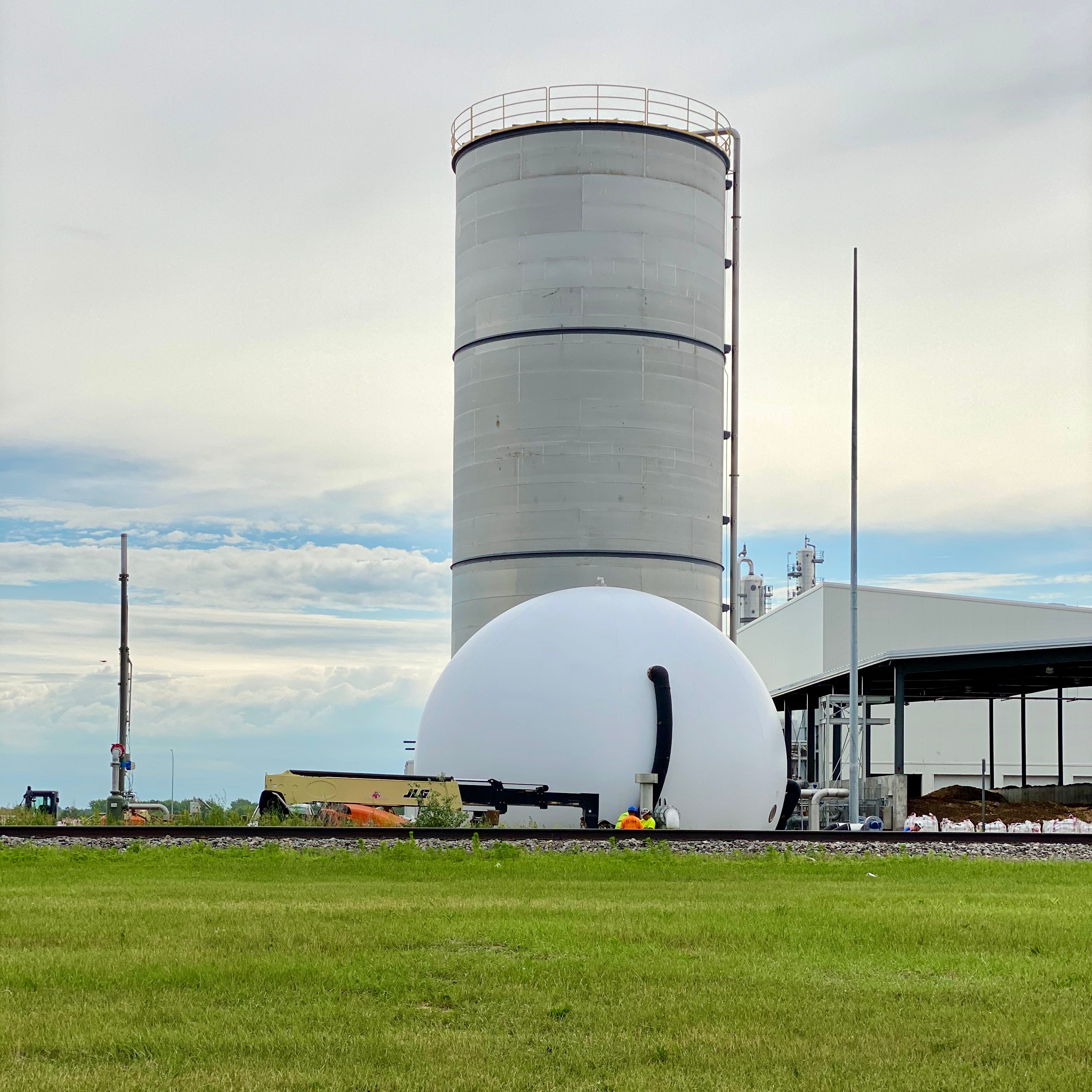
Take food waste projects, for example. From the outside, it looks like the goal is to sell gas. In reality, the primary economic pillar is often the tip fee, the fee paid to receive and process a material that someone else needs to get rid of. When the engineering for contamination control and pre-treatment is solid, these projects become community assets that solve a disposal crisis while producing renewable energy as a bonus.
The same logic applies to municipal wastewater and biosolids. Municipalities today are facing a perfect storm of disposal costs and the looming regulatory pressure of PFAS (forever chemicals). Gross & Co. is currently working on biochar projects that convert biosolids into a product that eliminates PFAS risk.
“If you can combine biogas recovery, solids management, and newer outlets like biochar into one practical strategy, you are not just making fuel,” Kevin explains. “You are solving disposal, compliance, odor, and resiliency at the same time. That is when the project gets more durable.”
The Incentives Engine: Engineering the Credits
In the United States, the economics of biogas are inextricably linked to policy, 45Q, 45Z, LCFS, and RINs. But Kevin warns that these shouldn’t be treated as a finance layer added after the engineering is done. They are, in fact, engineering problems in disguise.
The incentive strategy depends entirely on the engineering basis: what the battery limits are, what is being measured, and the uptime assumptions. “Where people get it wrong is assuming credits stack cleanly by default,” Kevin says. At Gross & Co., the engineering basis and the incentive strategy are built together from day one. If the scope shifts, the incentive basis shifts with it. This ensures that the technical story and the commercial story remain perfectly aligned for third-party diligence.
The Path to 17,000
As we look toward the potential of 17,000 new projects, the path forward isn’t necessarily about a single technology breakthrough. It’s about repeatability. It’s about building a development system that doesn’t have to relearn the same lessons on every project.
If Kevin could change one structural thing about the U.S. biogas ecosystem, it would be to strengthen the predevelopment layer. “Too many projects try to jump from concept into financing or EPC conversations without enough money or time set aside for real front-end definition,” he says. “That is where bad assumptions get baked in.”
Strengthening this early phase would improve financing outcomes, permitting outcomes, and community trust. A project that is better defined is a project that is more likely to be built and operated with confidence.
A Global Conversation
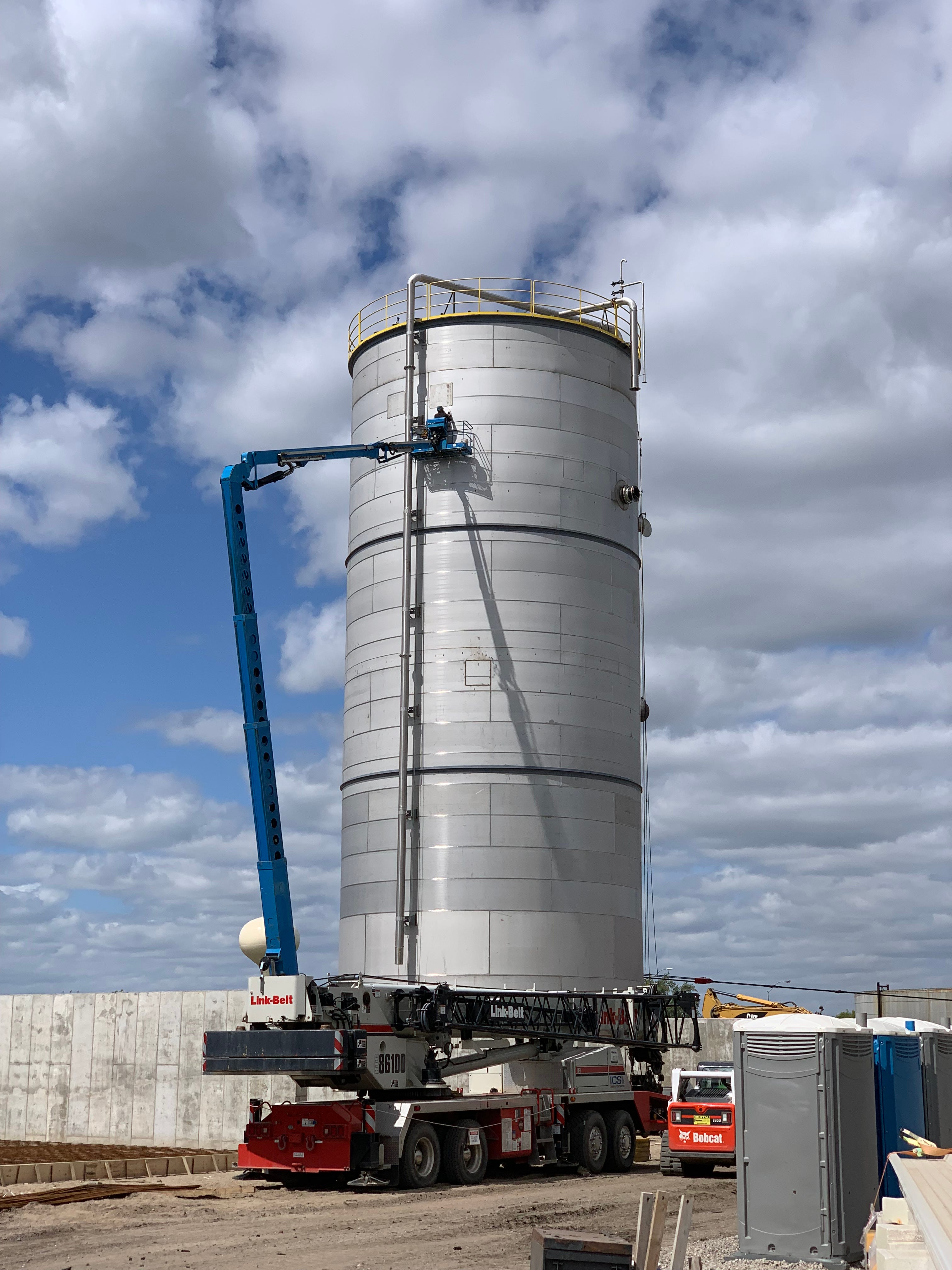
The momentum in the biogas space is a global phenomenon. Whether it’s a dairy cluster in the Midwest or a SAF plant in Europe, the lessons are the same: the real risk hides at the interfaces, and the front-end definition is what protects the owner.
Kevin Gross is building a version of Gross & Co. that acts as a senior-led platform to take projects from early screening through FEL and FEED quickly, without losing rigor. Success, in his view, is more than revenue growth; it’s more projects reaching real decisions sooner and fewer projects dying in the churn.
“Biogas is not just an energy story,” Kevin concludes. “It sits at the intersection of environment, infrastructure, and day-to-day practicality.”
The era of “garbage” is dead. We are entering the era of value, where our liabilities are our greatest opportunities. The sleeping giant of the 17,000 potential projects is waking up, and for the teams that can navigate the messy middle with speed and discipline, the future is incredibly bright.

To learn more about Kevin Gross and his work at Gross & Co, email him or visit their website:
kevin@grosscompany.net
https://www.grosscompany.net/