



Ben Martin didn’t plan to work in biogas. He planned to play rugby for as long as his body would allow. When it didn’t, he landed in wastewater treatment, which turned out to be a better apprenticeship than most. What he found when anaerobic digestion arrived on his site changed everything. The technology wasn’t spectacular. The realization was: the same organic molecules that were a cost line on one side of the balance sheet were the energy source on the other.
That observation, simple in hindsight and profound in its implications, is the lens through which Ben Martin, Founder and Director of Redrock Bioenergy, now approaches everything from feedstock chemistry to Irish regulatory architecture to the carbon accounting conventions he believes the entire global industry needs to rethink. Redrock Bioenergy is a specialist consultancy in the anaerobic digestion and biomethane space, having evolved from optimizing and managing AD facilities in transition, through assisting developers deliver projects from feedstock strategy to performance testing, to its current position: the capacity to build, own, and operate its own assets across the full project lifecycle.
Martin’s background makes him an unusual voice in a sector that can, at times, speak primarily to itself. He came up through process data and discharge consent parameters. He thinks in volatile solids loading rates and C:N ratios, but he also thinks in rugby team positions and patient metaphors about microbial culture. That combination, rigorous technical depth alongside an instinct for human communication, is increasingly rare. And it makes him exactly the kind of practitioner the industry needs more of at a moment when the gap between what biogas demonstrably does and what the public, the planning system, and the policy apparatus believes it does remains frustratingly wide.
From the Scrum to the SCADA Screen
The transition from elite rugby to anaerobic digestion doesn’t appear in any career guidance document, but Martin’s account of it reveals something important about the transferable logic of both disciplines. Rugby, at its best, is a systems sport: no single position wins a match, and the collapse of any one function, a front row losing a scrum, a lineout caller misreading the defense, can unravel everything the other fourteen players have built. Wastewater treatment, it turned out, operated on the same principle. Performance is legible through numbers. Consequences of getting it wrong show up fast. Discipline across every function is non-negotiable.
When an anaerobic digestion plant was added to his site, the data changed character. Suddenly, it wasn’t just compliance numbers. It was methane yield per cubic meter of sludge, parasitic load being stripped from the grid, throughput being balanced to maximize generation without flaring gas and wasting energy.
“The same organic load that was a cost line and needing massive amounts of energy to be broken down for discharge consent was the energy source on the AD side. Same molecules, opposite role on the P&L.”
That recognition, of value hiding in plain sight inside a process the industry was treating as a disposal problem, is the intellectual thread running through everything Redrock Bioenergy does. It shows up in how Ben approaches feedstock optimization, in how he describes digestate, in how he frames the methane abatement case for policymakers, and in the specific critique he makes of an industry that, in his view, consistently optimizes for the wrong metrics.
The Living System
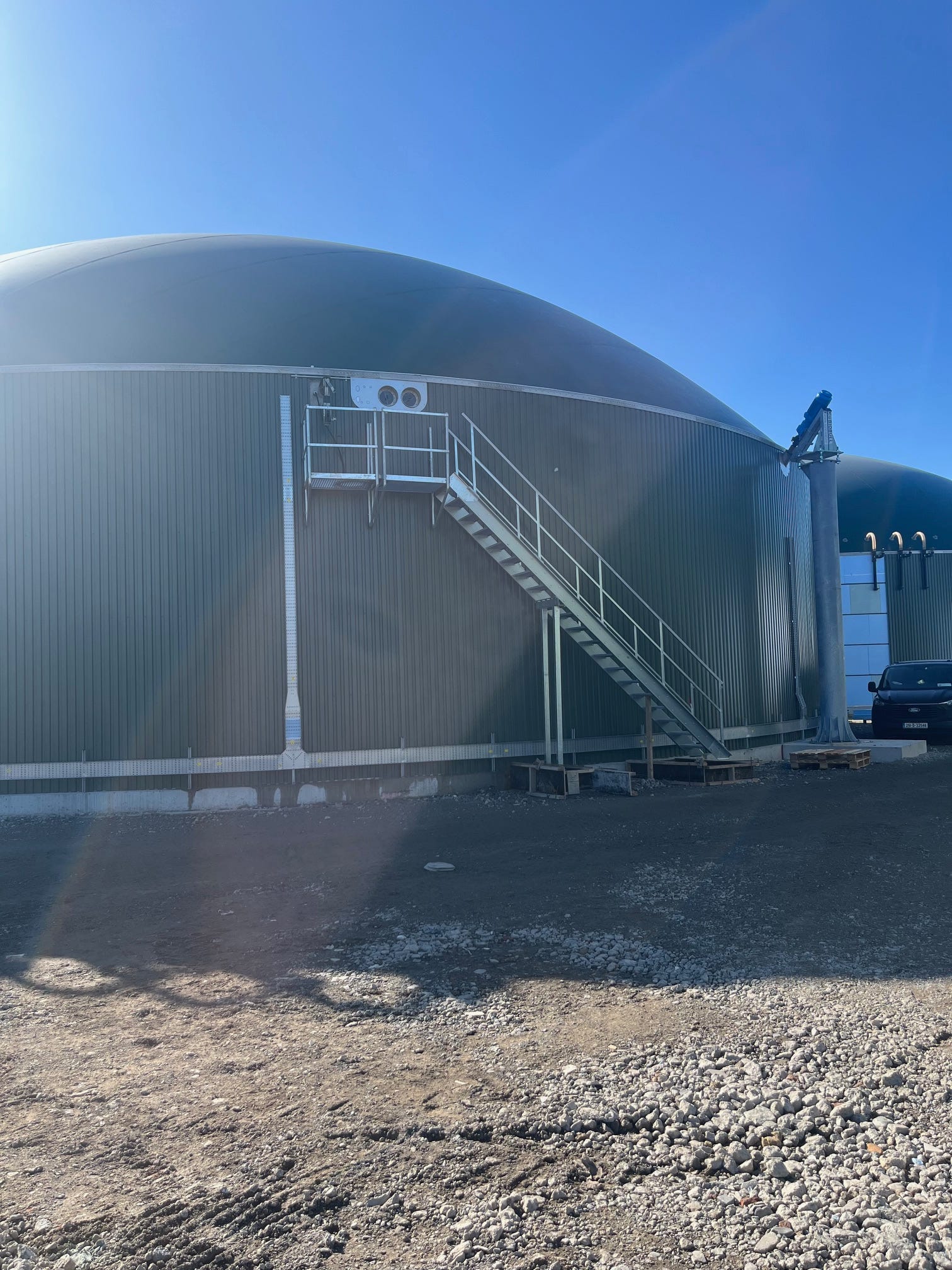
There’s a moment Ben describes that biogas engineers will recognize immediately and that everyone else should hear. He was on a plant that was underperforming, yields down, foaming worsening, operators chasing their tails. He spent a week pulling apart the data and found not one problem but six, all interacting: ammonia, pH, volatile fatty acids, methanogens, mixing, foaming. Every individual intervention was rational. Collectively, they were strangling the plant.
“The thing that hooked me wasn’t fixing it. It was realizing this wasn’t an engineering problem in the way a pump or a pipe is. It was a living system. A few hundred cubic meters of microbial culture, behaving roughly like a baby, sensitive to what you feed it, prone to upset if you get the diet wrong. Most engineering rewards precision and control. AD rewards humility and patience. You’re not the boss of the plant. You’re its doctor.”
That framing is more than a vivid metaphor. It’s a precise description of why AD plants fail at a rate that better-managed engineering would prevent. The four-stage biology of anaerobic digestion, hydrolysis, acidogenesis, acetogenesis, and methanogenesis is carried out by distinct microbial communities in dynamic equilibrium with each other. Disturb one stage without accounting for its downstream effects, and the cascade is rapid, non-linear, and expensive. The methanogenic archaea at the end of the chain, which produce the gas the plant exists to capture, are among the most chemically sensitive organisms in commercial use anywhere in industry. They respond to ammonia accumulation, to C:N imbalance, to hydraulic shear, to trace element depletion, to feeding rhythm.
Ben diagnoses where the industry consistently staffs this problem incorrectly, in rugby terms, he calls it the front row problem.
“The role that should sit at the heart of every AD plant is the person who reads the digester the way a head coach reads their front row: temperature drift, volatile fatty acid accumulation, ammonia trend, foaming pattern, gas composition. Most plants put a mechanical or process engineer in that seat. They’re good at pumps, valves and pressure curves. They’re rarely good at reading a microbial consortium under stress. The methanogens don’t care about the P&ID. The plants that run beautifully for 25 years have someone in that seat who came up through fermentation, wastewater microbiology, or rumen science. The plants that crash in year two were staffed for a refinery, not a culture.”
For anyone outside the industry, the translation is straightforward: the operating philosophy of an anaerobic digestion plant is closer to a winery or a fermentation facility than to a gas processing plant. The biology is the asset. The engineering exists to serve it. When those roles are inverted, and the mechanical logic dominates while the biological logic gets treated as a secondary variable, the plant suffers. And the suffering is slow, compounding, and difficult to reverse.
The Feedstock Insight That Doubled Gas Output
Redrock’s technical differentiation goes beyond Rugby analogies. Ben describes a feedstock optimization decision that illustrates precisely the kind of engineering thinking the sector needs more of at scale. Moving from 200,000 tonnes per annum of food-organics-anchored feedstock to 250,000 tonnes per annum with the addition of 50,000 tonnes of maize silage and ryegrass cover-crop took gross annual biogas output from roughly 10.9 million cubic meters of methane to roughly 21.7 million. A 100% increase in gas output from a 25% increase in feedstock volume.
The insight behind that result wasn’t about adding volume. It was about understanding what the digester biology actually requires. Mass matters far less than volatile solids content. Food waste runs at 25 to 30% VS on a wet-weight basis, a function of high moisture in fruit and vegetable streams. Maize silage runs at 28 to 32% VS on a much lower moisture base. Per tonne entering the digester, the crop carries materially more biodegradable solids. The biochemical methane potential per kilogram of VS is comparable to or better than the food-waste benchmark.
The second insight concerns carbon-to-nitrogen ratio. Pure food waste is nitrogen-rich, with a C:N around 12 to 15:1, which drives ammonia accumulation and methanogen inhibition under load. Maize silage runs at 25 to 30:1. Co-digesting in the right proportions brings the working C:N inside the digester toward the 20 to 30:1 optimum for stable mesophilic operation. The digester runs healthier, ammonia inhibition retreats, VS destruction is more complete, and gas yield per kilogram of fed VS rises. As Ben puts it, the maize and ryegrass combination is a biologically operating ballast as much as a feedstock.
The third layer is pretreatment. Maize stalks and ryegrass leaf hold a significant fraction of their cellulose and hemicellulose inside lignin matrices that mesophilic methanogens can’t access without help. An acid hydrolysis pretreatment at the front end unlocks that lignocellulosic fraction. Ben notes that acid hydrolysis sounds alarming to non-engineers but is straightforward in practice, and that the sector’s failure to explain its own processes accessibly is one of its most persistent and costly communication failures.
The broader principle: optimize for biochemical methane potential multiplied by volatile solids content, not gate fee multiplied by tonnage. Most developers do the latter. The discipline that returns is to treat feedstock as the design input that drives every downstream sizing decision, not as a passive revenue variable.
Ireland’s Structural Problem and What Actually Fixes It
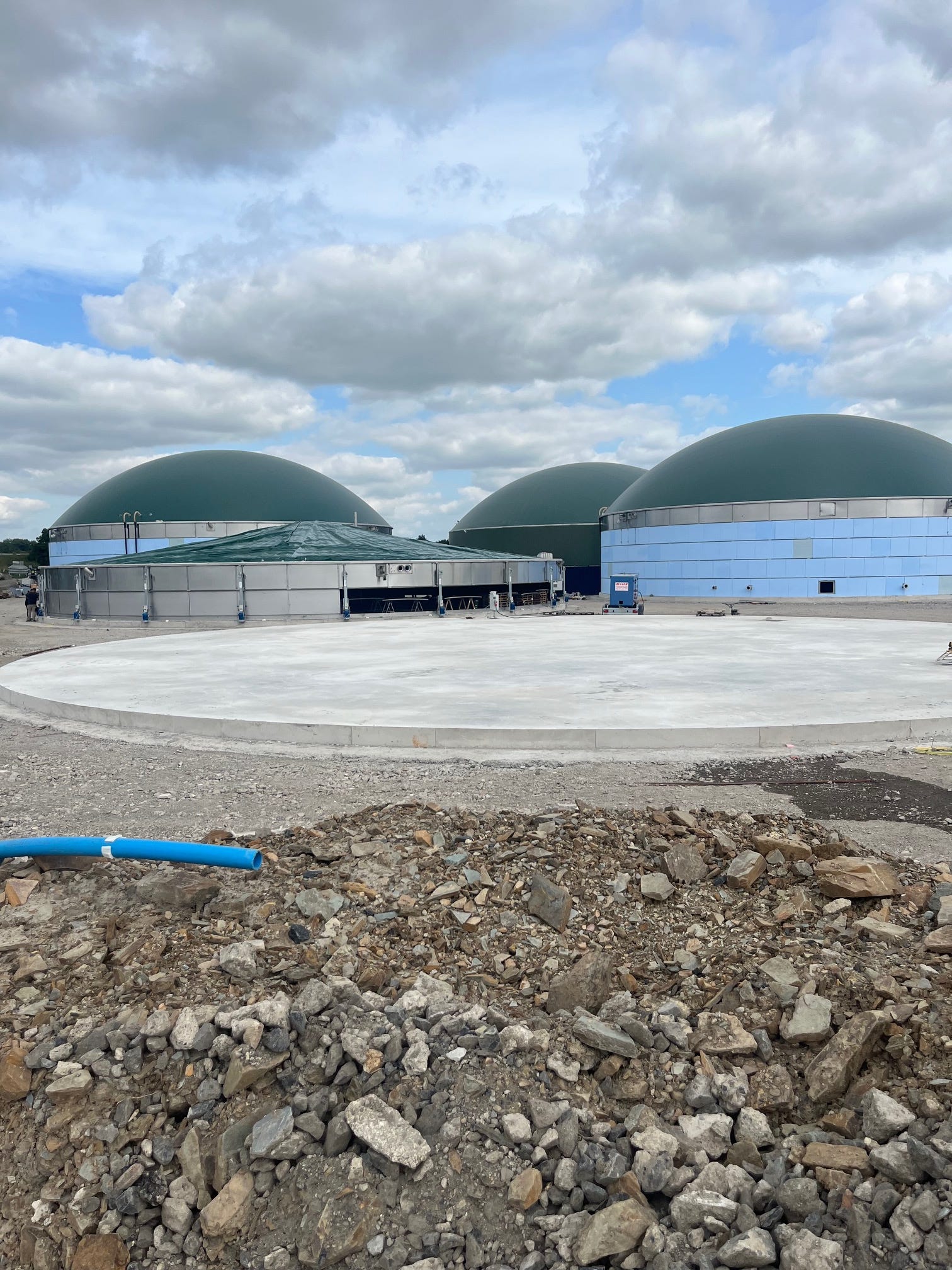
Ben’s analysis of Ireland’s biogas development environment is precise and uncomfortable in equal measure. Ireland has set a target of 5.7 TWh of biomethane to the gas grid, has two operational injection facilities producing approximately 75 GWh per year, less than 1.5% of the 2030 target, and needs to commission roughly 150 new AD plants at a rate of approximately one every ten days, sustained from now until 2030, in a country that has commissioned two in the entire last decade. The target, as he states plainly, won’t be met.
The easy answer is the Route to Market: the RHO delay, the planning inconsistency, the grid economics. Ben’s diagnosis goes deeper. The fundamental barrier is the absence of a coherent farm-to-grid-to-farm value chain in which nutrients flow as fluently as gas does. An anaerobic digestion plant’s bankability is determined as much by digestate offtake as by gas offtake. A 200,000 tonne per annum plant produces roughly 180,000 tonnes of digestate per year. That material has to go somewhere legal, economic, and durable for a 20-year asset life. Ireland’s Nitrates Directive derogation, historically generous, is tightening under EU pressure and ongoing water quality enforcement. Spreading land is contested. No amount of RHO premium fixes a plant whose digestate lagoon is full and whose nearest spreading land is 90 kilometers away.
The reason the barrier persists is institutional. Anaerobic digestion in Ireland sits across at least four government departments: Climate, Energy and Environment; Agriculture, Food and the Marine; Housing, Local Government and Heritage; and the EPA, and none of them owns it. A developer pursuing a 200,000 ktpa plant has to win simultaneously at all four. Lose anyone, and the project fails. The four don’t communicate on consistent timelines. The RHO design didn’t factor in RENURE timelines. The planning regime doesn’t factor in feedstock catchment logic. The EPA hasn’t published end-of-waste criteria for digestate, which means the same material is technically a waste for one regulator and a fertilizer for another.
The February 2026 adoption of Directive (EU) 2026/288, formally amending the Nitrates Directive to allow RENURE-grade processed digestate to be treated as chemical-fertilizer equivalent and applied above the 170 kg N/ha cap, is a genuine structural shift. In principle, it resolves the digestate land-bank constraint that has been the silent killer of Irish project finance. In practice, Ireland still has to transpose the directive, the EPA still has to publish end-of-waste criteria, and the nutrient-stripping infrastructure that turns ordinary digestate into RENURE-grade material doesn’t yet exist on Irish AD sites. The EU layer creates the constraint and creates the fix, but the fix is multi-year.
The Evergreen project is the clearest proof Ben points to that the Irish regulatory bottleneck can be navigated. It did so through a specific and not widely replicable route: a feedstock composed entirely of industrial process by-products, with no domestic food waste, animal manures, or animal by-product materials. That single design decision removed the plant from the EPA Industrial Emissions License regime, compressed the consenting timeline dramatically, and allowed first gas in under four years rather than the seven-plus a conventional approach would require. The lesson is real. The scalability is limited by the finite availability of qualifying industrial feedstocks.
What world-best Irish policy would actually look like, in Ben’s framing, isn’t an incrementalist patch. It’s a single biomethane delivery agency with cross-departmental authority, modeled on the Danish Energy Agency, accountable to one minister, with RHO, capital grants, RENURE implementation, planning guidelines, and EPA end-of-waste criteria all on one delivery timeline. Add a statutory cluster framework rewarding co-location within 15 kilometers with cooperative farm ownership, a RENURE delivery program funded from the capital allocation, a redesigned RHO built around method-based rather than origin-based premiums, and a national AD planning code that removes local-authority-by-local-authority variability. That package isn’t radical. It’s integrated. Denmark proved the model works. Ireland has more agricultural feedstock per capita and the highest per-capita biomethane potential in the EU.
The Conversation the Industry Isn’t Having
The sharpest observation Ben made was the one the industry most consistently avoids. Methane accounting.
“The conversation we’re not having is about the methane that does not get made. The industry obsesses over biomethane produced for the grid. Nobody seriously accounts for the methane that would otherwise have escaped, from landfill, manure lagoons, uncovered slurry stores, aerobic decomposition of crop residues, and that the plant prevents.”
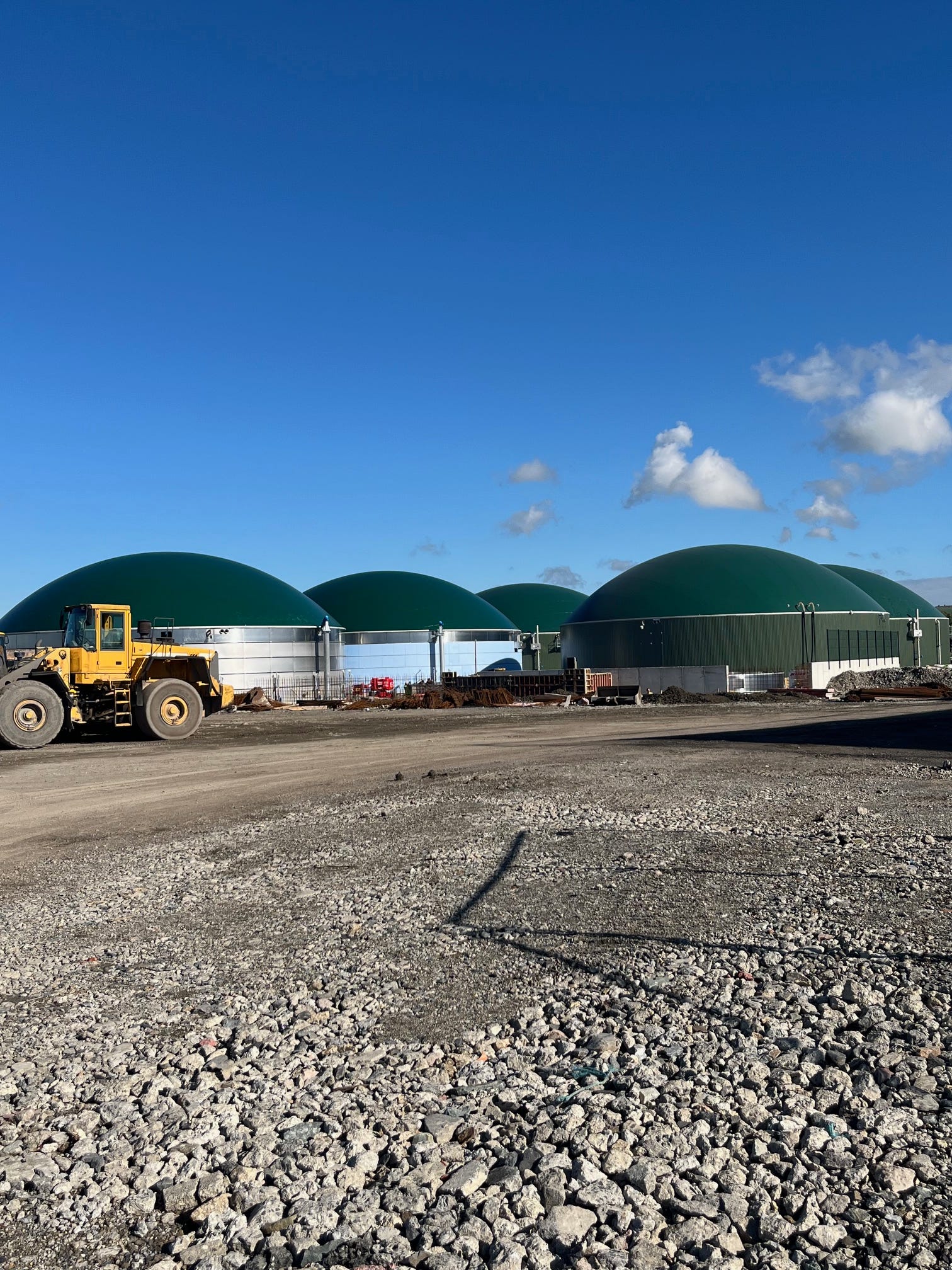
A 250 ktpa anaerobic digestion plant displaces fossil gas at the burner tip, one climate benefit, the one universally counted. It also avoids roughly 80,000 to 150,000 tonnes of methane-equivalent emissions per year that would otherwise have entered the atmosphere from the alternative disposal pathway. Over a 20-year period, methane is approximately 80 times more potent as a greenhouse gas than CO₂. The avoidance side of the ledger is frequently larger than the displacement side. Most reporting frameworks count one and ignore the other. Most support mechanisms price one and ignore the other.
The consequence is structural: biomethane gets priced and supported as a renewable-energy substitution play, when it’s more accurately a methane-abatement infrastructure play that produces energy as a co-product. The reframe changes the policy logic, the carbon accounting, and the corporate offtake conversation simultaneously. A cement manufacturer or data center with a Scope 1 abatement target is buying avoided methane first and, attached to that, a gas molecule it can use. The industry’s failure to lead with that argument means the wrong policy levers keep getting pulled and the wrong economic value keeps being left on the table.
Ben’s prescription sits in the same framework he applies to digestate communication, to planning objections, to investor conversations, and to the five different policy desks that each require a different version of the same project case. The vocabulary needs a rebuild. Digestate is a bio-fertilizer product, full stop. Pasteurization at 70 degrees Celsius for one hour is the same temperature-time profile used in commercial milk pasteurization. A 200 ktpa biomethane plant is a small refinery for biological feedstocks. And the methane it prevents from reaching the atmosphere is as central to the case for building it as the gas that flows into the grid.
“A flat subsidy is what governments reach for when they’re trying to start a market. A CI scoring mechanism is what governments need when they’re trying to scale one. Ireland and the UK are at the scaling stage, not the starting stage. The mechanism should reflect that.”

The Final Whistle
Rugby gave Ben Martin a framework for understanding systems long before he understood biogas. Every position performs, or the whole thing falls apart. You don’t move the ball without the front row holding. You don’t hold the front row without the locks and back row digging in to stabilize. Your backline won’t function without a solid lineout, and your defensive system will be continually stressed if your attack constantly falters. The loss of any single function doesn’t merely weaken the team. It invalidates the work of every other position.
He applies that logic without apology to everything Redrock Bioenergy touches. Feedstock acquisition, process biology, mechanical reliability, gas chemistry, planning, finance, regulatory compliance, digestate offtake, community engagement, and carbon accounting. These aren’t departments that hand work off in sequence. They’re positions on the same field, and every one of them has to perform for the asset to deliver what it’s capable of delivering. The plants that fail in year two were staffed for a refinery. They treated the digester as a vessel and the biology as a given. The plants that run for 25 years were built by people who understood that the biology is the team, and that no formation survives contact with reality unless every position knows its role.
The biogas sector is building something that matters, materially, at scale, in real tonnes per day, every day, for years. The feedstocks exist. The technology is proven. The climate case is stronger than the industry has yet been willing to state in full, because the full case includes the methane that doesn’t get made. That number changes everything. What the sector needs, in Ireland, in the UK, in Australia, in every market where the conversation is still predominantly about subsidies and planning delays, is the discipline to tell that story completely. The gas that goes into the grid, the methane that never reaches the atmosphere, the nutrients that go back into the soil, and the communities that get durable local infrastructure instead of a landfill and a slow leak. All of it. Every position.
The full game is worth playing. It just requires every position to show up.

About Redrock Bioenergy
Redrock Bioenergy unites decades of specialist expertise in digester design, biomethane upgrading, waste management, and regulatory compliance across the UK, Ireland, and Australia. Our holistic, non-siloed approach transforms complex feedstocks, including FOGO and industrial organics, into scalable biomethane facilities, delivering superior commercial viability and risk mitigation from feasibility through to full commissioning.
Get in Touch
To learn more about Ben Martin’s work, reach out at: ben@redrockbioenergy.com