



Exciting news for the We Are Biogas community!
I’ve teamed up with the incredible team at Global NRG Advisory to bring you something that has been missing from this industry for far too long: a dedicated Project Finance Masterclass for biogas and biomethane professionals.
How do you actually fund a biogas project? That’s exactly what Chris Negus and Andrew Rice are breaking down across six live, expert-led modules, starting in September.
Cohorts are capped at just 15 seats. As a We Are Biogas subscriber, you have access to an exclusive 5% discount!
This is the kind of practical knowledge the industry actually needs. I couldn’t be more thrilled to share it with you.
👉 DM Chris Negus to get the details and secure your discounted seat! Let them know we sent you.
We Are Biogas Exclusive

Every Position Has to Perform: The Living Science, The Broken Policy & The Methane The Industry Isn't Counting
By Alexandra Arndt · May 18
In this week’s exclusive, Ben Martin takes us through the living biology at the heart of every AD plant, the feedstock insight that doubled gas output from a 25% increase in volume, and the structural dysfunction inside Ireland’s regulatory architecture that is quietly killing projects that should be getting built. But the sharpest part of the conversation is about the methane the industry isn’t counting, the emissions avoided from landfills, manure lagoons, and uncovered slurry stores that never get captured in the support mechanisms, the carbon accounting, or the public case for biogas. That number, he argues, changes everything. And the sector’s failure to lead with it means the wrong policy levers keep getting pulled and the wrong economic value keeps being left on the table.
“The conversation we’re not having is about the methane that does not get made. The industry obsesses over biomethane produced for the grid. Nobody seriously accounts for the methane that would otherwise have escaped from landfill, manure lagoons, uncovered slurry stores, aerobic decomposition of crop residues, and that the plant prevents.”
Ben Martin | Founder & Director, Redrock Bioenergy
Policy & Capital
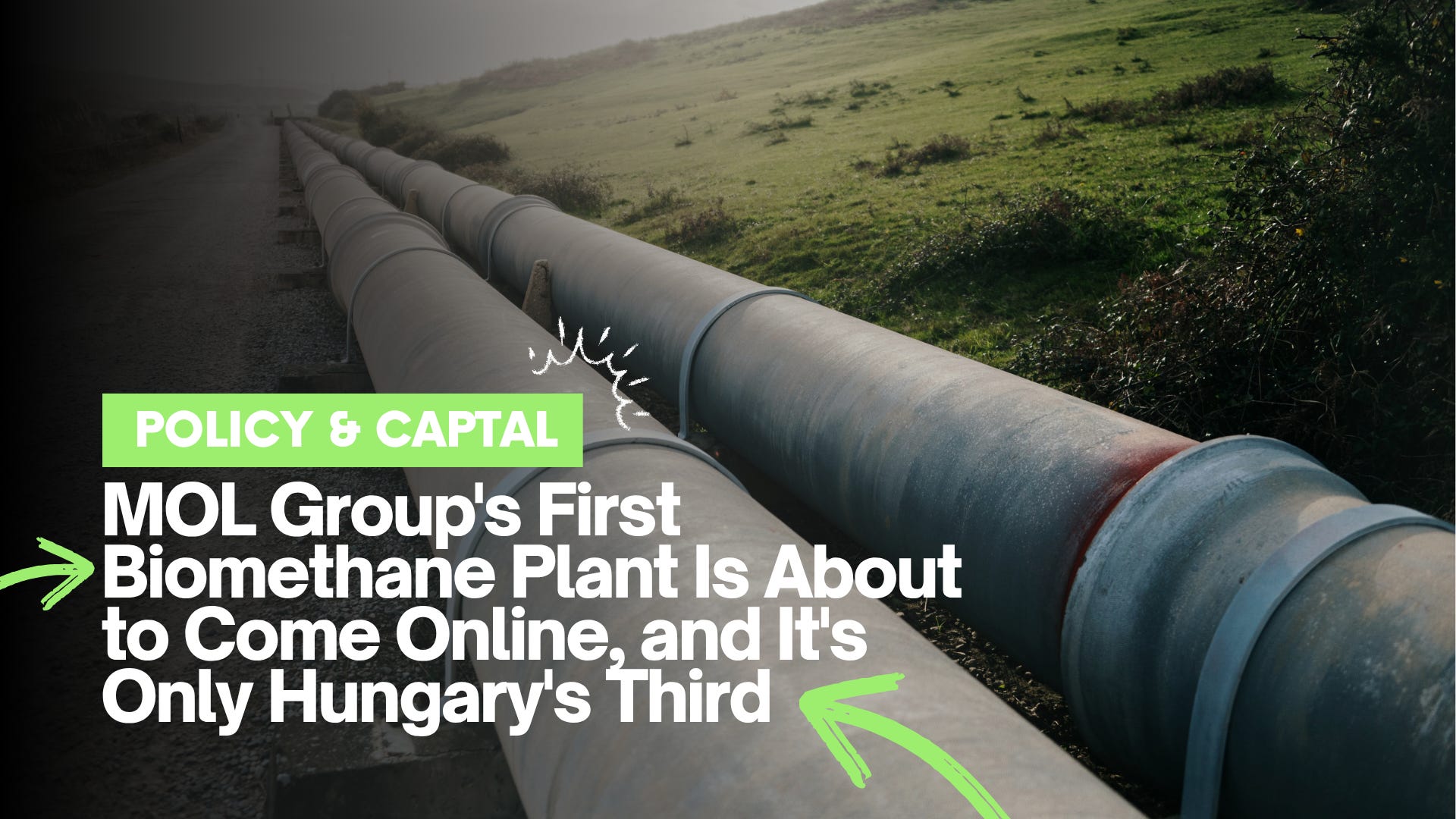
MOL Group's First Biomethane Plant Is About to Come Online, and It's Only Hungary's Third
🇭🇺 Hungary | Renewables Now
MOL Group is expanding its Szarvas biogas plant, acquired from BayWa AG in 2023, with a new biomethane upgrading unit that will make it the company's first biomethane facility and only the third such plant in Hungary. Expected to be completed by the end of 2026, the unit will produce more than 7 million cubic metres of biomethane annually, equivalent to the annual gas consumption of approximately 8,500 households, and will be fed directly into Hungary's national gas network. The plant currently processes over 111,000 tonnes of organic waste annually, including meat industry residues, agricultural substrate, slurry, and manure, producing nearly 12 million cubic metres of biogas and 24 GWh of electricity per year. The biomethane unit will purify that gas to grid-injection quality and carry internationally recognised ISCC green certification. MOL's Vice President for New and Sustainable Businesses was candid about the conditions required: unlocking biomethane at a national scale in Hungary will need not just capital, but a coherent support system, clear regulation, and active cooperation between the agricultural and energy sectors. MOL says it intends to apply what it learns at Szarvas to evaluate further acquisitions and greenfield investments across Central and Eastern Europe.

Lithuania Moves to Lower Domestic Biomethane Prices, and the Sector Is Already Accelerating Ahead of It
🇱🇹 Lithuania | InfoErdvė
Lithuania is taking regulatory steps to reduce domestic biomethane prices as part of a broader effort to deepen its local green energy market and reduce dependence on fossil gas imports. The move comes as the sector is already expanding rapidly: the country now has 12 operational biomethane plants with a combined capacity of 67 MW, and guarantees of origin issued in the first two months of 2026 were 2.4 times higher than the same period in 2025. Amber Grid, Lithuania's gas transmission operator, has also joined the European ERGaR Hub, enabling standardised cross-border certificate trading and opening Lithuanian producers to major green energy buyers, most notably Germany. The pricing intervention signals that Lithuania is moving beyond the build phase and into market architecture. The question is no longer whether biomethane can be produced here, but whether the commercial conditions can sustain it at scale.
Burckhardt Compression Acquires a 57-Year-Old Italian Biogas Compressor Specialist, A Sign That the Equipment Supply Chain Is Being Priced In
🇨🇭🇮🇹 Switzerland / Italy | Gasworld
Swiss compression giant Burckhardt Compression has signed an agreement to acquire Fornovo Gas, an Italian manufacturer founded in 1969 and one of Europe's leading producers of mid-sized reciprocating compressors for biogas and CNG applications. The company employs approximately 120 people and has built a strong market position across Europe over more than five decades. The acquisition expands Burckhardt's biogas offering at a moment when upgrading and compression infrastructure is becoming a genuine bottleneck in European biomethane deployment. What's worth noting is the signal this sends: industrial equipment players are consolidating the supply chain in anticipation of a significant scaling wave.
Greenlane and Panasonic Strike a Local Manufacturing Deal That Repositions Brazil as a Biomethane Production Hub
🇧🇷 Brazil | Bioenergy Insight
Canadian biogas upgrading specialist Greenlane Renewables has formalized an agreement with Panasonic do Brasil to manufacture its next-generation Cascade LF landfill gas upgrading technology locally, at Panasonic’s facility in São José dos Campos, São Paulo state. Initial investment is expected to reach between 8 million and 10 million Brazilian Reais, approximately €1.6 to €2 million, with Panasonic covering facility modifications, tooling, production equipment, and working capital, while Greenlane retains control of product design, supply chain management, sales, and commissioning. The first system is targeted for delivery by the end of 2026. Greenlane’s CEO described Brazil as a priority launch market, citing established biofuels infrastructure, abundant organic feedstocks, and a supportive environment for biomethane production. Industry forecasts point to a potential sevenfold increase in Brazil’s biomethane output by 2035, at a compound annual growth rate of approximately 21%.
Project Spotlights
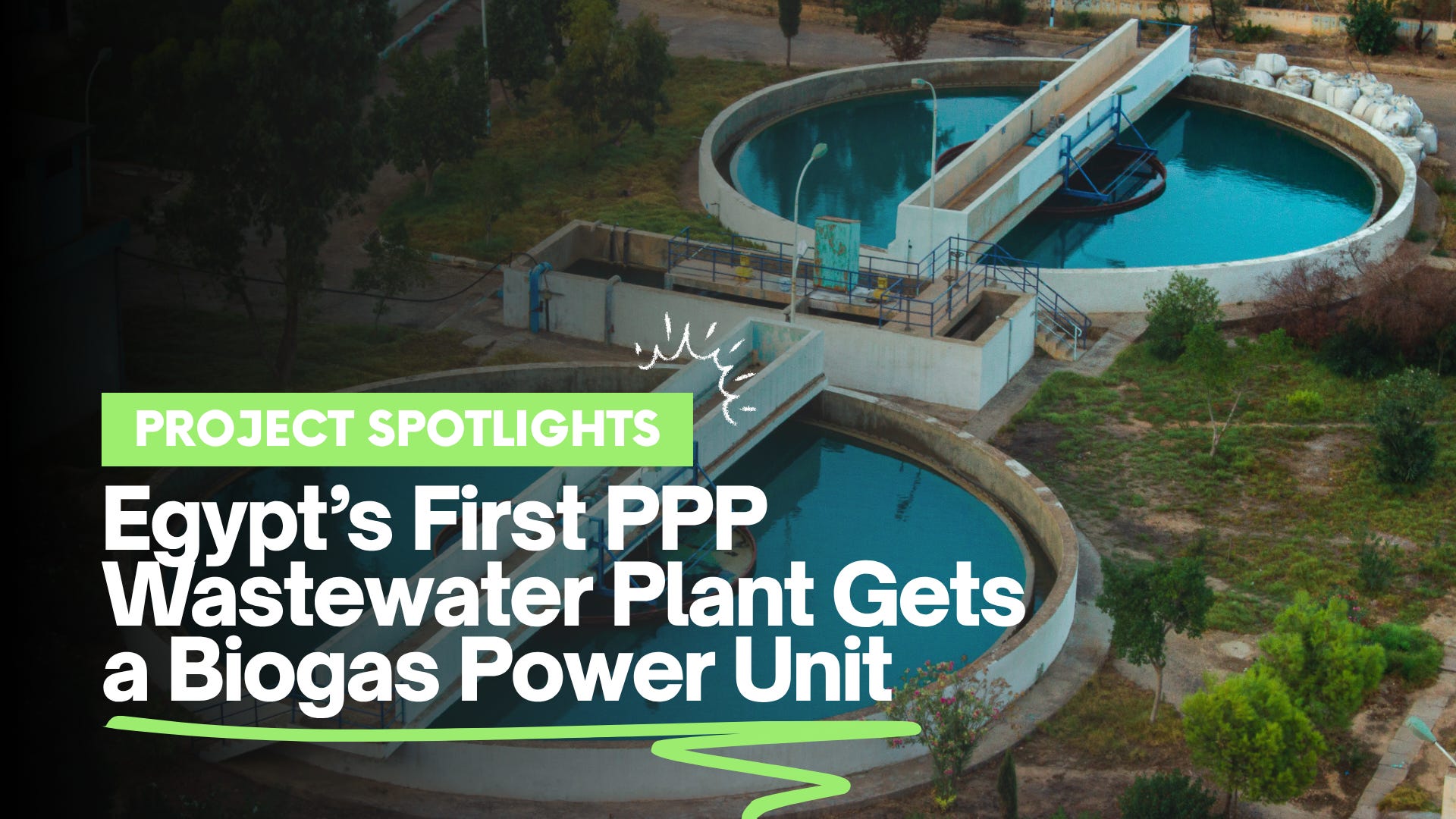
Egypt’s First PPP Wastewater Plant Gets a Biogas Power Unit, A Retrofit Model That Could Scale Across Africa’s Largest Economy
🇪🇬 Egypt | Smart Water Magazine
Joint venture Orasqualia, formed by Orascom Construction and AqualiaME, has reached an agreement with Egypt’s New Urban Communities Authority to install a biogas power generation unit at the New Cairo Wastewater Treatment Plant. Operational since 2013 as Egypt’s first public-private partnership wastewater project, the plant will use its new unit to convert biogas produced during sewage treatment into on-site electricity, reducing the facility’s reliance on external energy and improving its overall environmental performance. The retrofit pathway is what makes this significant: you don’t need a new facility to start capturing biogas value. You need the right agreement structure and the willingness to treat an existing waste stream as an energy asset. That logic is directly replicable across Egypt’s substantial wastewater estate, and across the wider African continent, where hundreds of operational wastewater plants are producing biogas that is currently flared or vented.
Brazil’s Biorrota Project Puts a 74-Tonne Biomethane Truck on the Sugar Route to the Port of Santos, Fuelled by the Same Cane It’s Carrying
🇧🇷 Brazil | Click Petróleo e Gás
The Biorrota project, developed with Coperçúcar and transport operators on Brazil's sugar export corridor, has deployed a biomethane-powered 6×4 heavy truck with nine axles and a 74-tonne capacity on one of the country's most demanding logistics routes, from sugarcane mills to the Port of Santos. The fuel is produced by the anaerobic digestion of vinasse, a residue from the sugarcane ethanol process, meaning the truck is powered by a by-product of the commodity it is transporting. With extended tanks, the vehicle achieves a range of up to 700 km, and the engine delivers 460 horsepower and 2,300 Nm of torque. The transmission was tuned specifically for heavy-load gas operation, including a retarder for the steep descent of the Serra de Santos. If the economics hold, it opens a template for closed-loop fuel cycles in other agricultural commodity chains where organic residues are currently treated as disposal problems rather than energy assets.
Tech, Science & Innovation
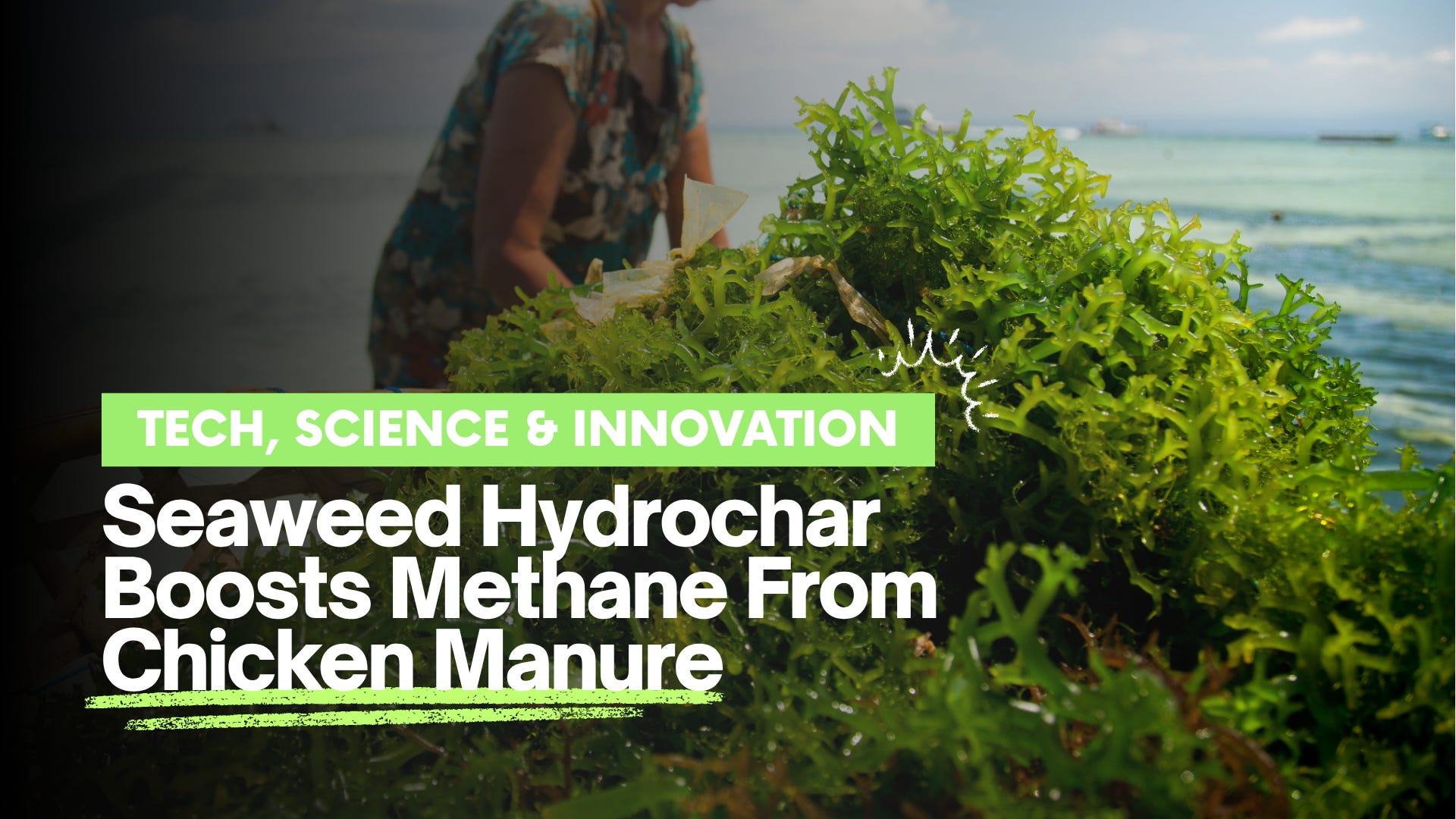
Seaweed Hydrochar Modified With Cobalt Boosts Methane From Antibiotic-Contaminated Chicken Manure by 25% While Cutting Resistance Genes by 65%
🇨🇳 China | EurekAlert / EurekAlert!
Researchers at Shenyang Agricultural University have demonstrated that a cobalt-modified hydrochar derived from Enteromorpha, a green macroalga responsible for large-scale coastal bloom events, can significantly improve anaerobic digestion performance when treating antibiotic-contaminated chicken manure. The best-performing treatment increased methane production by 25% compared to controls, achieved 37.4% removal of the antibiotic sulfadimethazine, and reduced sulfonamide resistance genes sul1 and sul2 by 65.66%. The mechanism operates through strengthened direct interspecies electron transfer, effectively making the microbial communities in the digester more cooperative under antibiotic stress. The material also enriched syntrophic bacteria critical to methane-producing ecosystems. Antibiotic-contaminated livestock manure is one of the most difficult feedstocks in anaerobic digestion. A material that simultaneously improves methane yields, removes antibiotic residues, and reduces resistance gene spread addresses three distinct problems in a single process step. Industrial-scale validation is still required, but the architecture of the solution is compelling.
Spain's Turn2X Plant Claims a European First: Synthetic Methane From Green Hydrogen and Biogenic CO₂, Injected Directly Into the Gas Grid
🇪🇸 Spain | Click Petróleo e Gás
Turn2X's T2X project in Miajadas, Extremadura, backed by the European Commission through the third auction of the European Hydrogen Bank, is producing renewable natural gas by combining green hydrogen with biogenic CO₂ captured from a nearby bioethanol plant, using Power-to-Gas technology. The resulting high-purity synthetic methane has been successfully injected into Gas Extremadura's distribution network, a process the company describes as a European first for direct grid supply. The plant is targeting 9 MW of electrolysis capacity and approximately 6,390 tonnes of renewable hydrogen production over its first decade, with financing contracts expected in the final quarter of 2026 and a fixed European premium of €0.62 per kilogram of certified hydrogen produced over ten years. The relevance for the biogas sector extends beyond the headline: biogenic CO₂, a by-product of biomethane upgrading, is precisely the feedstock this process requires. As biomethane production scales across Europe, the CO₂ currently vented or sequestered becomes a valuable input for synthetic gas production. The two pathways are not in competition; they are potentially complementary layers of a converging renewable gas architecture.
Osaka Gas Converts Used Bioplastic Bento Containers Into Biogas And Shows That Sewage Plants Can Accept Entirely New Waste Streams
🇯🇵 Japan | World Bio Market Insights
Osaka Gas, in collaboration with the city of Osaka and Osaka Metropolitan University, has conducted a demonstration experiment converting used bioplastic bento containers from a university cafeteria into biogas at a municipal sewage treatment facility. Nearly 1,000 containers were decomposed into lactic acid, which was then introduced into sewage sludge in a digester tank. The process ran smoothly, and previous smaller-scale tests showed that lactic acid additions can increase biogas production from sewage sludge by approximately three times. The company estimates that around 3,500 containers could generate enough biogas to supply roughly 30 households daily. A commercially deployable process is targeted for around 2030. The broader implication is significant: this frames the sewage treatment facility not just as a waste processor, but as an integrated receiver of multiple organic waste streams simultaneously, each contributing to a higher-yielding biogas output. Japan’s government target of two million tonnes of bioplastic use by 2030 would make this feedstock pathway increasingly material at scale, and a practical end-of-life solution for bioplastics is one of the sector’s most persistent unsolved problems.
Expansion & Trends
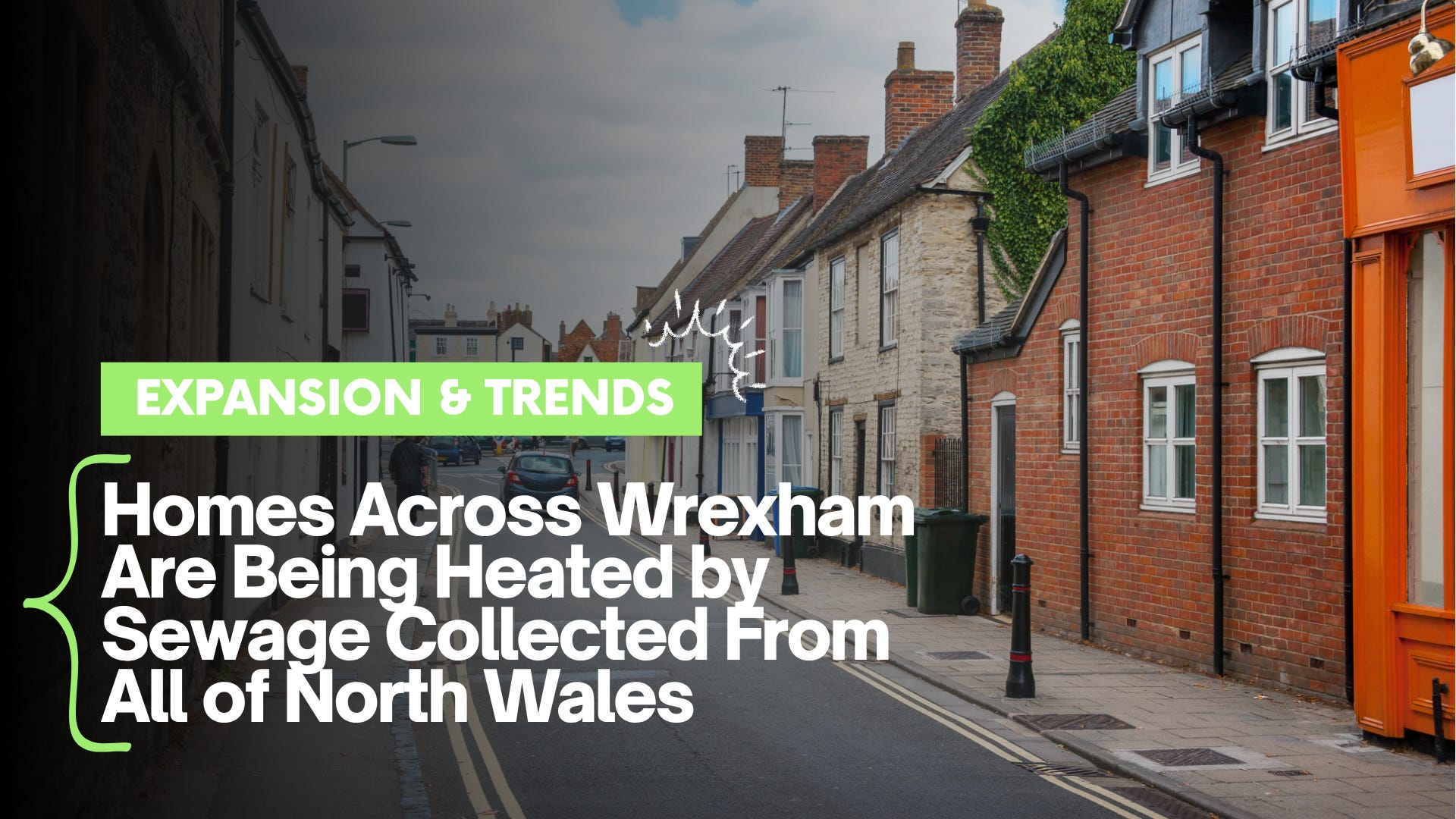
Homes Across Wrexham Are Being Heated by Sewage Collected From All of North Wales And Most People Had No Idea
🏴 Wales, UK | Wrexham.com
Welsh Water's advanced anaerobic digestion facility in Wrexham processes sewage sludge transported from wastewater treatment works across the entire North Wales region, including Ruthin, which serves a population of over 6,400 and discharges to the Afon Clwyd. The sludge is processed under high pressure, producing methane that is cleaned and injected directly into the National Grid. The result: Wrexham residents are heating their homes and cooking using energy recovered from human waste collected across a whole region. Welsh Water has also invested more than £5 million in its Ruthin site to reduce phosphorus discharge levels. The facility is energy self-sufficient, combining biogas output with on-site solar. A regional water utility built a functioning circular energy system from wastewater, integrated it into the national gas grid, and most of the public, including a visiting Senedd Member, had no idea it was happening. This is what embedded biogas infrastructure looks like in practice.
44,000 Households Recycled 95 Tonnes of Food in the First Week of a New Collection Service, All of It Going to Anaerobic Digestion
🇬🇧 United Kingdom | Greater Birmingham Chambers
Cannock Chase District launched its new food waste collection service on 27 April, distributing seven-litre indoor caddies, 23-litre outdoor kerbside caddies, and compostable liners to approximately 44,000 households as part of England's national mandatory food waste separation rollout. In the first week alone, residents recycled over 95 tonnes, all of it sent to an anaerobic digestion facility in Cannock, where it is converted into renewable energy, with resulting digestate returned to agriculture as a soil improver. The council's head of operations noted that average households discard approximately £800 worth of edible food annually, and that participation in the scheme can drive both waste reduction and behavioural change. The result, 95 tonnes in week one, points to something consistent across every mandatory food waste rollout: when infrastructure is provided, and the pathway is clear, people participate. The feedstock is available. The AD capacity exists. The missing link, repeatedly, has been the collection system. Mandatory household food waste separation is the unlock, and England is now delivering it nationally.
We Are Biogas is a curated weekly newsletter covering the global biogas, biomethane, RNG, and anaerobic digestion landscape.
Want to be featured? Email: alexandra@wearebiogas.com