


Exciting news for the We Are Biogas community!
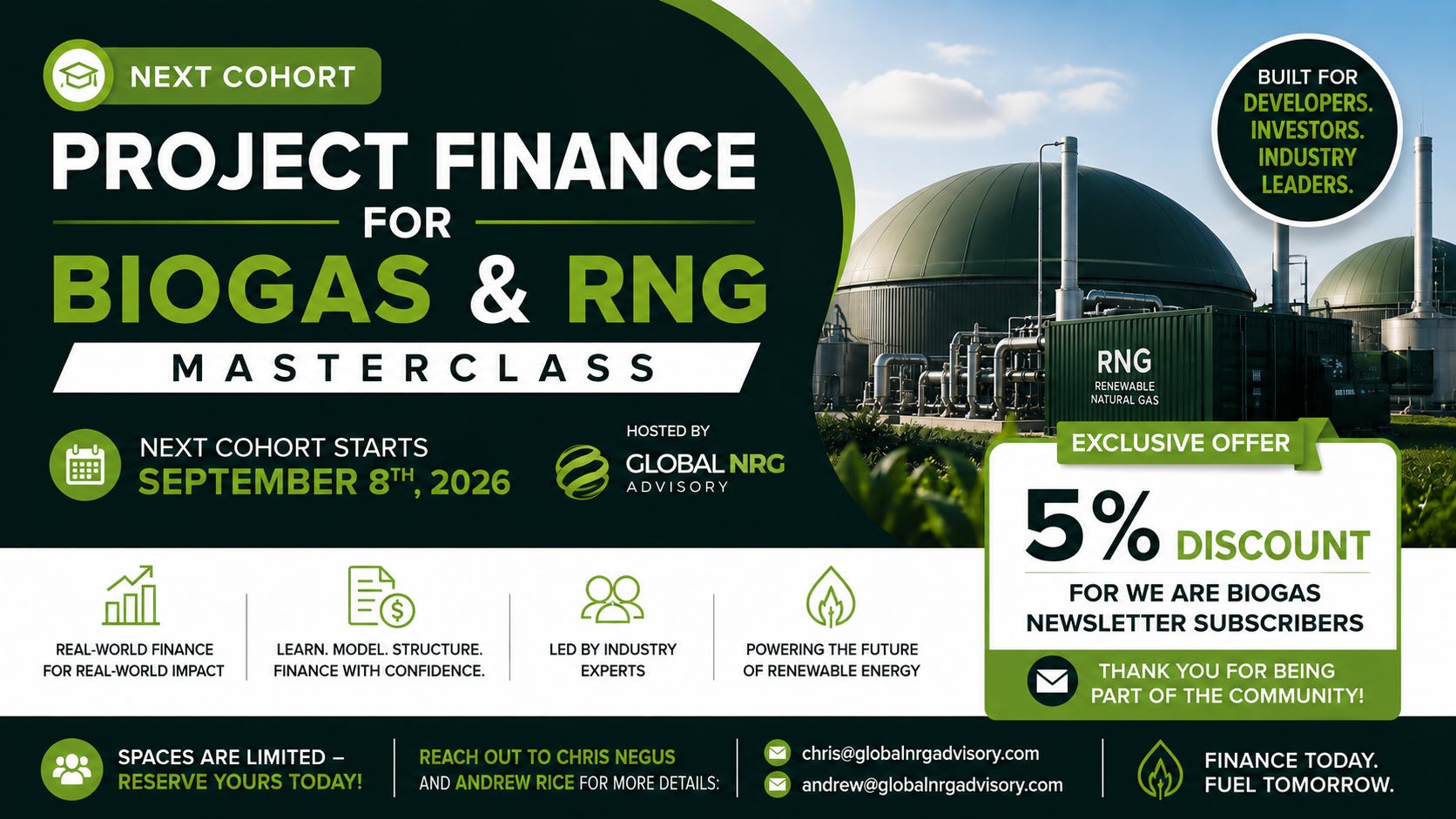
I’ve teamed up with the incredible team at Global NRG Advisory to bring you something that has been missing from this industry for far too long: a dedicated Project Finance Masterclass for biogas and biomethane professionals.
How do you actually fund a biogas project? That’s exactly what Chris Negus and Andrew Rice are breaking down across six live, expert-led modules, starting in September.
Cohorts are capped at just 15 seats. As a We Are Biogas subscriber, you have access to an exclusive 5% discount!
This is the kind of practical knowledge the industry actually needs. I couldn’t be more thrilled to share it with you.
👉 DM Chris Negus to get the details and secure your discounted seat!
We Are Biogas Exclusive
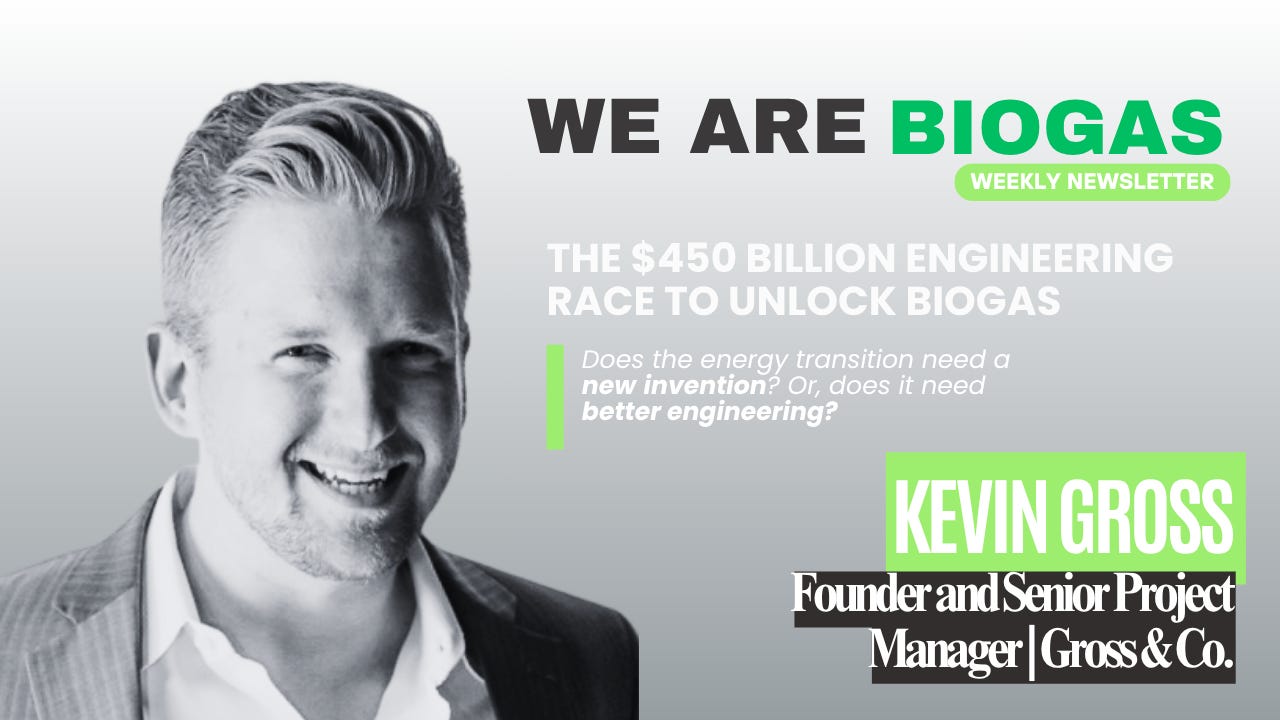
Inside the $450 Billion Engineering Race to Unlock Biogas
By Alexandra Arndt · May 11
In this week’s exclusive, we move from policy and capital into the industrial machinery that determines whether promising biogas projects actually get built. At the center of the conversation is Kevin Gross, founder of Gross & Co., a senior-led engineering firm that has identified a precise and costly gap in the biogas development pipeline: the front end. With 2,600 operating biogas systems in the US and room for 17,000 more, the constraint isn’t feedstock, technology, or even capital. It’s the slow, expensive, and often assumption-laden work that happens before a project can attract financing. Kevin’s answer is an assumptions-first methodology and a compressed six-week sprint to a Class 2 estimate — roughly 85% faster than industry standard. What emerges is a reframing of engineering not as a technical service layer, but as the primary risk management tool in the waste-to-value economy. The $450 billion opportunity on the table will not be unlocked by better science alone. It will be unlocked by better front-end definition.
“Investors do not need fake certainty. They need a credible decision framework. Once the unknowns are named and bounded, the conversation gets better.”
-Kevin Gross | Founder, Gross & Co.
Policy & Capital
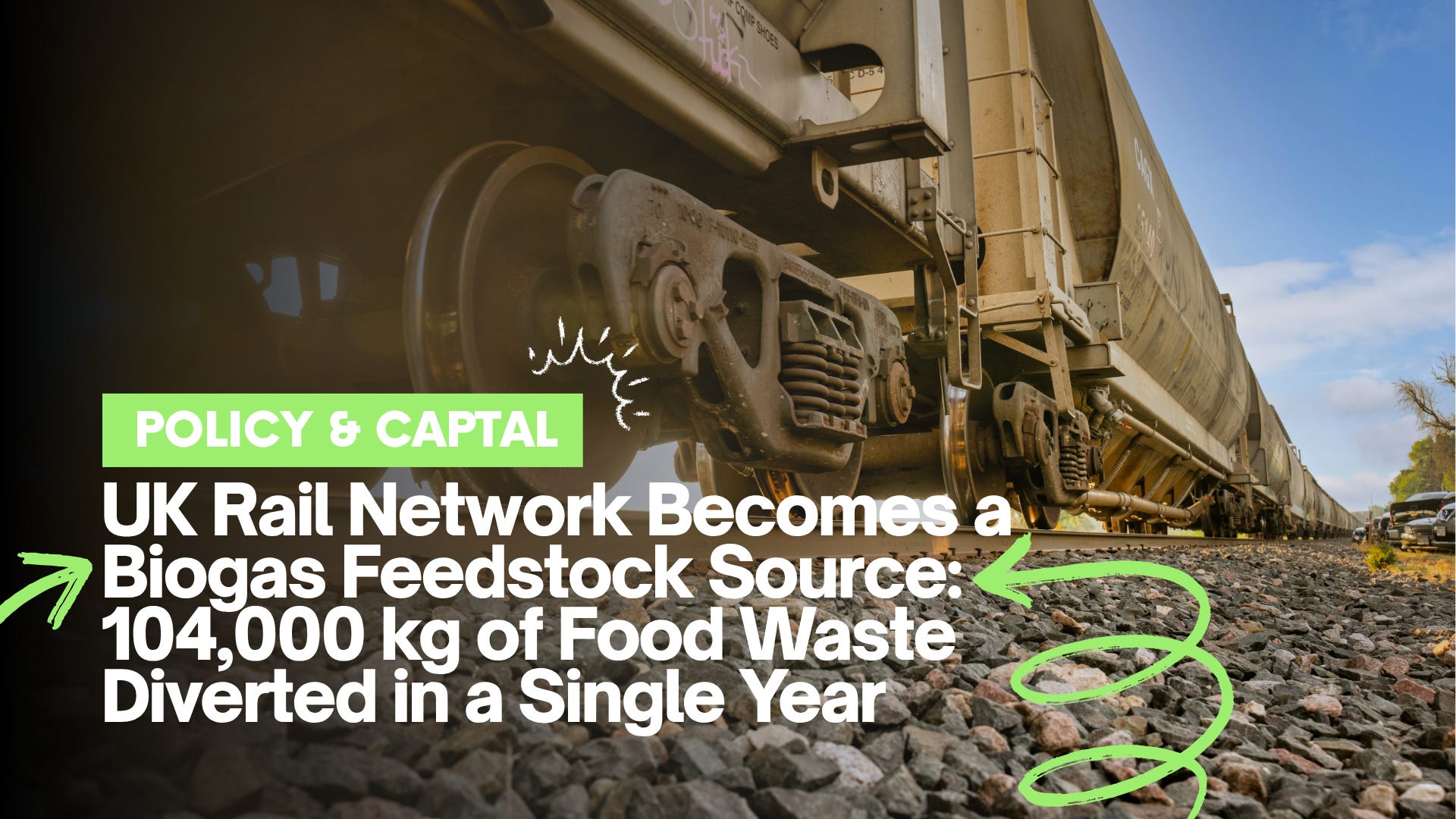
UK Rail Network Becomes a Biogas Feedstock Source: 104,000 kg of Food Waste Diverted in a Single Year
🇬🇧 United Kingdom | Railway PRO
Greater Anglia has diverted over 104,000 kg of food waste from its rail network into anaerobic digestion over the past year. A more than fourfold increase from the previous reporting period. The shift followed the UK's Simpler Recycling workplace regulations and infrastructure upgrades across stations and depots. All collected waste is processed by Carlisle Support Services into biogas and biofertilizer, diverting 94% of the operator's food waste from landfill. What makes this notable is not the volume alone, but the mechanism: waste streams embedded in transport infrastructure, often overlooked, are being systematically redirected into the biogas supply chain. Rail networks as feedstock sources represent a largely untapped but operationally scalable input for AD.

Hungary Has the Ambition, the Feedstock, and the Targets; Now it Needs 20–25 Biomethane Plants to Get Built
🇭🇺 Hungary | CEE Energy News
At the Budapest Biogas Summit, industry figures revealed that Hungary plans to build 20 to 25 larger biomethane plants in the coming years, as the country targets a tripling of its total biogas production to 600 million cubic metres by 2030. Biomethane production currently sits at just 5.4 million cubic metres annually, produced by only two plants, against a target of 184 million cubic metres. The Summit made clear that the challenge is not ambition but execution: the regulatory and incentive framework has lagged behind stated policy goals, and stakeholders are calling for stable, bankable support schemes to attract the investment required. The agricultural-energy integration dimension was a recurring theme; biomethane's potential here is inseparable from how effectively the sector mobilises farmers as active participants in the supply chain.
Latvia Just Approved €5M to Let Small Producers Access the Gas Grid Without Individual Connections
🇱🇻 Latvia | Gasworld
The Latvian government has approved a €4.7 million investment to construct two new biomethane injection points in Ragana and Rēzekne, operated by transmission system operator Conexus Baltic Grid. The infrastructure allows smaller producers to compress biomethane and transport it by container to centralized entry points, removing the barrier of individual grid connections. Latvia has now effectively cut its dependence on Russian gas and is actively building a self-reliant renewable gas architecture. This latest approval builds on an earlier injection point in Džūkste and an oversubscribed support programme that attracted demand more than triple its initial allocation. The signal is clear: investor appetite for Latvian biomethane is running well ahead of available public funding.
Project Spotlights
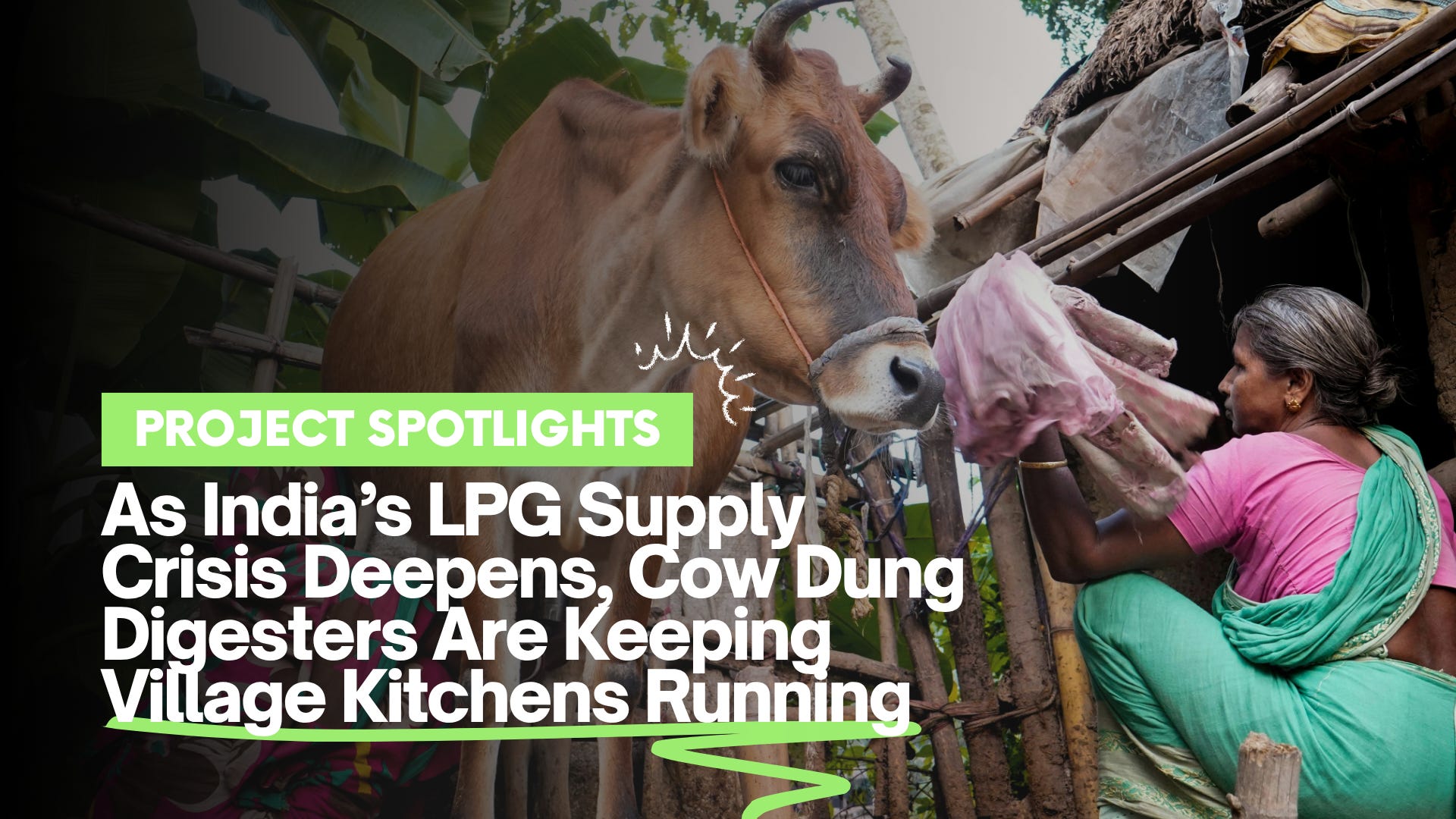
As India’s LPG Supply Crisis Deepens, Cow Dung Digesters Are Keeping Village Kitchens Running
🇮🇳 India | South China Morning Post
In Uttar Pradesh villages, households equipped with biogas digesters fed by cow dung are cooking through an LPG supply crisis that is generating long queues across much of India. The energy crunch, exacerbated by instability in the Middle East affecting LPG imports, has given fresh visibility to decentralised biogas as genuine energy infrastructure rather than a rural curiosity. India consumes over 30 million tonnes of LPG annually, importing more than half its needs. In a Hindu-majority nation where cattle are culturally central, cow dung carries multi-layered practical value: biogas for cooking, digestate for fertiliser, and energy independence from volatile import markets. This is not a technology story; it is a resilience story. And it is playing out at household level, right now.
Institutional Capital Arrives in Italian Biomethane as Sosteneo Moves to Acquire a Project Portfolio
🇮🇹 Italy | Renewables Now
Italian infrastructure investor Sosteneo, part of the Generali Investments ecosystem and manager of over €700 million in clean energy funds, is expanding its biomethane exposure through Italian project portfolio acquisitions. Italy's biomethane sector has become one of the most active investment environments in Europe, underpinned by the NRRP-funded auction system, 15-year feed-in tariffs, and capital grants. With nearly 572 projects funded and approximately 2.3 billion cubic metres of new annual capacity in development through 2026, Italy has built the pipeline that institutional capital is now following. Sosteneo's move reflects a broader pattern: as European biomethane exits the development phase, infrastructure-grade investors are arriving to consolidate early-mover assets into managed long-term portfolios.
HAM Group Has Biomethane at Every Pump Across 140+ European stations
🇪🇸 Spain / Europe | Bioenergy Insight
Spain’s HAM Group has completed the rollout of bioLNG and bioCNG across its entire service station network, more than 140 stations across Spain and wider Europe, following a process initiated in late 2025. The key commercial signal here is interoperability: existing gas-powered vehicles require no modification to refuel with biomethane. This removes one of the most persistent demand-side barriers in transport decarbonisation. HAM’s rollout, combined with interest from operators like UK retailer Marks & Spencer, which is expanding its bioCNG heavy goods vehicle fleet toward 300 trucks, suggests that biomethane as a transport fuel is transitioning from pilot to mainstream procurement. The refuelling network is now in place; adoption dynamics will depend on whether fleet operators treat this as a strategic shift or a compliance option.
Tech, Science & Innovation
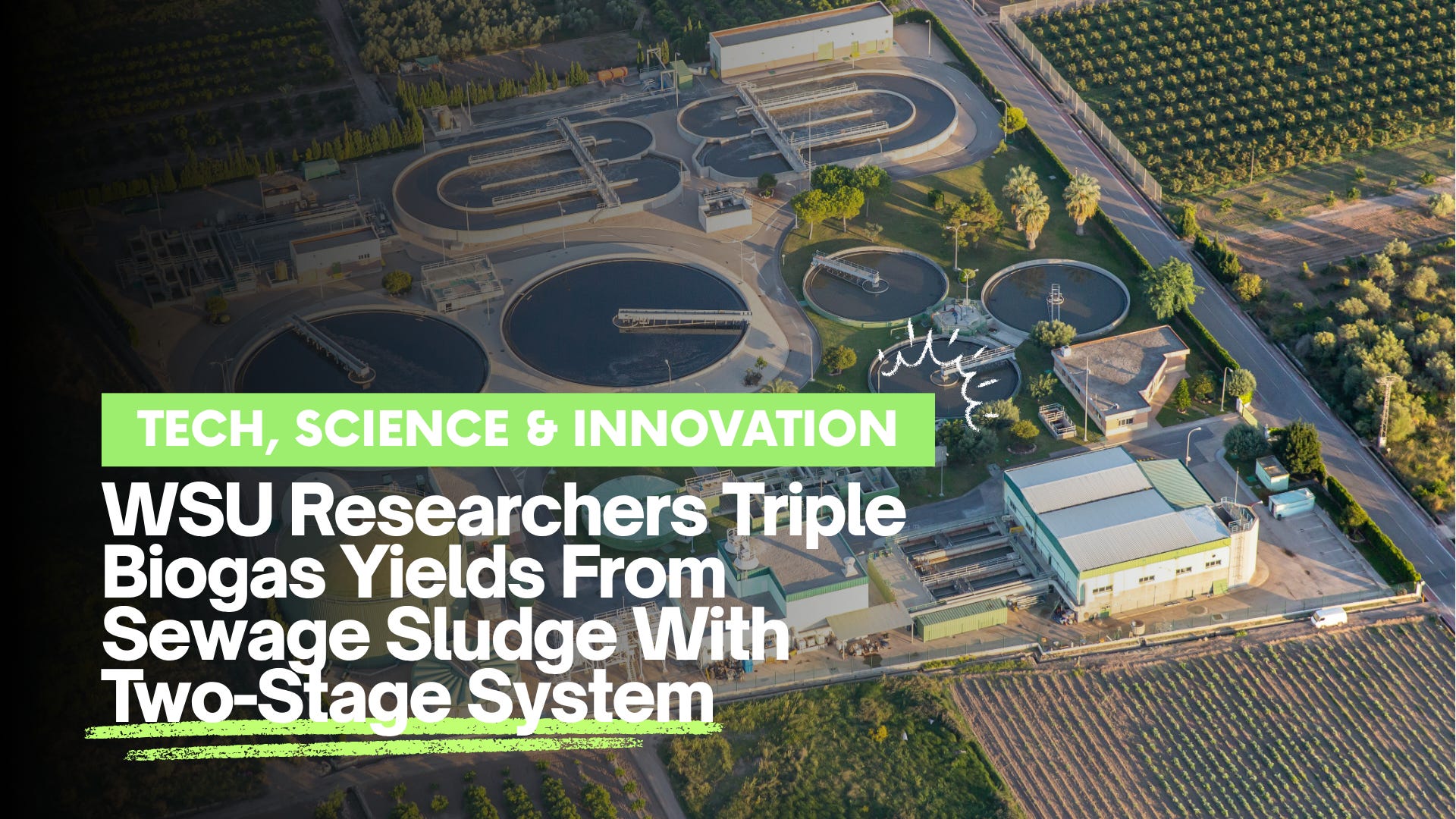
WSU Researchers Triple Biogas Yields From Sewage Sludge With Two-Stage System
🇺🇸 United States | New Atlas
Researchers at Washington State University have developed a two-stage process, the Advanced Pretreatment and Anaerobic Digestion (APAD) system, that tripled renewable natural gas output compared to conventional anaerobic digestion, achieving an overall carbon conversion efficiency of 83% from sewage sludge. The system combines an Advanced Wet Oxidation and Steam Explosion pretreatment stage to break down resistant organic compounds with a secondary digestion phase, then upgrades the resulting biogas using a novel bacterial strain, Methanothermobacter wolfeii, that converts residual CO₂ into additional methane. Beyond the yield gains, the process also cuts sludge disposal costs from $494 to $253 per dry ton. The team has patented the bacterial strain and is pursuing an industrial scale-up partner, with funding from the US Department of Energy. The broader implication is that wastewater treatment, currently a significant energy consumer and greenhouse gas emitter, could be restructured into a net energy producer at significant scale.
Biogas-to-Hydrogen Via Ceramic Membrane: A New Convergence Technology
🇪🇺 Europe (Spain / Norway) | Youris
At a wastewater treatment plant in Navarra, Spain, the EU-funded CARMA-H2 project is testing a proton-conducting ceramic membrane technology that converts biogas directly into low-carbon hydrogen in a single integrated step. Developed by CoorsTek Membrane Sciences (Oslo) and coordinated by the Industrial Association of Navarra, the system eliminates multiple conventional conversion stages, compresses hydrogen electrochemically in the same process, and produces capture-ready biogenic CO₂ as a by-product eligible for carbon credits. The demonstration site feeds on biogas already produced from the plant's existing waste management operations. What is emerging here is a convergence pathway: biogas infrastructure enabling hydrogen production, with the CO₂ by-product reusable in agri-food. For policymakers looking to connect biogas, hydrogen, and carbon markets in a single investment, this is worth watching closely.
Researchers Just Certified a Biogas Pathway From Açaí Seeds That Doesn't Exist Anywhere Else in the World
🇧🇷 Brazil | G1 Globo
Researchers at the State University of Amapá have received a technical and economic viability certificate for a project converting açaí seeds and other Amazonian organic residues into biogas via anaerobic digestion. The purified output, biomethane, can directly substitute LPG cooking cylinders. The researcher leading the project noted that biogas from açaí, coconut, or Brazil nuts is virtually unknown globally, making this a genuinely novel feedstock pathway. The project is being positioned explicitly within the context of Amapá's energy identity: a state preparing for oil investment but seeking to anchor its energy future in locally produced, sustainable resources. This is a small project with a large framing, waste-to-gas as a statement of regional sovereignty.
Expansion & Trends
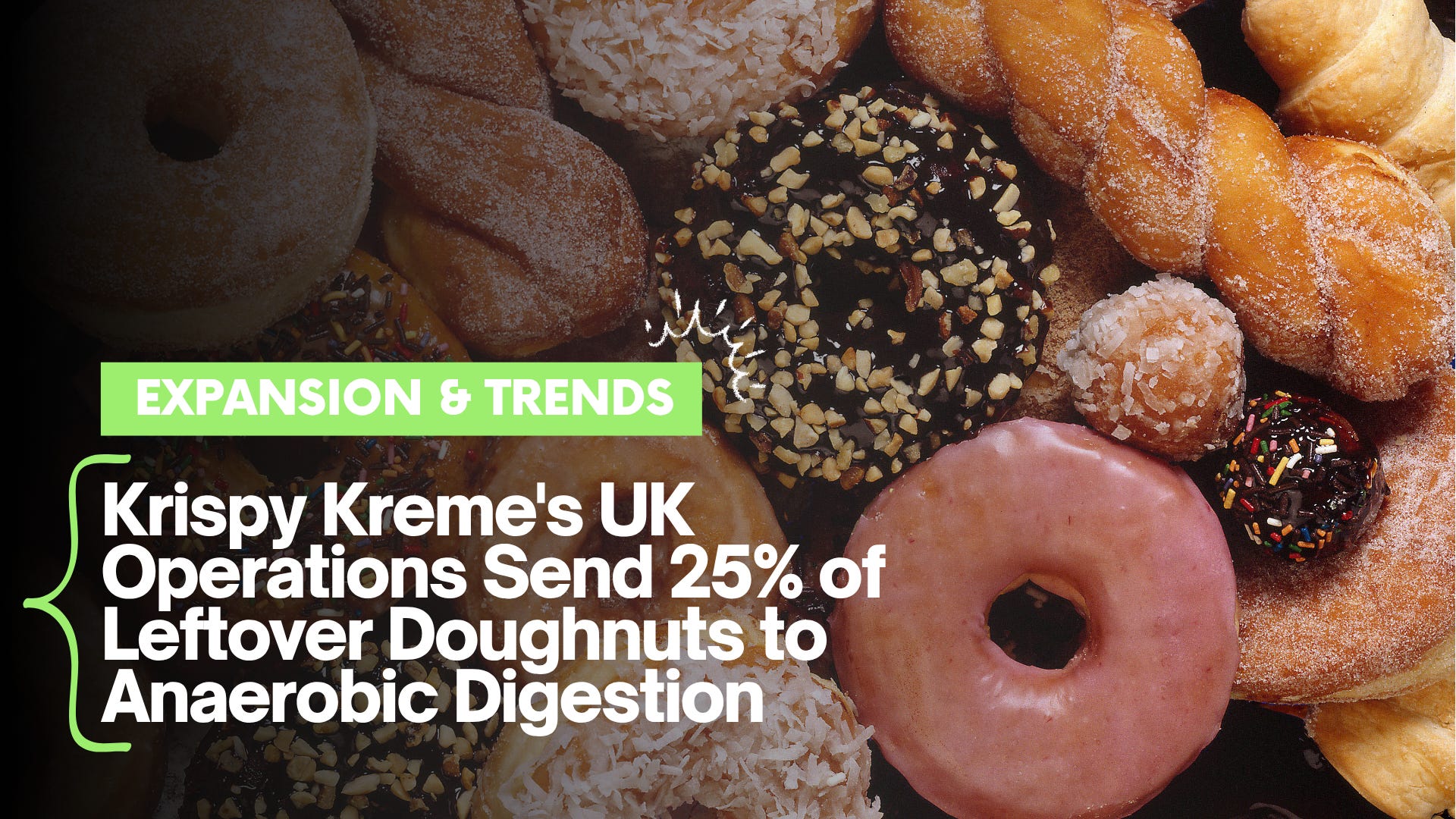
Krispy Kreme's UK Operations Send 25% of Leftover Doughnuts to Anaerobic Digestion
🍩 United Kingdom | Mashed
Krispy Kreme's UK FAQ confirms that 25% of the chain's unsold or unacceptable quality doughnuts are sent for anaerobic digestion and converted into biofuel, with 94% of total food waste diverted from landfill overall. The remaining waste is processed by Leafield Feeds Ltd into animal feed components. This is a small data point, but it belongs to a larger pattern: food service waste streams, from rail operators to doughnut chains, are increasingly being treated as biogas feedstock rather than disposal problems. The contrast with US operations, which generated nearly 30,000 tonnes of food waste in 2024 with limited transparency on disposition, also illustrates how policy and operational culture shape the same company's waste behaviour across markets. Demand for AD capacity is, in part, a function of how seriously food businesses are held to waste diversion standards.
We Are Biogas is a curated weekly newsletter covering the global biogas, biomethane, RNG, and anaerobic digestion landscape.
Want to be featured? Email: alexandra@wearebiogas.com