



We Are Biogas Exclusive
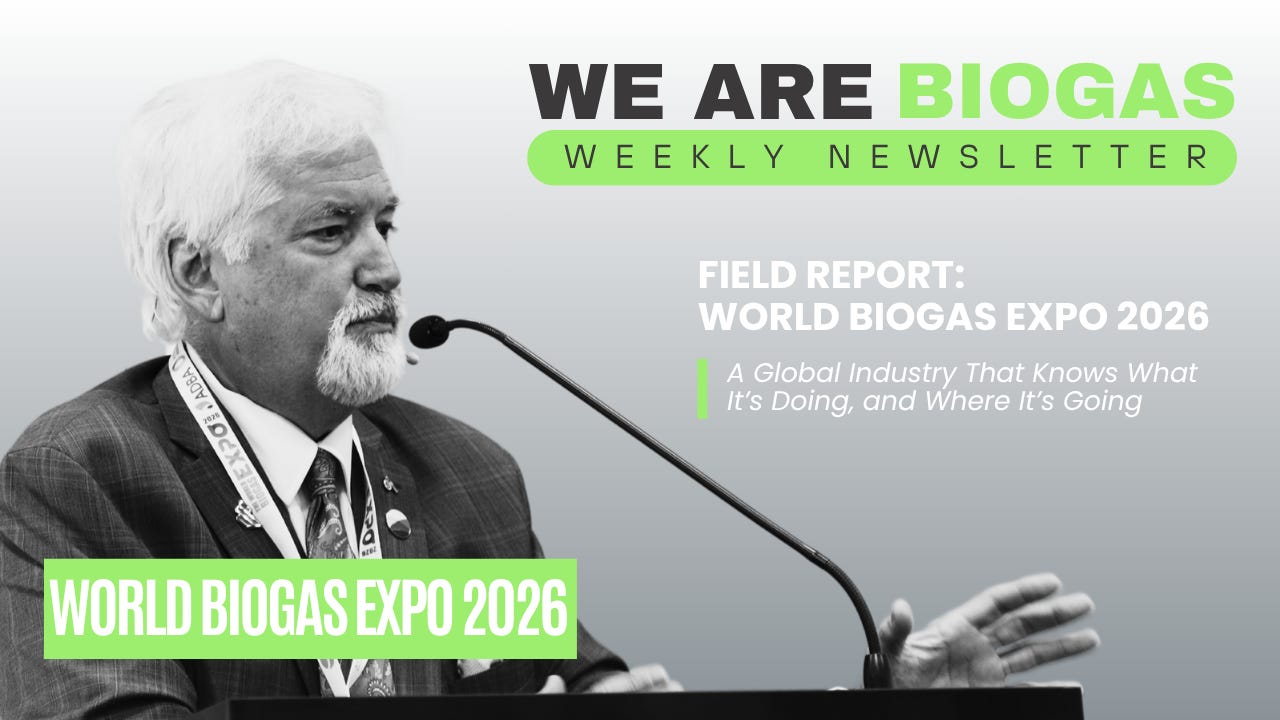
Field Report: World Biogas Expo 2026 — A Global Industry That Knows What It’s Doing, and Where It’s Going
🇬🇧 United Kingdom | We Are Biogas
The World Biogas Association and The Anaerobic Digestion and Bioresources Association (ADBA)‘s World Biogas Expo in Birmingham assembles the actual global biogas industry under one roof. Not a regional delegation. Not a conference of observers. The people building this sector, from across Europe, Africa, Asia, and the Americas, showing up to compare notes and push thinking forward.
This year delivered on every level. The International Energy Agency (IEA) launched BioGRAM, a new geospatial biogas potential map, with Peter Zeniewski‘s framing landing hard: “the potential exists everywhere.” Not a polished conference line. An empirical claim. Biogas potential isn’t a geography problem. It’s an implementation problem. A visit to a CNG Fuels station put it in physical terms, watching trucks from GXO, DHL, Amazon, and Tesco refuel on biomethane at 90% lower emissions than diesel because it works and it’s cost-competitive.
One line from Simona Amerio has stayed with me: “The real catalyst behind the energy transition is not technology. It’s people.”
That’s the mission.
Policy & Capital
One Year After OBBBA, the US Biogas Industry Is Still Waiting on the Tax Credit That Should Be Working
🇺🇸 United States | Waste Dive
One year after President Trump signed the One Big Beautiful Bill Act, key questions about implementation of the 45Z Clean Fuel Production Tax Credit remain unanswered, specifically for manure-derived fuels. The DOE’s updated 45ZCF-GREET model released in June moved things forward on several fronts, adding carbon capture parameters and clarifying treatment of process energy in RNG systems. But the manure emissions calculations that are make-or-break for dairy and swine RNG projects remain unresolved. The American Biogas Council called it plainly: the major updates needed are still unfinished. Until those calculations land, a credit that should be unlocking farm-level investment continues to sit out of reach for the producers who need it most.
Ukraine Plans Four New Biomethane Plants Worth $51 Million as Export Ambitions Grow
🇺🇦 Ukraine | UBN News
Two Ukrainian agribusinesses have announced plans to develop four biomethane facilities representing a combined investment of over $51 million. Vitagro Energy intends to build three plants across the Ternopil, Khmelnytskyi, and Rivne regions of western Ukraine, with a fourth planned by a second agribusiness group. The projects are a direct expression of Ukraine’s growing biomethane export ambitions, following parliamentary legislation enabling gas sales to Europe and the first commercial exports now flowing to Germany. The country’s 11.6 BCM annual feedstock potential from waste and residues alone makes it the European leader in what’s available. Four new plants is how that potential starts becoming infrastructure.
DOE Awards $6.9 Million to Nine Waste-to-Energy Projects Targeting Transportation Fuel Production
🇺🇸 United States | Department of Energy
The US Department of Energy’s Bioenergy Technologies Office and Vehicle Technologies Office have announced $6.9 million in funding for nine waste-to-energy projects across six states, focused on local waste management solutions that produce low-carbon transportation fuels. The projects span two categories: feasibility study development for communities earlier in their planning process, and detailed engineering design work for those closer to construction. Feedstocks include food waste, municipal wastewater sludge, solid waste, and manure. This is patient infrastructure funding, the kind that builds the evidence base and engineering readiness that commercial projects depend on. Nine communities moving from concept to analysis to design is nine communities closer to operational infrastructure.
Project Spotlights
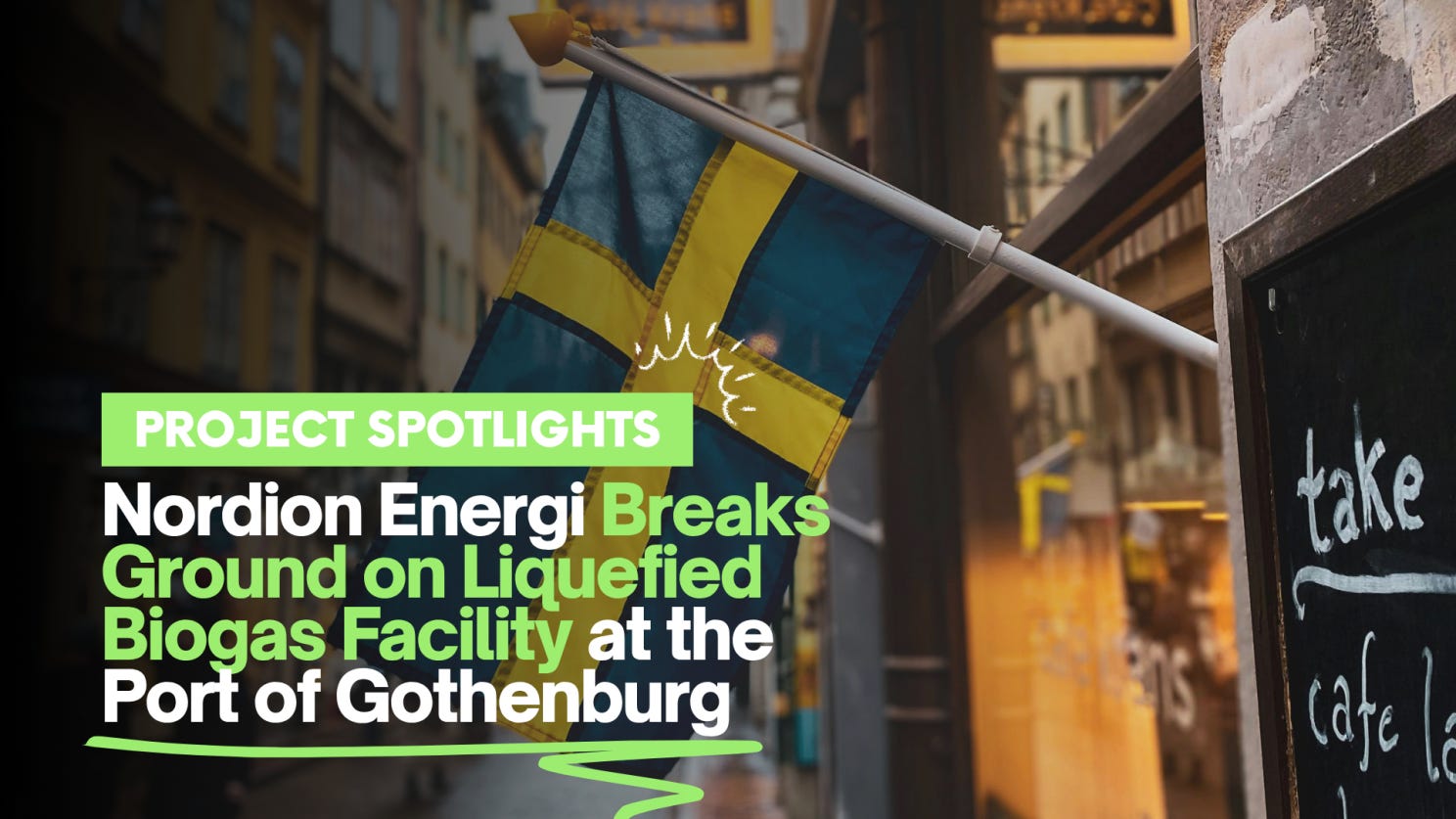
Nordion Energi Breaks Ground on Liquefied Biogas Facility at the Port of Gothenburg
🇸🇪 Sweden | Biomass Magazine
Construction has begun on a liquefied biogas facility at the Port of Gothenburg, owned and developed by Nordion Energi, with completion expected in early 2027. The facility is positioned to play a central role in making Swedish biogas available to the maritime and shipping sector, a demand channel that has historically been difficult to access without liquefaction infrastructure at port. Gothenburg is Scandinavia’s largest port. Building a BioLNG production facility directly at the quayside is not a niche logistics decision. It’s a statement about where Swedish biogas is heading.
Elevion Group Acquires Italian Biogas Specialist BTS Biogas, Including Nine Biomethane Plants in Northern Italy
🇮🇹 Italy | Bioenergy Insight
Netherlands-based Elevion Group has agreed to acquire a 100% stake in BTS Holdings Italy, the parent company of BTS Biogas, a 25-year-old EPC and O&M specialist with approximately 100 employees, active across Italy, France, the UK, and wider Europe. The deal also includes 51% stakes in companies operating nine biomethane plants in northern Italy, three already producing and six in conversion from biogas to biomethane. Once fully operational, the portfolio is forecast to deliver approximately 30 million standard cubic metres of biomethane annually. This is the supply chain consolidating in real time. Experienced operators with existing permitted infrastructure being absorbed into a platform with the capital and ambition to take them further.
Brazil Signs Its First Commercial Biomethane Injection Contract in Santa Catarina
🇧🇷 Brazil | Canal Solar
H2A Bioenergia, operating Brazil’s first ANP-certified biomethane facility using swine waste in Santa Catarina, has signed a contract for commercial biomethane injection. It’s a milestone in a market where regulatory frameworks and certification systems have been building toward this moment for years. The plant uses CSTR-type biodigesters and membrane purification to produce biomethane from pig slurry, with purity exceeding 96%, alongside food-grade CO2 as a co-product. As H2A scales toward 22 new plants and $570 million in investment, the Santa Catarina facility is the reference project that everything else builds from. First commercial injection in a market this large, backed by a mandatory blending framework that started at 1% this year with a trajectory to 10% by 2034, is the kind of signal that changes investment calculus across a sector.
Linden, NJ’s Food Waste-to-RNG Megaproject Hits a Safety Milestone, With Full Operations Coming
🇺🇸 United States | MyCentralJersey
The Linden Renewable Energy facility in New Jersey, a $440 million food waste-to-RNG project being developed by SJI, Captona, and RNG Energy Solutions, has reached a significant safety milestone as it moves toward full commercial operations. When complete, the facility will process up to 1,475 tonnes of organic waste per day, producing 3,783 dekatherms of RNG daily for injection into Elizabethtown Gas’s distribution system. It is on track to be one of the largest food waste-to-biogas facilities in the United States, serving New York City, northern New Jersey, and the broader metro region. Safety milestones are how large AD projects get from construction to commercial operation. This one is close.
Tech, Science & Innovation
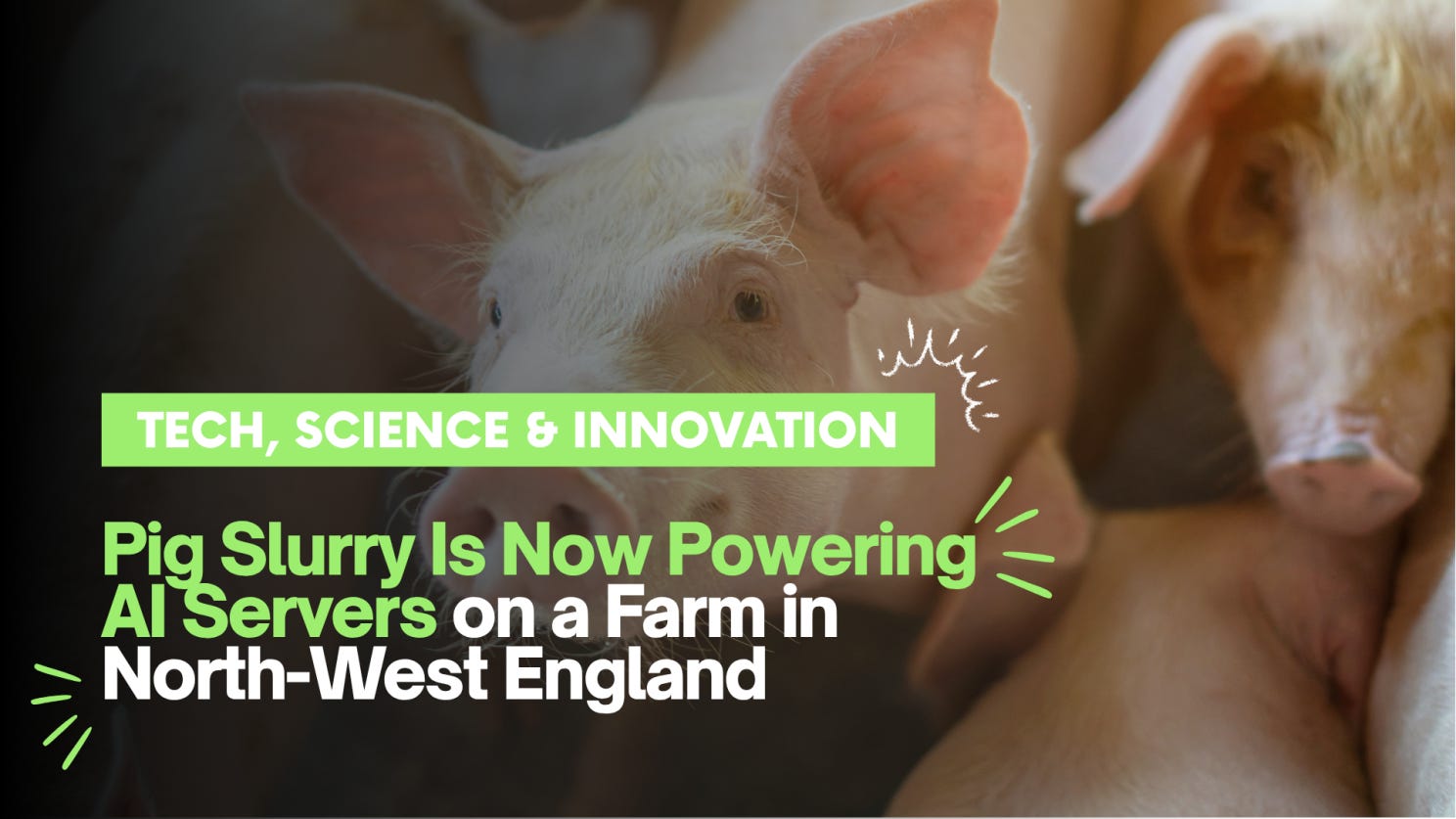
Pig Slurry Is Now Powering AI Servers on a Farm in North-West England
🇬🇧 United Kingdom | FarmingUK
A pig farm in north-west England is using electricity generated from slurry-fed anaerobic digestion to power high-performance AI computing equipment, under a model developed by Easy Compute and its Green Compute network. Instead of exporting surplus electricity to the grid at 8 to 12p per kilowatt-hour, the farm is running commercial AI servers on site. The company claims this can generate returns up to ten times higher, with the potential to reduce the payback period on an AD plant from 12 to 15 years down to around four. The model carries caveats worth noting: independently audited farm-level performance figures haven’t been published, revenue-sharing terms aren’t disclosed, and cryptocurrency income from the Bittensor network introduces volatility. But the underlying concept, biogas electricity as a premium on-site energy product rather than a grid export, is one the sector should be paying close attention to. CEO Josh Riddett put it memorably: “The best clean AI on the market is quite literally running on pig muck.”
Anaergia to Supply AD Technology for Australia’s Goodness Grown Facility, Its First Major Australian Reference Project
🇦🇺 Australia | Bioenergy Insight
Anaergia, through its Australian subsidiary, has signed a contract with RF Corval Pty Ltd to deliver proprietary anaerobic digestion technology and equipment for an advanced AD facility at the Goodness Grown farm production site in Tongala, Victoria. The project marks Anaergia’s first major reference project in the Australian market. Australia’s AD sector has significant untapped potential relative to its agricultural feedstock base, and a project of this profile, with a globally recognised technology provider establishing its first major local installation, is the kind of reference point that opens conversations with other developers and financiers in the market. First projects in new geographies matter disproportionately.
Expansion & Trends
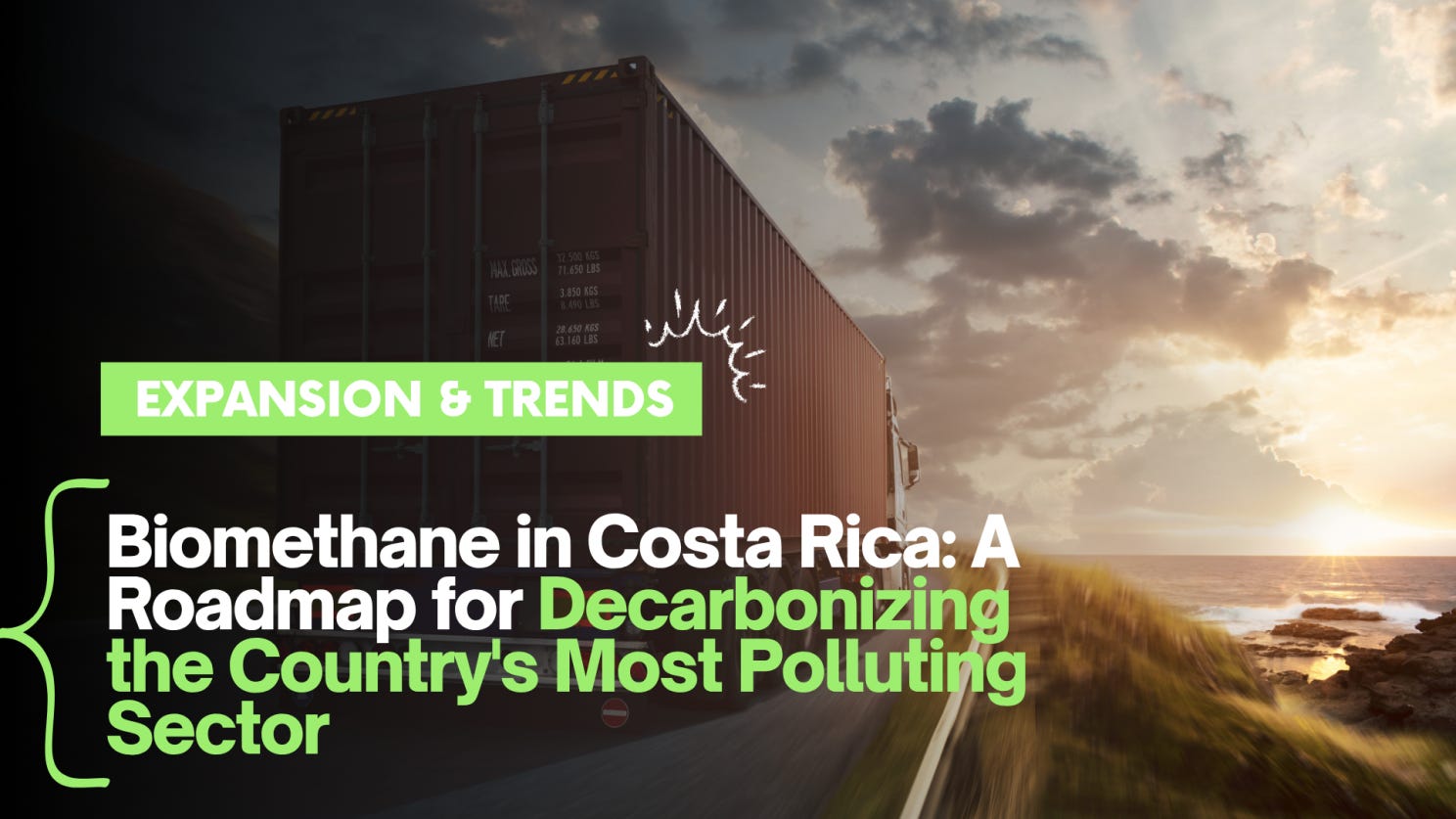
Biomethane in Costa Rica: A CABEI-EU Roadmap for Decarbonizing the Country’s Most Polluting Sector
🇨🇷 Costa Rica | Noticias Ambientales
A study supported by the Central American Bank for Economic Integration and the European Union has identified Costa Rica as having strong potential to adopt biomethane for heavy transport decarbonization, the sector responsible for 37.6% of the country’s polluting emissions. The country has abundant agro-industrial and livestock organic waste streams, strategic logistics corridors suited to refueling infrastructure, and a national planning horizon extending to 2040 that creates a framework for long-term private investment. A CABEI-EU Technological Roadmap 2025 to 2040 prioritizes infrastructure, regulation, and investment to validate biomethane in the transport sector. Central America entering this conversation adds another geography to an already rapidly expanding global picture.
Landfill Gas Now Drives 64% of US RNG Production and 700 More Sites Are Waiting
🇺🇸 United States | American Biogas Council
New data from the American Biogas Council shows that landfill gas now accounts for 64% of all US renewable natural gas production, with 598 landfill gas capture systems providing roughly three-quarters of all biogas captured nationally. Twenty new landfill gas projects came online in 2025, adding 39.9 billion cubic feet of new biogas capture capacity, about 75% of all new US biogas capture capacity added across every sector last year. Total estimated investment in landfill gas facilities has now reached nearly $14.9 billion. And here’s the number that should be driving strategic conversations: approximately 705 additional landfills remain suitable for development, representing up to 455 billion cubic feet of additional biogas annually. The sector’s largest single feedstock category is not tapped out. It’s barely halfway there.
North American RNG Passes 600 Operational Facilities as the RNG Coalition Turns 15
🇺🇸 North America | Bioenergy Insight
The RNG Coalition is marking 15 years of operation alongside a milestone in the sector it represents: more than 600 operational RNG facilities now running across North America. The North American RNG portfolio has reached 604 operational facilities following a rapid period of buildout. From a standing start to a 600-facility continent-wide infrastructure network in 15 years is the kind of compounding that tends to accelerate rather than slow down. The pipeline keeps growing. The sector the Coalition was founded to represent looks nothing like what it looked like in 2011, and that’s the point.

We Are Biogas is an independent media platform covering the global biogas, biomethane, RNG, and anaerobic digestion industry. Subscribe to the weekly newsletter and follow the podcast for in-depth coverage, industry interviews, and sector analysis.