


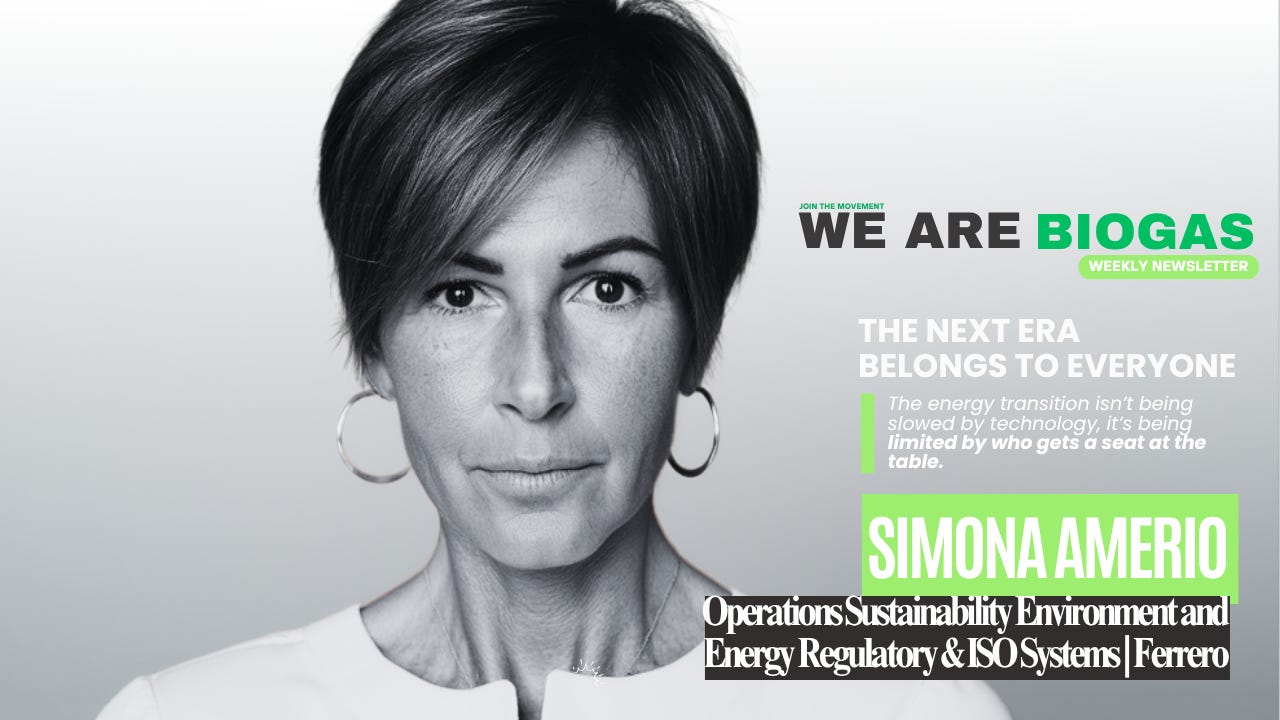
The biogas industry is at an inflection point. The technology works. The climate case is settled. The economics are catching up. And yet, the sector is still leaving value on the table, not in infrastructure or policy, but in the rooms where decisions are made. In who gets heard, and who doesn’t.
Simona Amerio has spent her career making that case, not in speeches, but in results.
She’s often been the only woman in rooms where regulatory direction, investment priorities, and long-term strategy were being decided. Not once. Not in some formative early-career moment she can now look back on with perspective. Routinely. What Simona Amerio did at those tables is the thing that is hardest to explain and most important to understand.
She didn’t wait. She didn’t perform a version of herself calibrated to make the room comfortable. She didn’t shrink into the edges of conversations where she had every right to be at the center. And she didn’t carry her exclusion as a grievance; she carried it as information.
“I stopped adapting to the room,” she says, “and started shaping it.”
Why Energy Is Where Systems Change
Simona is an internationally recognized leader working at the intersection of sustainability, energy, and regulatory systems at Ferrero, with more than 20 years of industry experience, and a recipient of the 2025 EBA SheLeads Award, a distinction that extends well beyond individual accomplishment. It recognizes women who are not only advancing the biogas and biomethane sector, but are also helping to shape a more inclusive and equitable energy landscape.
She’s done it in a space that remains, as she would tell you directly, still overwhelmingly male.
She’s built her career in the kind of technical, regulatory, and strategic complexity that doesn’t make headlines but determines everything: the decisions that either embed sustainability into the very bones of how industry operates, or leave it as a statement of aspiration that never quite becomes real.
The Gap Between Belief & Action
There is a number that sits at the heart of this story, and it comes not from Simona but from the World Biogas Association‘s own research. In 2024, the WBA surveyed the global biogas sector on gender representation. The findings were, depending on your vantage point, either a sign of progress or a portrait of a problem that has been politely acknowledged for years without being structurally addressed.
Women make up 28% of the biogas workforce. In senior management, that figure drops to 24%. Only 11% of organisations surveyed have achieved anything approaching gender parity in their leadership teams. The gender employment rate gap in the energy sector overall sits at 65%, compared to 26% across non-energy sectors.
And then there’s this: 93% of respondents to the same survey said they believe diversity has a positive impact on business performance.
Ninety-three percent believe it. Eleven percent have built it.
"This is not just a diversity issue," she says. "It’s a performance failure."
That gap, between knowing and doing, between intention and structure, is the thing that Simona has spent her career navigating from the inside. And it’s the thing that the biogas industry, and the energy sector more broadly, has not yet found the will to close.
What It Really Takes to Be Heard
Ask Simona what it actually feels like to navigate spaces where you are underrepresented, and she doesn’t give you the answer you might expect. She doesn’t describe exhaustion, or frustration, or the particular loneliness of being visible in the wrong way. She describes something more piercing than any of those things.
“It sharpens you,” she says. “You become precise, intentional, and fearless in how you contribute.”
What she’s describing is a kind of discipline imposed by circumstance, the way that operating in a system that doesn’t automatically make space for you forces a clarity that more comfortable environments can allow you to avoid. Preparation as armour. Purpose as authority. The combination, she says, makes your voice unstoppable.
But there is something underneath that answer worth pulling at. Because the sharpening she describes is real, and it is also a tax. Every hour a woman spends becoming precise enough to be heard in a room that wasn’t built for her is an hour not spent on the work itself. The talent is being spent on the wrong problem; instead of driving innovation, it’s being used to prove belonging. The sector is paying for this, in ways it doesn’t measure and largely doesn’t see.
"The cost is structural and strategic. Without women, innovation slows, foresight is narrowed, and the speed required for the energy transition falters."
No One Is Sending an Invitation
When asked what she would say to women who are waiting to be invited into the conversation, her answer is three sentences that land like a detonation.
“No invitation is coming, and that is freedom. Step in, speak up. Let your thinking earn your place.”
Said plainly, without bitterness, by a woman who has operated at the highest levels of a male-dominated industry for years. It’s the most honest assessment of where the sector currently stands. She’s not counselling acceptance of the status quo. She’s counselling women not to wait for the status quo to change before they act. The distinction is everything. But she is equally clear about where the responsibility lies for those with the power to change the room itself.
“Leaders must move from awareness to accountability,” she says. “Inclusion must be embedded as a driver of performance, not a side conversation.”
The WBA data reflects exactly the gap she is naming. 71% of organisations now have an equality and diversity policy, up from 60% in 2022, a genuine improvement. But only 35% collect gender equality data. Only 45% have a formal group dedicated to the work. The sector is becoming fluent in the language of inclusion. The structural accountability that would make that language real, the measurement, the targets, the traces in promotion decisions and leadership appointments, is still largely absent.
“Talk communicates intention,” Simona says. “Action shapes reality. True inclusion leaves measurable traces in leadership, promotion, and decision-making structures.”
Measurable traces, not statements of commitment on a website. Not a working group with no authority. Traces. The kind you can point to and count.
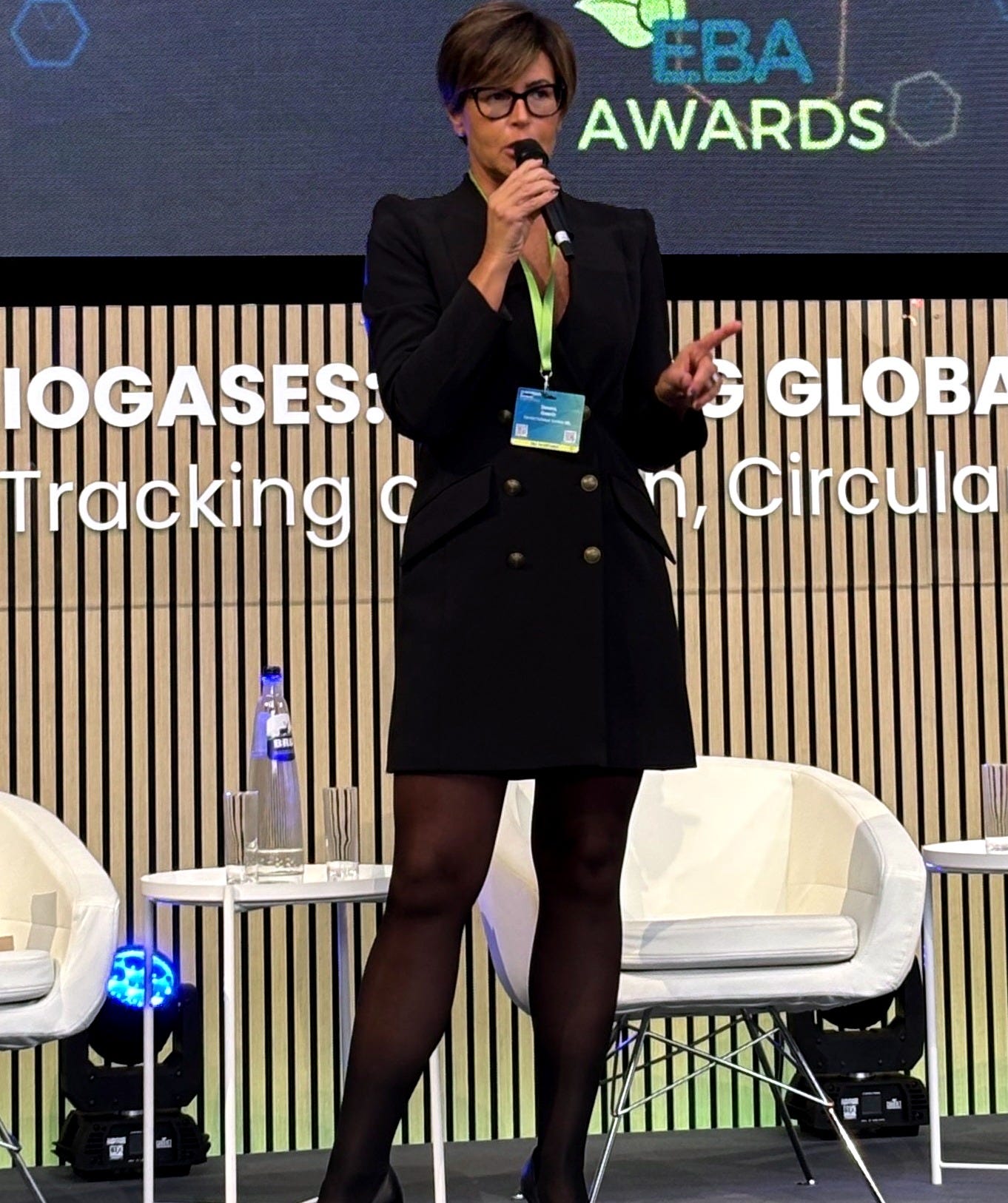
When There’s Only One Seat
There is a part of this conversation that rarely surfaces in public because it sits in uncomfortable territory, and Simona goes there with the same directness she brings to everything else. In environments where women are scarce, the dynamics between women can become complicated. When there is effectively one seat at the table, competition for it can be real. When visibility is a limited resource, the instinct to protect it rather than share it can take hold. These are not failures of character; they are predictable responses to a system built on scarcity. But they compound the problem, and they deserve to be named.
"When women lift each other up," she says, "challenges become opportunities for innovation, influence, and collective impact."
What she’s describing as the alternative is not solidarity as an abstract moral stance. It’s solidarity as a strategy. A rising tide. The deliberate opening of doors. It only becomes fully possible, she implies, when the scarcity that creates the competition is itself addressed, when there are enough seats at enough tables that protecting any single one feels less urgent. Which is, again, a structural argument wearing the clothes of an interpersonal one.

You Already Belong Here
Ten years from now, Simona has a clear picture of what success looks like.
“I want this conversation to be obsolete. Not because the work is done, but because inclusion will be instinctive, embedded, and unquestioned.”
Obsolete. It is a striking word to reach for. Not resolved, not improved, obsolete. The kind of thing future generations read about and struggle to believe was ever necessary to argue for. She’s not asking for gradual progress. She’s asking for a transformation complete enough that the argument disappears entirely.
To the young women standing at the beginning of a career in energy or biogas or beyond, wondering whether there is space for them, she is unambiguous.
"You already belong here. The sector needs your perspective, your courage, and your vision, even before it fully recognises it."
And to the industry itself, to the leaders in the rooms where the decisions are made, whether women are present in those rooms or not, her message is stripped of sentiment entirely.
The Opportunity in Front of Us
The WBA survey asked respondents whether they believe there are barriers to women being promoted in the biogas industry. 49% said yes. Half the sector's own workforce, acknowledging out loud that the system they work within is not yet fair. The other half said no.
Which means either that progress has been made, and it has, genuinely, incrementally, or that the barriers have become invisible to the people not navigating them. Probably both. What Simona Amerio represents, in this conversation, in her career, in the rooms she has walked into and refused to be made smaller by, is a standard of what leadership in this industry can look like when it stops being defined by who has historically been in the room. She’s not asking to be an exception. She’s making the case, through everything she says and everything she has built, that the exception should become the rule. And to the sector itself, her final message is the one that every leader in every room should carry into the next decision they make.
“The next era of biogas and the energy transition will be led by those who challenge assumptions, not those who preserve them. Inclusion is not ethical. It is strategic. Those who understand this will define the future.”
The biogas industry is standing in front of one of the most significant opportunities in the history of renewable energy. The systems are ready. The moment is here. The only question is who gets to build the future: everyone who can, or only those who always have.
To connect with Simona Amerio and follow her work shaping the future of energy and sustainability, you can reach out to her directly on LinkedIn.
The World Biogas Association Women in Biogas Survey Analysis Report 2024 is available at Women In Biogas Survey Analysis Report