


A Global Industry That Knows What It’s Doing, and Where It’s Going
There are events you attend because you should. And there are events you attend because they genuinely recharge something. The World Biogas Expo in Birmingham is firmly in the second category for me.
Every year, this show does something that very few events in this space can claim: it assembles the actual global biogas industry under one roof. Not a regional slice of it. Not a delegation of observers. The people building this sector, developers, researchers, policymakers, engineers, advocates, from across Europe, Africa, Asia, the Americas, showing up in Birmingham to compare notes, push thinking forward, and, if you’re lucky, have exactly the kind of corridor conversation that reorients how you see the whole space.
The Map That Changes the Conversation
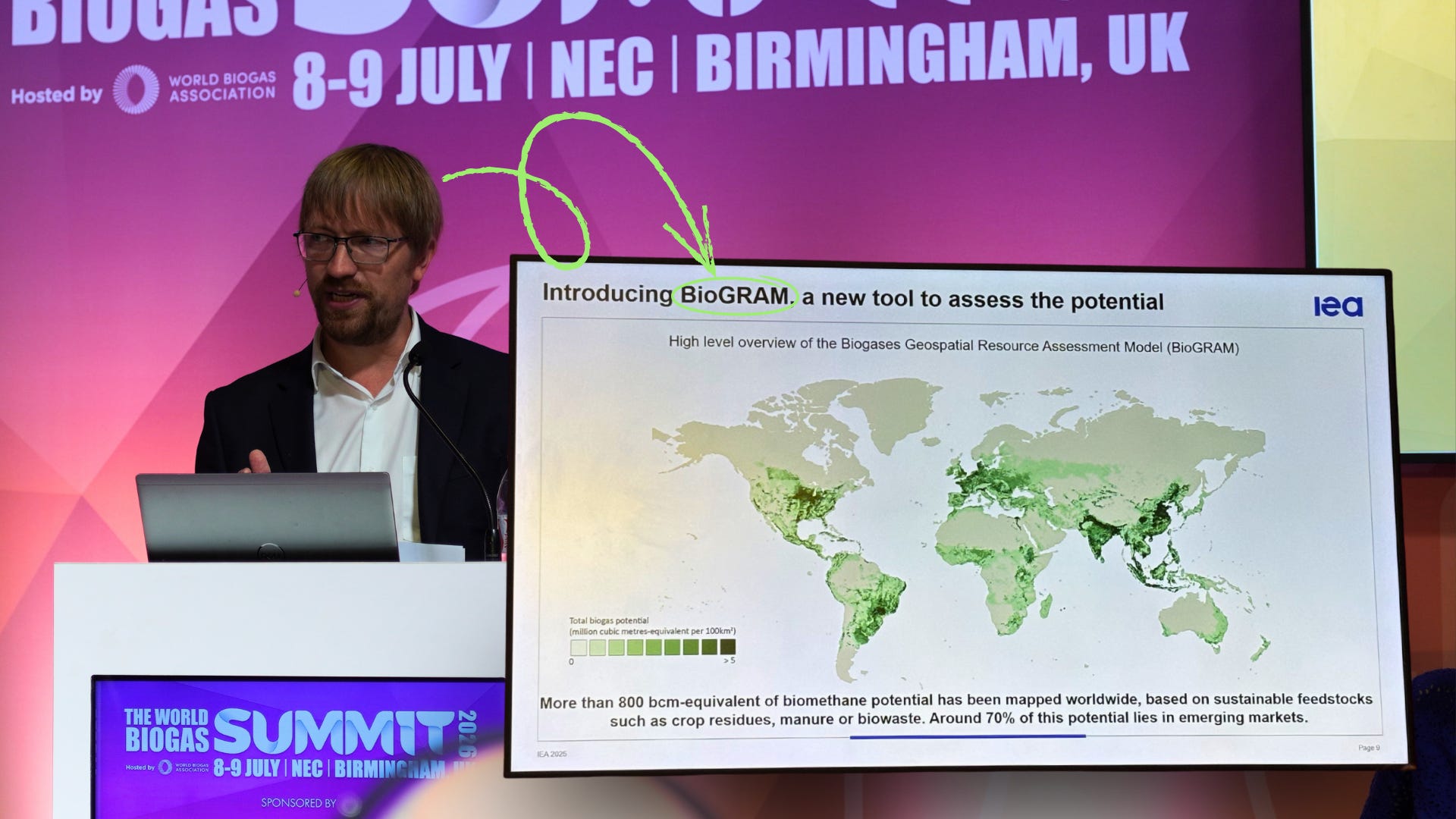
The session I keep returning to is Peter Zeniewski‘s presentation from the International Energy Agency (IEA), during which the launch of the newly expanded geospatial biogas potential map BioGRAM was announced. A data tool built from spatial crop output datasets, livestock assessments, waste generation data, key regional plant data, and on-the-ground studies that the IEA continues to improve. The map generates supply curves from gate fee estimates for crop residues, labor, and materials, and it’s designed from the outset to be a living resource. The IEA actively wants people to use it, stress-test it, and contribute to making it more accurate over time.
What strikes me about this isn’t the map itself, impressive as it is. It’s the framing Peter put around it. When he said “the potential exists everywhere,” he wasn’t offering a polished conference line. He was making an empirical claim backed by the data the IEA had just built. Biogas potential isn’t a geography problem. It’s an implementation problem. That distinction matters enormously for how the industry makes its case to the policy and finance communities.
The IEA releasing this tool publicly, and actively inviting collaboration on its improvement, is a signal worth noting. It reflects a maturation in how the sector is being understood at the institutional level, not as a niche technology with localized applications, but as a global infrastructure class with a measurable resource base. That’s a different conversation.
The Scale of What’s Possible, and the Work Required
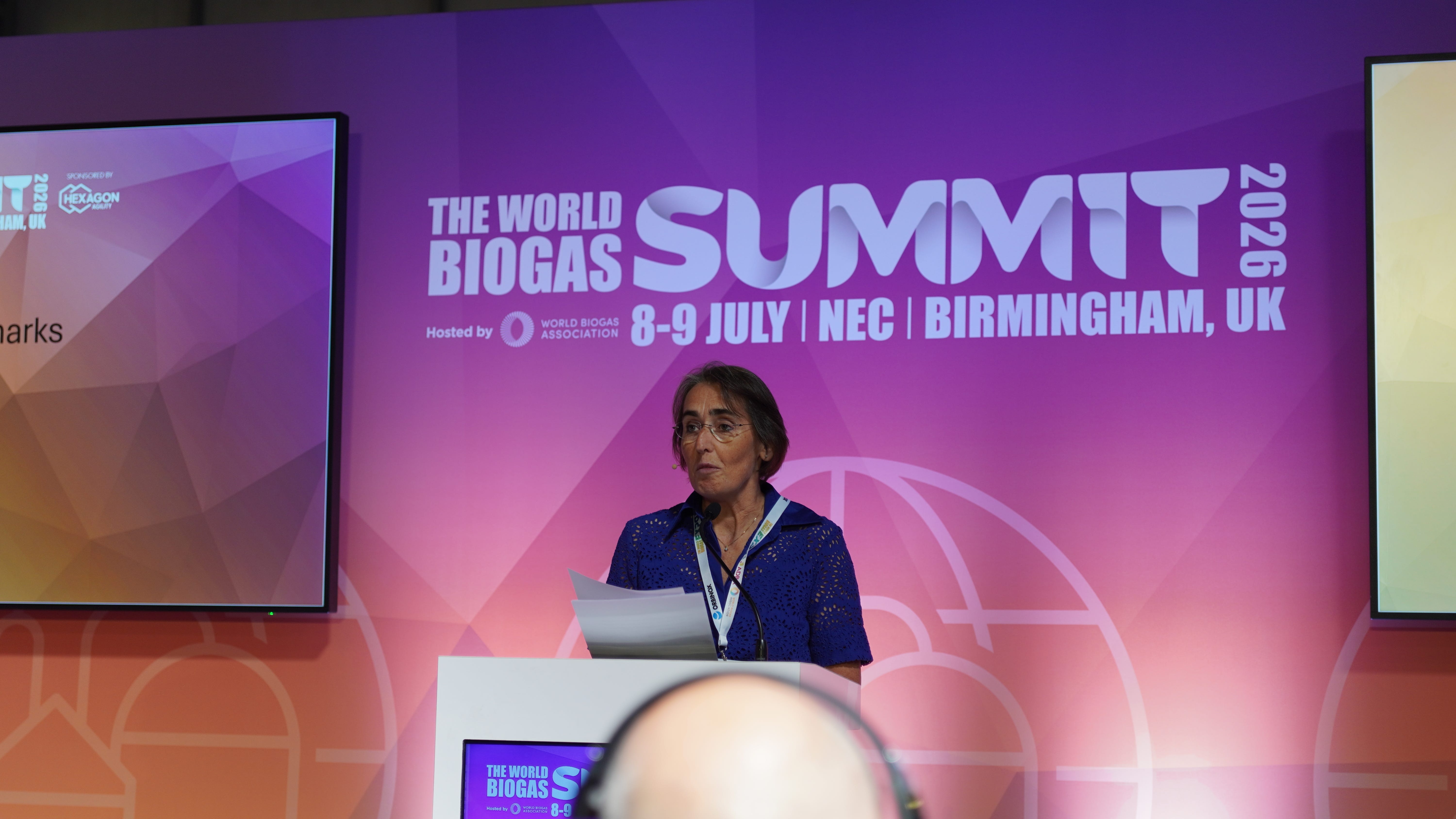
Charlotte Morton OBE‘s remarks set the macro frame for the event, and she didn’t undersell it. Biogas has the potential to supply roughly a third of the world’s gas demand if properly tapped, and to generate between 10 and 15 million jobs worldwide in the process. Mexico and Argentina are now active parts of the WBA’s global expansion, two major agricultural economies in Latin America whose feedstock base alone represents an enormous untapped resource.
These are not aspirational figures designed to fill a keynote slide. They’re the outputs of serious resource modeling, and they sit in stark contrast to current deployment levels. That gap, between what the data says is possible and what the world has actually built, is both the challenge and the opportunity the sector is collectively working to close.
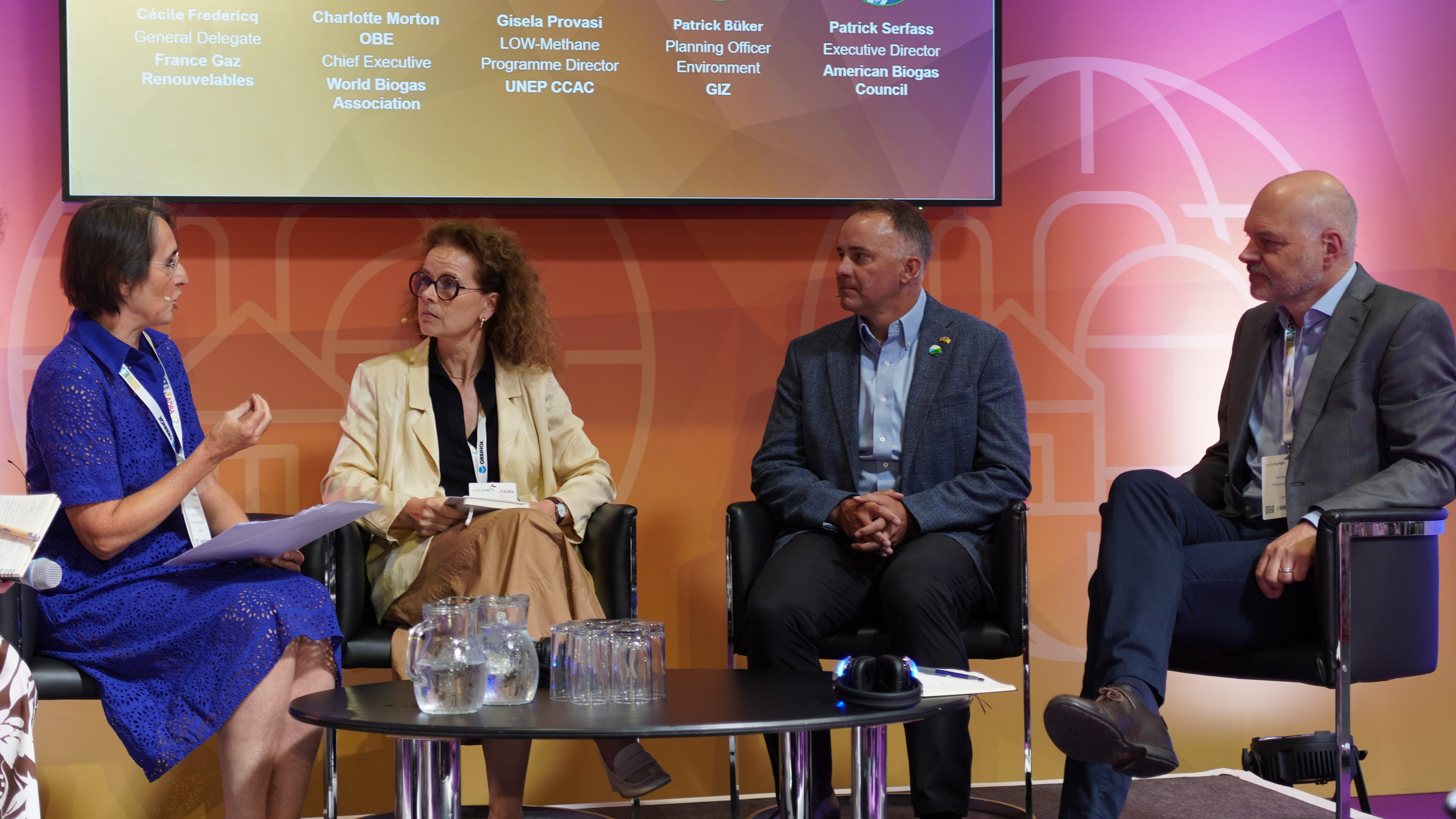
Patrick Serfass of the American Biogas Council brought a complementary dimension to this, focused on cross-border market development and the potential for the US to participate in a genuinely international biomethane trade. The domestic market in America is sophisticated and growing, but the more interesting strategic question is whether, and how, that expertise and production capacity can interface with demand in markets that are further along on the policy side. It’s an early conversation, but it’s the right one to be having.
France: A Case Study in Scaling, and What Comes After
Cecile FRÉDÉRICQ‘s panel segment on France’s biomethane trajectory was one of the most instructive of the expo for me, because France represents a market that has done the hard work of scaling and is now dealing with the second-order challenges that come with maturity.
France passed 2.2 bcm of biomethane injected into the gas grid, already past the 1.5 bcm threshold that was the original benchmark. The majority of that production has come from farmer-led projects, which is structurally significant, because it means French biomethane has developed as an agricultural income stream as much as an energy asset. The right to inject into the grid, enshrined in legislation since 2018 on the condition of meeting environmental standards, gave the sector a stable foundation to build on.
But the scheme is now changing, and not in a direction that’s straightforward for existing and future producers. From 2026, the French government is shifting from a consumption-based perspective to a tendering mechanism, eliminating feed-in tariffs in favour of competitive allocation. The concern, as Cécile framed it, is specifically for farmers: smaller agricultural operators who built their project economics around a guaranteed price are now being asked to compete in a system designed with larger, more financially sophisticated developers in mind. The change only applies to future plants, which limits the immediate damage, but it signals a recalibration of who the French biomethane market is designed to serve as it moves from deployment phase to competitive maturity.
It’s a dynamic that other markets should watch closely. Scaling biomethane on farmer participation is a feature, not a bug. It’s what gives the sector its distributed, rural character. Policy design that inadvertently prices out the agricultural base in the name of market efficiency is a real risk.
Biogas at the Pump: A Visit to CNG Fuels
One of the things I love most about the World Biogas Expo is that Birmingham puts you in the middle of the infrastructure. Biogas isn’t abstract here. It’s running through pipelines, compressors, and tank trucks, powering the HGVs you see pulling into freight hubs on the M6. So when the opportunity came up to visit one of CNG Fuels‘ refuelling stations during the event, I took it immediately.
Seeing it in operation is something else. CNG Fuels, part of ReFuels N.V, Europe’s largest supplier of renewable biomethane to the transport sector, operates the UK’s largest public-access Bio-CNG refuelling network, with 16 stations across major trucking routes and mobile units ensuring continuous availability. Their Bio-CNG delivers emissions savings of greater than 90% compared to diesel on a well-to-wheel basis, and the fuel is independently verified under the UK Department for Transport’s Renewable Transport Fuel Obligation. The customer list reads like a who’s who of UK logistics: GXO Logistics, Inc., DHL, Amazon, Lidl in Germany, Royal Mail, Tesco, Waitrose & Partners, Marks and Spencer, ALDI Stores Australia. These are commercial fleet decisions made at scale by companies with serious decarbonisation targets and even more serious cost pressures.
Standing at one of those stations, watching trucks refuel with biomethane produced from food waste and agricultural by-products, is a useful corrective to the abstraction that can creep into conference discussions. This is what deployment looks like. This is the end-use case for everything being discussed inside the Expo halls: the AD plants, the upgrading technology, the grid injection, the supply chains. It all points here. A truck, a pump, 90% fewer emissions than the diesel it replaced, and a fleet operator who chose it because it works and it’s cost-competitive.
CNG Fuels is currently targeting the capacity to refuel up to 20,000 trucks daily by end-2028, with a long-term ambition of powering 10% of the UK’s articulated truck fleet with 100% renewable biomethane by 2030, a reduction of over 1.2 million tonnes of GHG emissions annually at that scale. Seeing the infrastructure in person makes that target feel less aspirational and more like a construction plan.
Recognition That Lands
The AD & Biogas Industry Awards gala dinner is one of those events that reminds you why industry recognition matters, not as ceremony for its own sake, but because the people and projects that get spotlighted at these events are doing work that genuinely deserves a wider audience.
A few that stood out this year:
Lazarous Chewe, AD Hero of the Year — Retist Solutions Limited, Zambia. Lazarous is leading the technical team developing waste-to-energy solutions across Africa, with a particular innovation that deserves more attention: bottled biogas compressed at 40 bar in specially designed cylinders. This is not a minor technical footnote. It’s a distribution model that makes biogas accessible in contexts where grid injection is simply not the relevant infrastructure, and it’s the kind of pragmatic, context-appropriate engineering that the sector needs far more of in off-grid and developing market settings.
David Hurren, AD Biogas Support of the Year — DAH Renewable Consulting, UK. A personal highlight of the evening. David is someone I’m proud to call a friend, and watching him take this recognition was a genuinely great moment. DAH Renewable Consulting has built a reputation for the kind of hands-on, technically rigorous support that moves projects forward. This award was thoroughly deserved and long overdue.
FSM Education Programme, Education Campaign of the Year — Sguazzi in partnership with Anaergia, Italy. This one resonated with me for obvious reasons. The FSM Education Programme is exactly the kind of initiative We Are Biogas exists to amplify: knowledge-building that brings people into the biogas conversation who might otherwise never find their way in. Anaergia’s work here reflects a recognition that technical expertise alone doesn’t build an industry. You also need the educational infrastructure to develop the next generation of people who understand it, advocate for it, and build it.
Biogas International Limited, Net Zero Circular Solution of the Year — Kenya. The Trash 2 Resource model uses BIL’s proprietary FlexiTech T-Rex modular AD technology to convert organic waste at source in urban markets and high-density settlements into clean cooking energy and bio-fertiliser, while simultaneously recovering, repurposing, and recycling inorganic materials. No waste transport emissions. No charcoal displacement lag. A genuinely closed loop, operating at the community scale.
Govardhannathji Energies LLP, WBA Biogas Plant of the Year — Gujarat, India. Gujarat’s largest integrated biogas plant, producing both renewable energy and high-value organic fertiliser under the UTPANN brand, with digital integration, large-scale nutrient recycling, and an explicit focus on farmer empowerment and rural uplift. India’s CBG sector has been developing at pace, and this plant represents what the benchmark looks like at scale.
Naiara Ortiz de Mendíbil Romo, Women in Biogas — Sedigas, Spain. A well-deserved recognition for someone working at the intersection of gas industry policy and biomethane development in one of Europe’s more complex regulatory environments.
The full winners list is worth reading in its entirety. The geographic breadth alone, Zambia, Kenya, India, Romania, Brazil, Spain, the US, the UK, is its own statement about where this industry is actually operating.
What I’m Taking Into the Rest of the Year
Conferences like this one do something specific that newsletters and podcasts can’t quite replicate: they let you feel the momentum of a sector in real time. Not through data, but through the density of serious people in the same room, pushing on the same problems from different angles, with different country contexts and different timescales. That’s hard to manufacture and impossible to fake.
The conversations I had at the Expo this year, reconnecting with people I’ve been following and talking with across this whole journey with We Are Biogas, and meeting new ones, left me more focused, not less. More convinced that the story of this sector is one worth covering with rigour and ambition. More aware of the gaps between what the industry knows how to do and what the world’s policy and finance architecture has yet to catch up with.
I’m taking that back into the platform: more momentum, more focus on the people moving this space forward, more of the granular, cross-border storytelling that helps the sector see itself clearly.
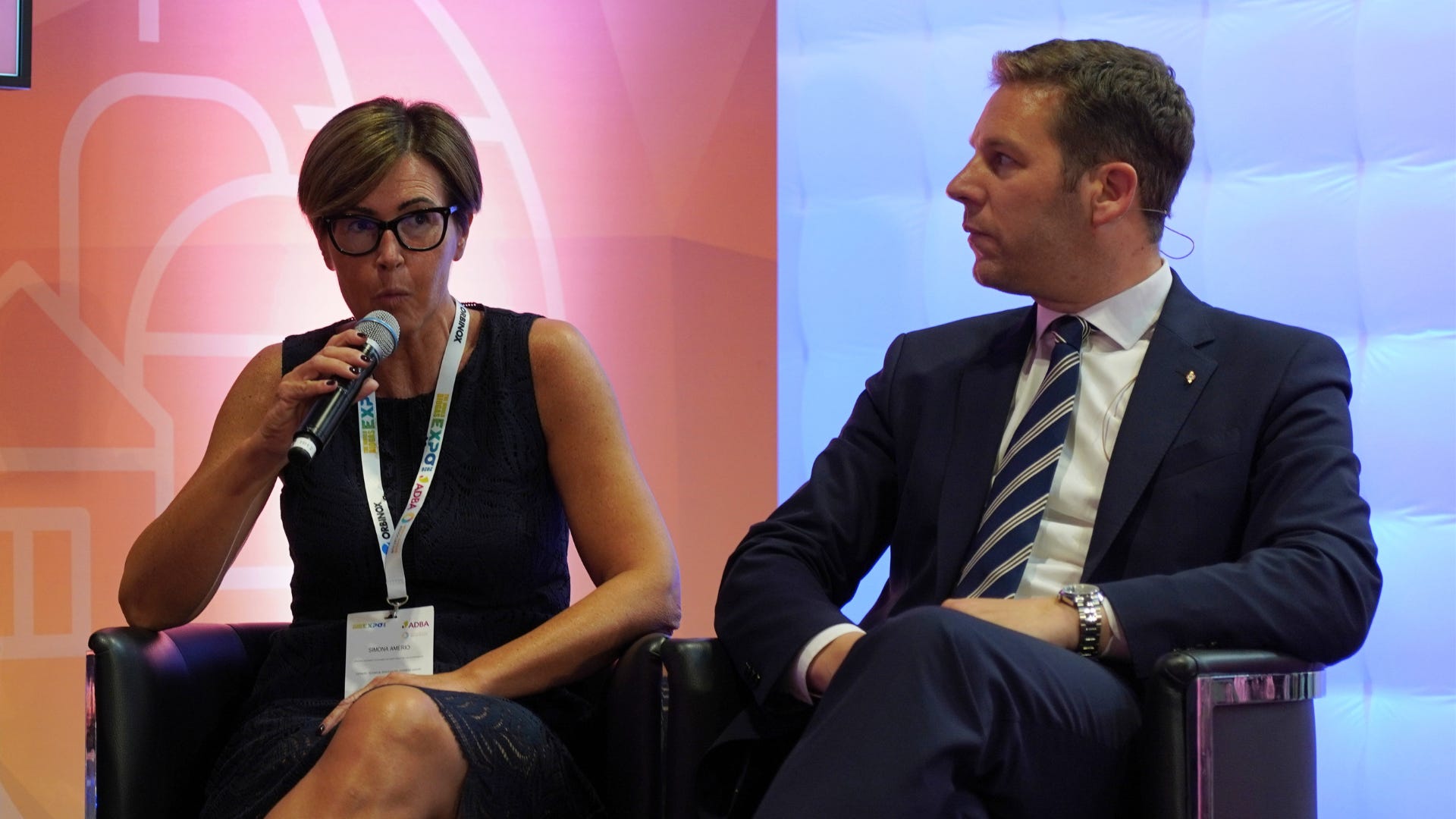
Simona Amerio, shortlisted for Women in Biogas this year at the awards, put something into words during her session at the Expo that I haven’t been able to shake.
“I believe the real catalyst behind the energy transition is not technology. It’s people. Technology can be acquired, infrastructure can be built, capital can be invested, but what cannot be easily replicated is a workforce empowered to innovate.”
That’s the mission. That’s what We Are Biogas is here to do.
The World Biogas Expo 2026 was held on 8-9 July at the NEC, Birmingham, co-organised by The Anaerobic Digestion and Bioresources Association (ADBA) and the World Biogas Association. The AD & Biogas Industry Awards Gala took place on 8 July at the Vox, Birmingham. We Are Biogas attended as independent media.