


Flávio Ascenco talks about biogas the way some people talk about architecture, not as a system to be managed but as something to be understood at the level of its constituent parts, its logic, its relationship to the environment it sits inside. By the time we arrived at Willen Biogas in Enfield, on the outskirts of London, I had already learned more in a single conversation than most people absorb in a year of reading about this sector. That, it turns out, was entirely intentional. He wanted me to really see the site before I saw it.
And what I actually saw when we pulled up stopped me for a moment.
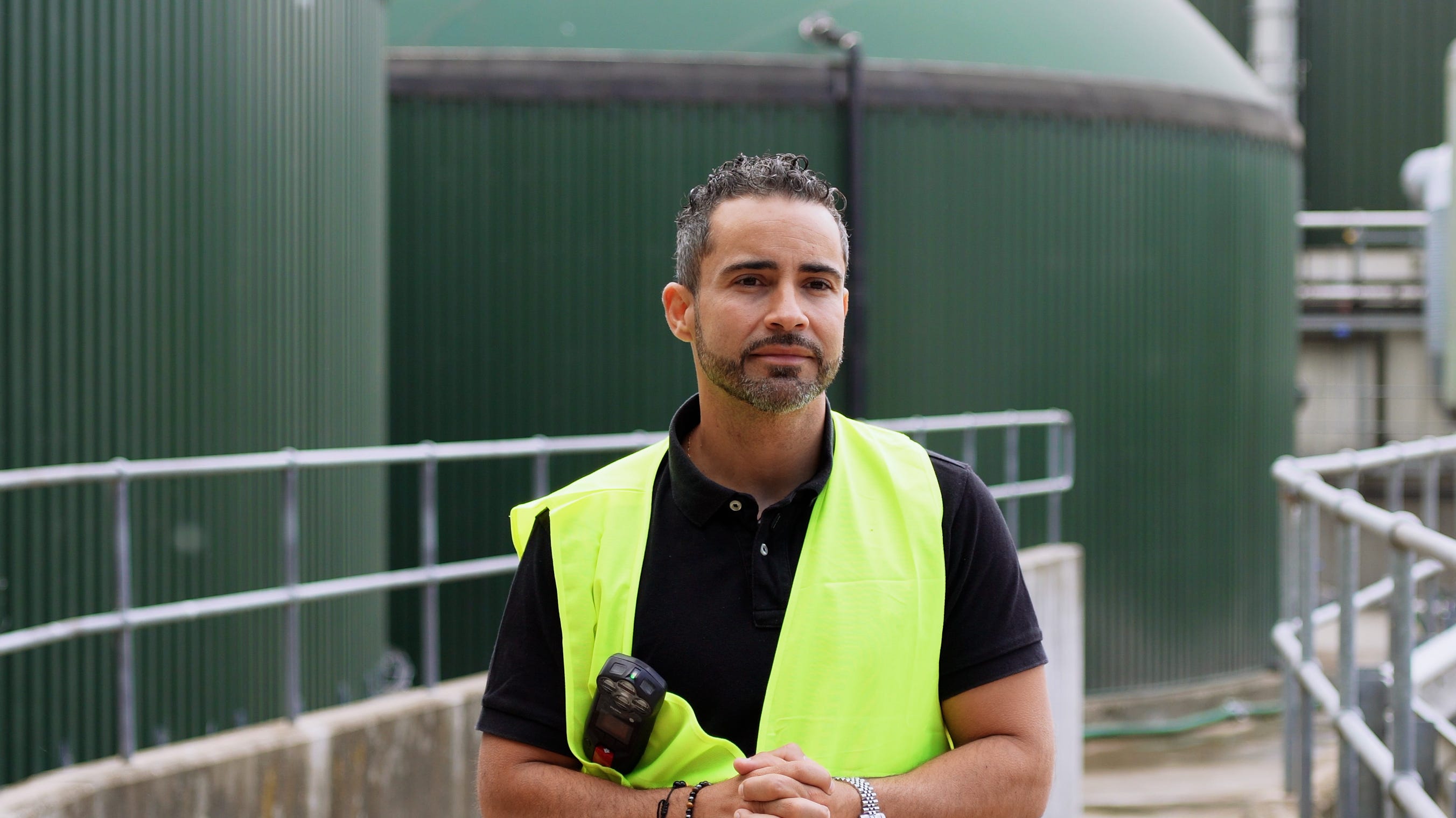
The gate closes behind you, and you just stand there briefly, taking it all in. Because the tanks, the actual, physical, full-scale anaerobic digestion tanks, look exactly like every diagram and every photograph you have ever seen of them, and somehow that makes them feel less real, not more. Like stepping into a rendering. You know intellectually that this is a working industrial site on the outskirts of London. But your eyes need a few seconds to catch up with the fact that you are actually, finally, standing in front of one.
You’d drive past this site a hundred times on the outskirts of London and have no idea that inside those sealed vessels, something extraordinary is happening. And for the first time, I was able to step foot behind the scenes of a biogas site and experience that waste-to-energy magic firsthand.
The Tour
Willen Biogas is processing close to 30,000 tonnes of food waste annually, sourced from restaurants, canteens, and local authority collection facilities across London. Some of it originates within miles of the city centre. The transfer costs and transport emissions that make urban food waste processing economically marginal in so many places are, by design, not a problem here. Proximity to the source is not incidental to this site’s value proposition. It is central to it.
Flávio walked me through the full process. Loads arrive at the intake bay, are visually inspected for contamination, and directed through mechanical separation equipment that isolates plastics and contaminants before the organic fraction enters the digestion system. What arrives as mixed food waste exits as three distinct products: renewable electricity generated via a combined heat and power (CHP) unit capable of processing 1.5MWh, which could supply enough energy for approximately 4,000 homes; heat recovered and used on site; and a PAS 110-certified digestate, a spreading-ready, organic agricultural fertiliser product that leaves the facility no longer classified as waste. It leaves as something the farming sector actively needs and uses.
As Flávio puts it so eloquently and succinctly, “We solve three problems with one massive problem — waste.”
The carbon mathematics running underneath all of this are not incidental either. Methane emitted from organic waste decomposing in landfill carries a global warming potential “85 to 88 times greater than CO₂ over a twenty-year period,” the timeframe most relevant to the emissions commitments governments are being held to. Capturing that methane, converting it to energy, and simultaneously displacing synthetic fertiliser production delivers a compounding emissions benefit. Standing on a working site, watching the system run, makes that argument considerably easier to grasp than any policy document manages to.
"Food waste will grow every year. The potential is there, the opportunity is there, and it will continue to be."
The Training Session
After the tour, Flávio gathered the site staff. I took a seat at the back of the room.
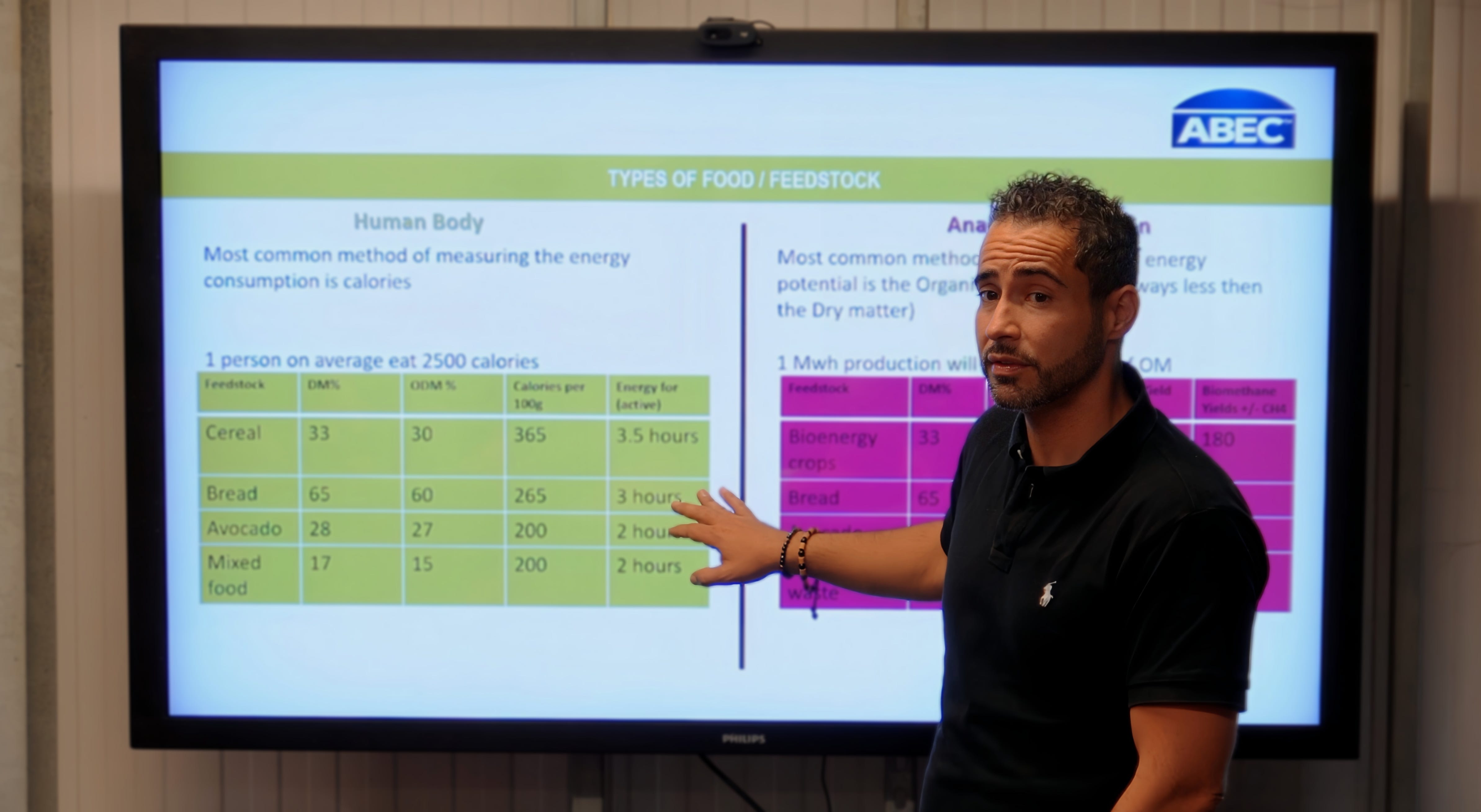
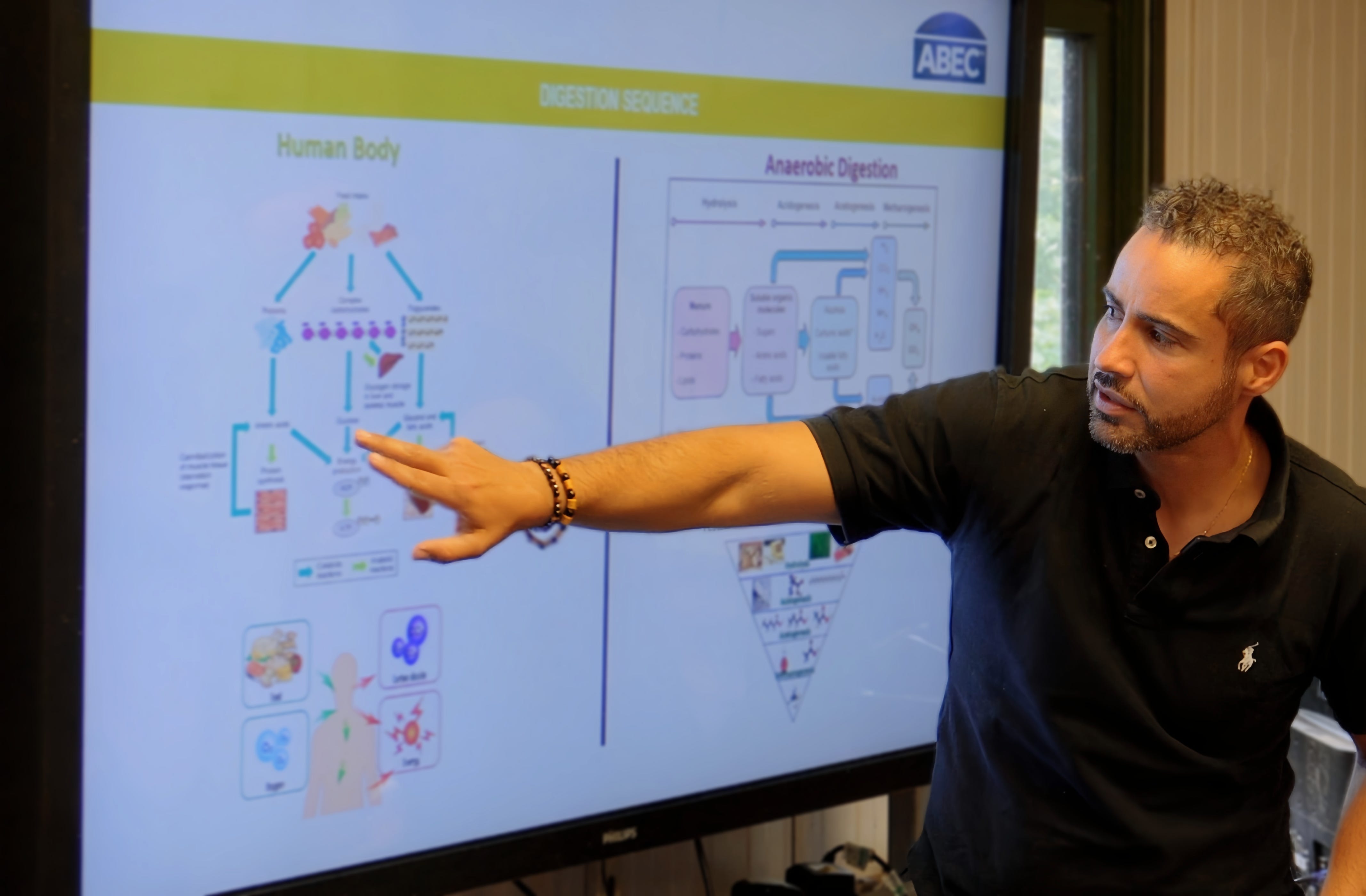
What followed was a structured, formal training session, with Flávio at the front, walking the team methodically through the fundamentals of anaerobic digestion. The biology. The process stages. The reasons why certain operational decisions matter more than they might appear to in the moment. These are the operators who help run Willen Biogas day in and day out. And Flávio was in front of them, making sure that the people responsible for keeping this plant performing understood it from the inside out.
"It's not only building these sites. There needs to be an element of expertise, technical and operational, that ensures it's not only an asset but a performing asset."
That room told me more about why this site works than the tour did.
A biogas plant is not a passive asset. It is a living system, biological, mechanical, and operational simultaneously, and it performs exactly as well as the people managing it understand it. The industry has invested heavily in building physical capacity over the last decade. It has invested considerably less in ensuring that capacity is matched by the operational and technical expertise needed to extract full value from it. The gap between a plant that exists and a plant that performs is not an engineering problem. It is a people problem. And it is where Agile Biogas works.
Watching Flávio command that room, precise, knowledgeable, and entirely at ease, translating complex biological processes into operational clarity for a team with boots on the ground, it became apparent that his value to a site like this operates on two levels simultaneously. He is the expert who understands the system. He is also the person who ensures everyone responsible for the system understands it too. That distinction matters more than the sector currently gives it credit for.
What I Keep Coming Back To
The challenge biogas has always faced relative to solar and wind is one of visibility. Photovoltaic panels and wind turbines are legible at a glance. Anaerobic digestion is sealed, subterranean, and largely invisible by design. That invisibility has cost the sector considerably in public understanding and policy priority, not because the technology is less capable, but because the impression it makes requires proximity.
What this visit clarified is that the visibility problem runs deep. The operators running these sites, the trainers developing the expertise that keeps them performing, the teams who show up every day to manage a biological process most of the world does not know exists, they are the story the sector has been underreporting. The training session I sat in at Willen Biogas was not a headline moment. It was not designed to be documented or celebrated. It was simply Flávio doing what he does, making sure the people behind the process understand it well enough to keep it running at its full capacity.
That is what a performing AD site looks like.
What Comes Next
I am already counting down the days until my next site visit.
There is a particular kind of clarity that comes from standing inside the industry you cover, from watching a trainer hold a room, from understanding that the PAS 110 certificate leaving with the digestate tanker exists because someone took the time to make sure the people on the floor knew why it mattered. That is not a technology story. It is a people story. And it is one We Are Biogas intends to tell a great deal more of.
If you operate a site and would like us to come and document it, the process, the team, the expertise that keeps it performing, get in touch. These stories exist everywhere, running behind fences in industrial estates and on farm edges across the world. They deserve a louder signal.
The infrastructure is already doing the work. So are the people inside it. It’s time the story caught up.
Watch the full Willen Biogas video feature, filmed on site with Flávio Ascenco of Agile Biogas, at the link above.
For consulting, training, technical input, or project development enquiries, contact Flávio at flavio.ascenco@agilebiogas.com or find out more at agilebiogas.com