


Somewhere in rural Serbia, a village is getting smaller. The young people left first, then the school closed, then the small shops, then the sense that there was anything left worth staying for. It’s a pattern repeating across Central and Eastern Europe, quiet and persistent and almost entirely ignored in conversations about the energy transition. Lidija Zelić thinks about that village a lot. She thinks about the women holding it together, doing the farming, raising the children, carrying the weight of a community while their economic contribution goes unrecognized and their names don’t appear on the contracts. She thinks about what it would take to give that village a reason to believe in its own future. And she thinks about biogas.
That framing, biogas as a rural lifeline rather than an energy technology, didn’t come from an engineering textbook or an energy policy paper. It came from wine. Lidija spent years in Serbia’s wine industry, out in the field with producers, in wineries and rural communities, building trust and visibility for a sector the wider world barely knew existed. She learned that behind the glamorous image of wine is hard physical work, seasonal uncertainty, a deep connection to land, and the same slow, unglamorous process of building institutional credibility that she would later recognize when she stepped into biogas. She carries that experience everywhere. She still keeps field clothes and boots in the trunk of her car, because on any given day, she might go directly from a ministry meeting to a farm site visit, and she wouldn’t have it any other way.
Today, Lidija heads the Serbian Biogas Association, the organization driving sector development, regulatory engagement, international collaboration, and public communication for a market that has been building quietly for more than 16 years. Forty-five biogas plants operate at full capacity in Serbia. Another 55 projects hold temporary privileged producer status. The country is entering its first serious conversation about biomethane injection. None of that happened quickly, and none of it happened without the kind of field-level, community-rooted work that Lidija describes with the same seriousness she brings to a Brussels policy roundtable. The energy numbers matter. But in her telling, they’ve never been the whole story.
A Sector Built on Enthusiasm, Not Ideal Conditions
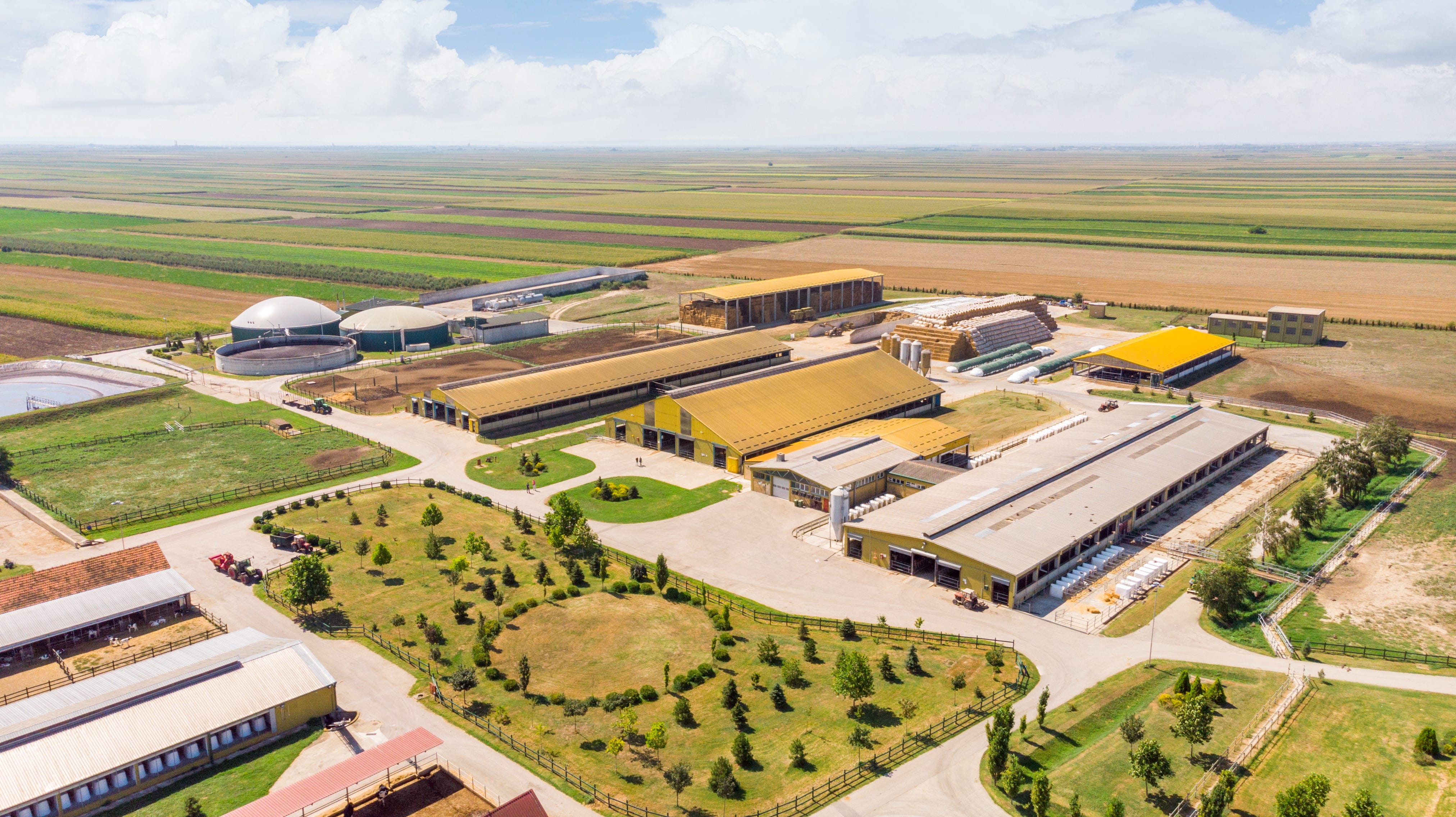
Serbia’s biogas market has characteristics that distinguish it from most European peers. The sector developed almost entirely from agriculture rather than from municipal waste or urban systems. Most existing plants are large-scale, typically around 1 MW, deeply connected to livestock farming and large agricultural operations. More than 65% of Serbia’s territory is agricultural land, and the biogas sector grew from that land organically, shaped by the resources and realities of farming communities rather than top-down industrial planning.
That agricultural identity has advantages and complications. The advantage is that the sector arrived with a natural constituency: farmers who understood organic inputs, who saw the circular logic of turning manure and agricultural residue into energy and returning nutrients to the soil, and who had existing relationships with the land that made the idea of a biogas plant feel less foreign than it might in a purely urban context. The complication is that Serbia has been developing its market, its regulatory framework, its institutional capacity, and its public understanding of the energy transition simultaneously, without the decades of accumulated policy infrastructure that older European markets could draw on.
“Behind everything there is an enormous amount of personal dedication, belief, and persistence from the people developing it. Many things developed slowly, often alongside obstacles, unclear regulations, and the constant feeling that you had to keep proving why this sector matters.”
That description, patient, persistent, proof-oriented, is also an accurate account of Lidija’s own approach to building the association. What she emphasizes most consistently about the Serbian sector’s development isn’t the technical progress or the regulatory milestones. It’s the people who stayed when progress was slow, who kept building when the conditions were against them, who understood that the sector’s credibility was being constructed one plant, one community, one honest conversation at a time.

The Communication Insight That Changes Everything
There’s a moment Lidija describes that any practitioner in an emerging energy market will recognize. A project is well-prepared technically, the engineering is sound, the numbers work, and yet development stalls. The technology didn’t fail. The community around it was never genuinely included in the conversation. The regulatory environment is hostile because no one built the relationships that would have made it friendly. The public perception is negative because no one explained the process in language people could engage with.
Lidija came to communication not as a strategic add-on but as a professional necessity. Without a technical background, she had to learn to explain complex biological and chemical processes to farmers, to local councils, to students, to ministries, and to journalists, all of whom needed different framings of the same underlying reality. That learning curve, initially a source of anxiety, became the most transferable skill she developed.
“Trust is not a “soft” topic or an additional layer around a project, but a very concrete factor that directly influences how stable and sustainable a project’s development will be over the long term.”
That framing, trust as infrastructure rather than optics, runs through everything she says about project development. The communities that initially resisted biogas plants in Serbia weren’t irrational. They were cautious about something unfamiliar, in an environment where they’d had limited experience with technical projects being developed transparently and with genuine regard for local concerns. The first reactions were almost always about fear: odors, pollution, safety, exclusion from decisions that would affect their everyday lives. What changed perception wasn’t a communications campaign. It was years of stable operation, visible community presence, and the accumulated evidence that the feared outcomes didn’t materialize.
One of the most practically useful observations in the interview concerns the asymmetry between how trust is built and how it’s lost. Lidija is direct about it.
“One poorly managed project can damage public trust for years, while responsible and stable projects can significantly improve the perception of the entire industry.”
For anyone planning a biogas project in a community with little prior exposure to the technology, that asymmetry is the most important planning input. The first projects in an emerging market don’t just represent themselves. They represent the entire sector for years afterward. The standard they set, positive or negative, becomes the reference point through which every subsequent project is evaluated. Getting the first projects right isn’t a nice-to-have. It’s a structural necessity.
What Showing Up Actually Means
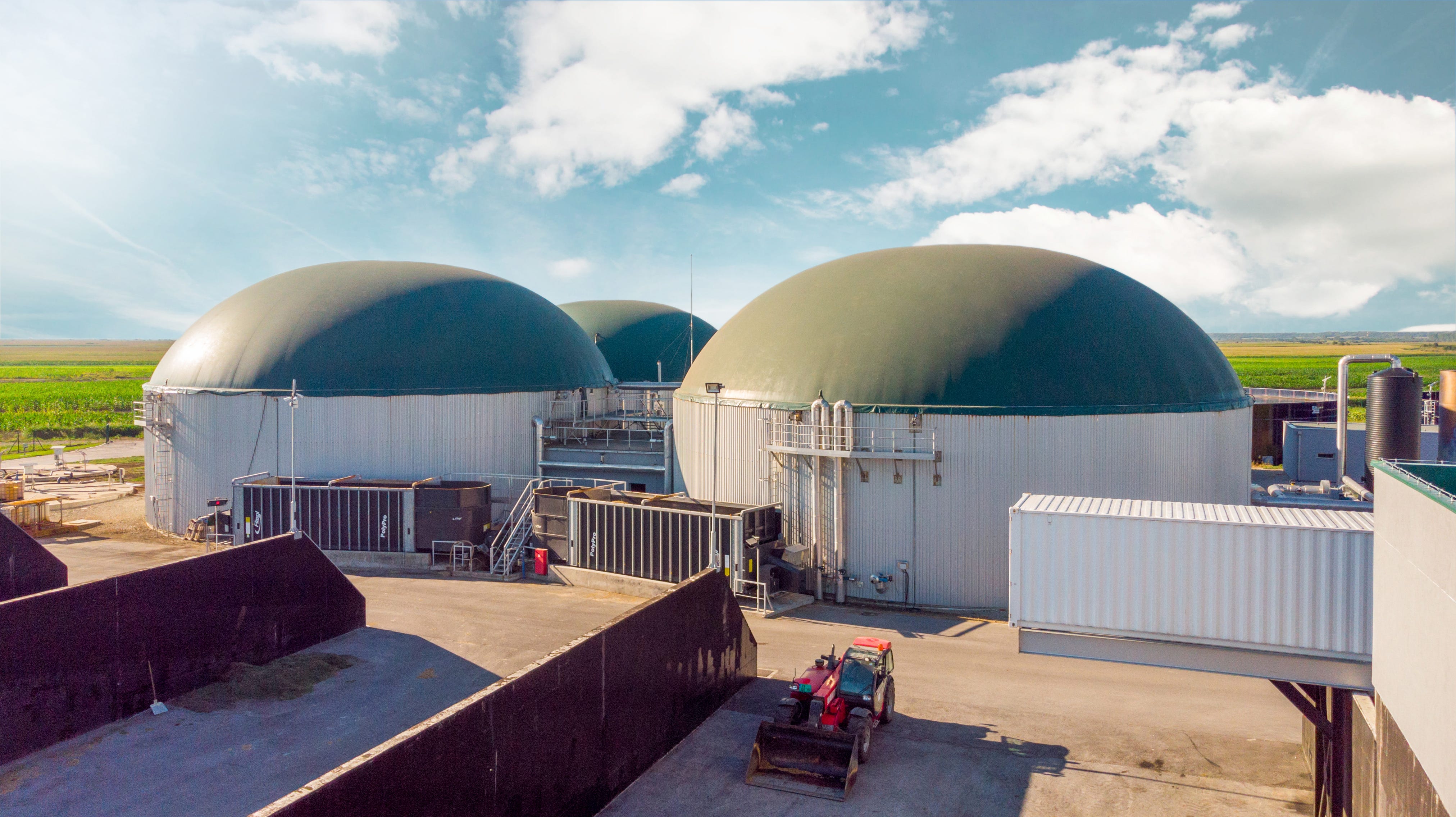
The image of field clothes and boots in the trunk isn’t incidental. It’s the physical expression of a philosophy about what it means to work in a sector that exists in the real world rather than on a slide deck.
“It often happens that I go directly from an official reception or a very formal meeting to a farm or plant site visit, which is why I always keep field clothes and boots in the trunk of my car. Field work, conversations with farmers, operators, and the people who live this sector every single day have always been the part of the job closest to me. Because that is where you truly feel where the sector breathes.”
That phrase, where the sector breathes, is about something specific and important. The gap between how a sector describes itself and how it actually functions on the ground is one of the most consistent sources of credibility problems in emerging energy markets. Communities develop a distrust not only of specific projects but of entire industries when they sense that the people speaking publicly about a technology have little real familiarity with what it looks like, smells like, and requires on a daily operational basis. Lidija’s credibility with communities, with farmers, and with operators comes partly from the fact that she’s seen the inside of the plants, had the difficult conversations, and been present when things were complicated rather than only when they were photogenic.
She applies the same standard to the advice she gives organizations struggling with community resistance. The instinct is usually to prepare better technical presentations, to organize more comprehensive information days, to communicate more volume. Her advice runs in a different direction: be present before the project is a source of conflict. Understand what people are actually concerned about rather than what you assumed they would be concerned about. Show up when there’s no camera, no formal meeting, and no easy conversation. That’s where trust is either built or lost.
Serbia’s Biomethane Moment and What It Requires
For the first time, Lidija says, biomethane in Serbia doesn’t feel like a subject being discussed in the future tense. The regulatory conversations are real. Institutional engagement is more substantive than it’s been at any previous point. Investors and international partners are paying attention. The global energy crisis, concerns about supply security, and the European context of renewable gas development have collectively shifted the way biomethane is perceived by policymakers who would previously have treated it as a niche sector interest.
That shift matters, and so does the existing foundation it’s building on. Serbia has 45 operational plants, experienced operators, a strong agricultural base, and people who’ve spent years developing sector knowledge under genuinely difficult conditions. The path to biomethane isn’t starting from zero. It’s starting from a market that has been maturing for 16 years and now has the opportunity to connect what it’s built domestically with a much larger European renewable gas story.
What still needs to happen is substantive. Clear, stable, long-term, predictable regulatory frameworks are the prerequisite for serious investment decisions in a sector requiring substantial capital and multi-decade market certainty. Secondary legislation enabling biomethane production, certification, and grid injection needs to be finalized and adopted. Market mechanisms and support schemes need to be designed carefully, drawing on the European experience that shows how easy it is to design incentives that produce the wrong assets at the wrong scale. And infrastructure, technical standards, and sectoral integration between energy, agriculture, and gas networks are all necessary preconditions that require coordination across government departments that don’t naturally work in sync.
None of that is a reason for pessimism. It’s a description of the work. And Serbia has shown, across 16 years of market development under conditions that were rarely cooperative, that it can do the work.
The Rural Dimension Nobody Talks About Enough
Lidija consistently resists the framing of biogas as purely an energy story, and the resistance is most evident when she talks about rural communities. Serbia faces a rural depopulation challenge that’s familiar across Central and Eastern Europe: young people leaving villages for cities or abroad, reducing local agricultural capacity, hollowing out communities that lose their schools, businesses, and social life in the process. Biogas doesn’t solve that problem on its own, but it can become part of a story about why a village has a future rather than only a past.
The economic argument is concrete. Additional income streams for farmers, agricultural modernization, local employment in plant operations, the value of nutrient-rich digestate for soil management, and the possibility of energy systems that serve local needs rather than solely feeding into a national grid represent real tangible benefits for communities that have spent years watching their economic base erode. But the less measurable benefit, the sense that a community is part of something forward-looking rather than simply managing decline, matters as much or more for the question of whether young people stay.
Her observations about women in rural communities carry particular weight. The economic contribution of women to Serbian agricultural households is enormous and systematically underrecognized. They carry a large share of operational responsibility, decision-making in daily farming practice, and the social fabric of village life, while their formal economic participation and visibility remain limited. Lidija sees the biogas and biomethane sector as a space where that changes, not through a single policy mechanism, but through the accumulation of economic opportunities, cooperative ownership structures, and the gradual recognition that rural women are development actors rather than passive beneficiaries.
She also points to digestate as an underattended dimension of the sector’s contribution to rural economies. Digestate, the nutrient-dense co-product of anaerobic digestion, is the most tangible expression of the circular economy argument for biogas: organic waste returns to the land as a resource that improves soil health, reduces synthetic fertilizer costs, and builds long-term agricultural resilience. In agricultural countries, that argument has more practical resonance than the energy production numbers. It connects to what farmers already understand about land stewardship and what they’re already worried about in terms of input costs and soil quality.
The Generation Coming Through
One of the more optimistic threads in Lidija’s account concerns young people and students. The Serbian Biogas Association works actively with universities, not only technical faculties but economics, business, management, and sustainability programs, reflecting her conviction that the sector’s growth will create demand for professionals from a far wider range of backgrounds than it currently draws on. That outreach is both practical and genuinely energizing for her.
What she observes in the students she speaks with is a generation that’s more naturally aligned with the ideas behind biogas, sustainability, circular economy, local resource development, than previous generations were when the sector was beginning. They’re entering an industry that’s still in an intensive development phase in Serbia, which means they’re not stepping into a fully formed system with rigid roles and defined pathways. They’re entering at a moment when the sector itself is being shaped, and where the contribution of early-career professionals will be visible in how the market develops over the coming decade.
“When I imagine Serbia’s biogas sector ten years from now, I am not imagining only the future of one industry. I am imagining a much broader transformation in the way this country sees its resources, its villages, agriculture, energy, and the people whose lives depend on that work.”
That vision, biogas as rural transformation rather than energy technology, is the organizing idea behind everything Lidija Zelić has built in Serbia over the past eight years. The plants are real, the regulatory progress is real, and the biomethane moment is real. But what she’s actually been building, through years of field visits, university lectures, difficult community conversations, and the slow work of institutional trust, is something harder to quantify and more important: a sector that people believe in, and a story about rural Serbia that has a future in it.
The boots are still in the trunk. That’s not incidental. That’s the whole approach.
About the Serbian Biogas Association
The Serbian Biogas Association is the leading industry body representing the biogas and biomethane sector in Serbia. It works across regulatory development, public communication, international collaboration, and sector education to advance the country’s renewable gas market.
www.biogassrbija.rs
Get in Touch
To learn more about the Serbian biogas sector, explore collaboration opportunities, or connect with Lidija directly, reach out at: lidija.zelic@biogas.org.rs