


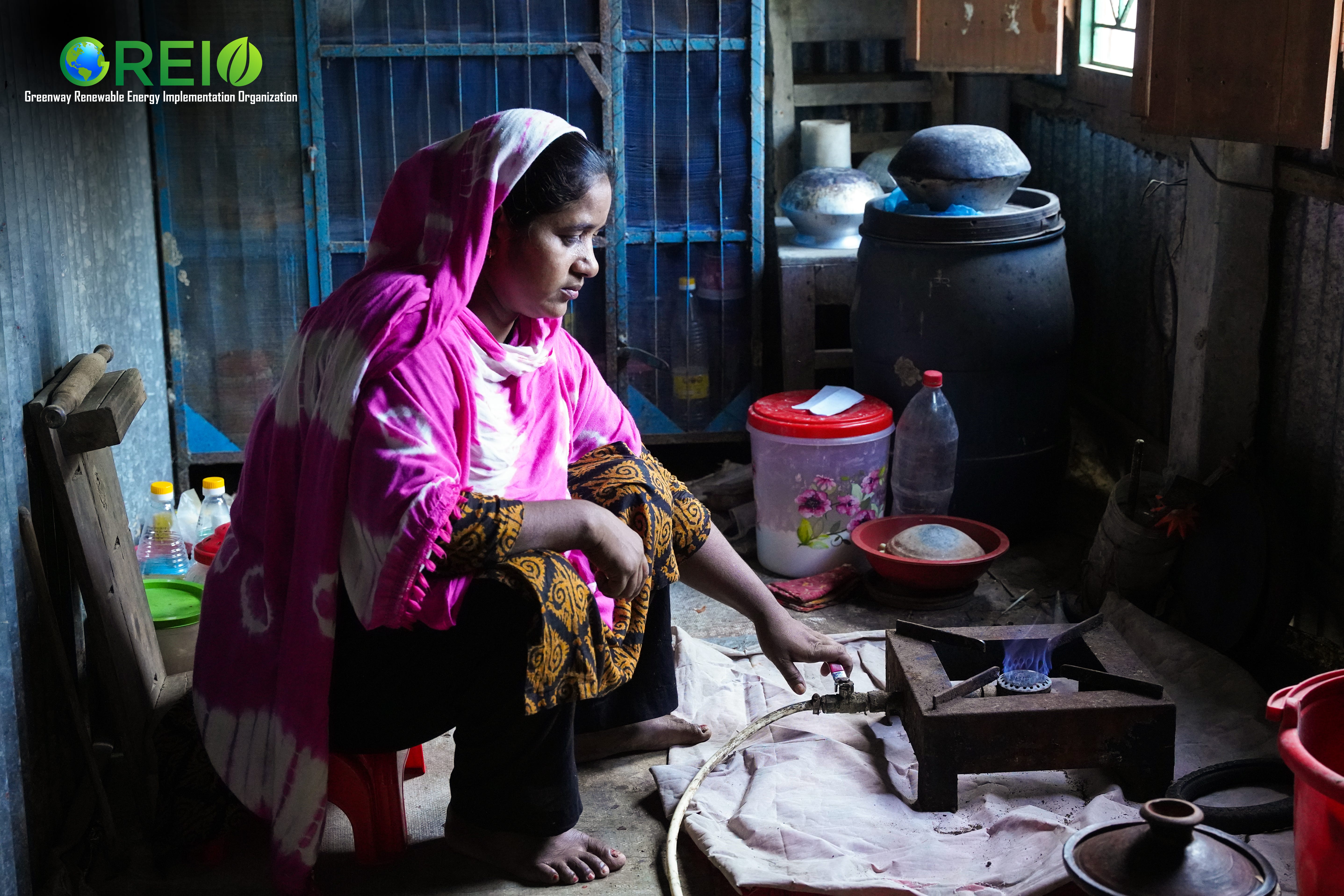
Before dawn in rural Bangladesh, before the children wake, before the farm demands anything of her, Meena Begum used to go looking for wood.
It was never a short walk. And it was never just wood. It was the hours she would never get back. Hours scraped from the beginning and end of every day, her body bent under the weight of what she’d gathered, returning home to a kitchen that would fill with smoke before the first meal was even cooked. The smoke wasn’t incidental. It was the condition of eating. Of survival. For millions of women across rural Bangladesh, it still is.
This is the reality that Md. Ashrafuzzaman Ashraf set out to change by establishing Greenway Renewable Energy Implementation Organization (GREIO), not just the smoke, but the entire interlocking system of poverty, labor, and environmental strain that produced it. From the beginning, he understood that solving one part of the problem required addressing the whole system.
That insight, deceptively simple yet structurally powerful, has driven the installation of over 4,000 household biogas systems across 27 districts of Bangladesh. These systems are collectively returning hundreds of thousands of hours of time, improving indoor air quality, and restoring soil health for the farmers who need it most.
GREIO works primarily with low-income rural households, particularly small livestock farmers, who are at the center of this energy–agriculture transition.
The Triple Burden of Traditional Fuel
To understand the necessity of GREIO’s work, you must grasp the structural weight of what rural Bangladeshi families manage every single day.
The traditional hearth relies on firewood, crop residues, and dried cow dung. It’s far from romantic or pastoral; it’s a system with real costs, paid with real lives. Women and children breathe smoke with every meal, often in poorly ventilated rooms, year after year. The damage accumulates slowly, surfacing in chronic respiratory problems decades later. Collecting fuel takes hours, mostly shouldered by women, hours that could otherwise be spent in school, childcare, or small income-generating activities that might lift families out of subsistence.
And beneath it all, the environmental toll grows. Every tree felled for cooking fuel is one fewer standing. Every pile of unmanaged livestock waste, left to decompose in the open, releases methane into an already overburdened atmosphere.
“What we are trying to solve is not just an energy issue or an agricultural issue in isolation,” Ashraf explains. “It’s about transforming how rural households manage energy, waste, and farming systems together.”
The Circular Loop: Where Waste Becomes Wealth
The engineering of a household biogas digester, a sealed chamber that converts organic waste into cooking gas, is well established. What GREIO has mastered is something more complex: making the full circular system visible, understandable, and practical for communities that have long viewed livestock waste as a burden rather than a resource.
At the household level, the system begins with what farmers already have, manure from cows or goats that are part of daily life. This waste is fed into the digester and transformed into two valuable outputs: clean biogas for cooking and bio-slurry, a nutrient-rich organic fertilizer.
This model is especially effective for small livestock-owning households, as it converts their daily manure into both energy and agricultural inputs, creating immediate and tangible value.
The results are clear and measurable. Farmers using bio-slurry report improved soil structure, better moisture retention, and increased nutrient availability, including nitrogen, phosphorus, and potassium. This leads to stronger crop yields while reducing dependence on costly chemical fertilizers. Over time, continued use enhances soil fertility rather than depleting it, improving resilience to drought, irregular rainfall, and pests.
What this creates in practice is a fundamental shift in perception. Manure is no longer treated as waste to be managed, it becomes a resource to be utilized. Farms become more productive, input costs decrease, and households move toward greater economic stability.
The Human Metric: A Study in Dignity
If you measure GREIO’s impact only in terms of carbon reduction or technical output, you miss the true heartbeat of this story: the restoration of dignity and control over daily life.
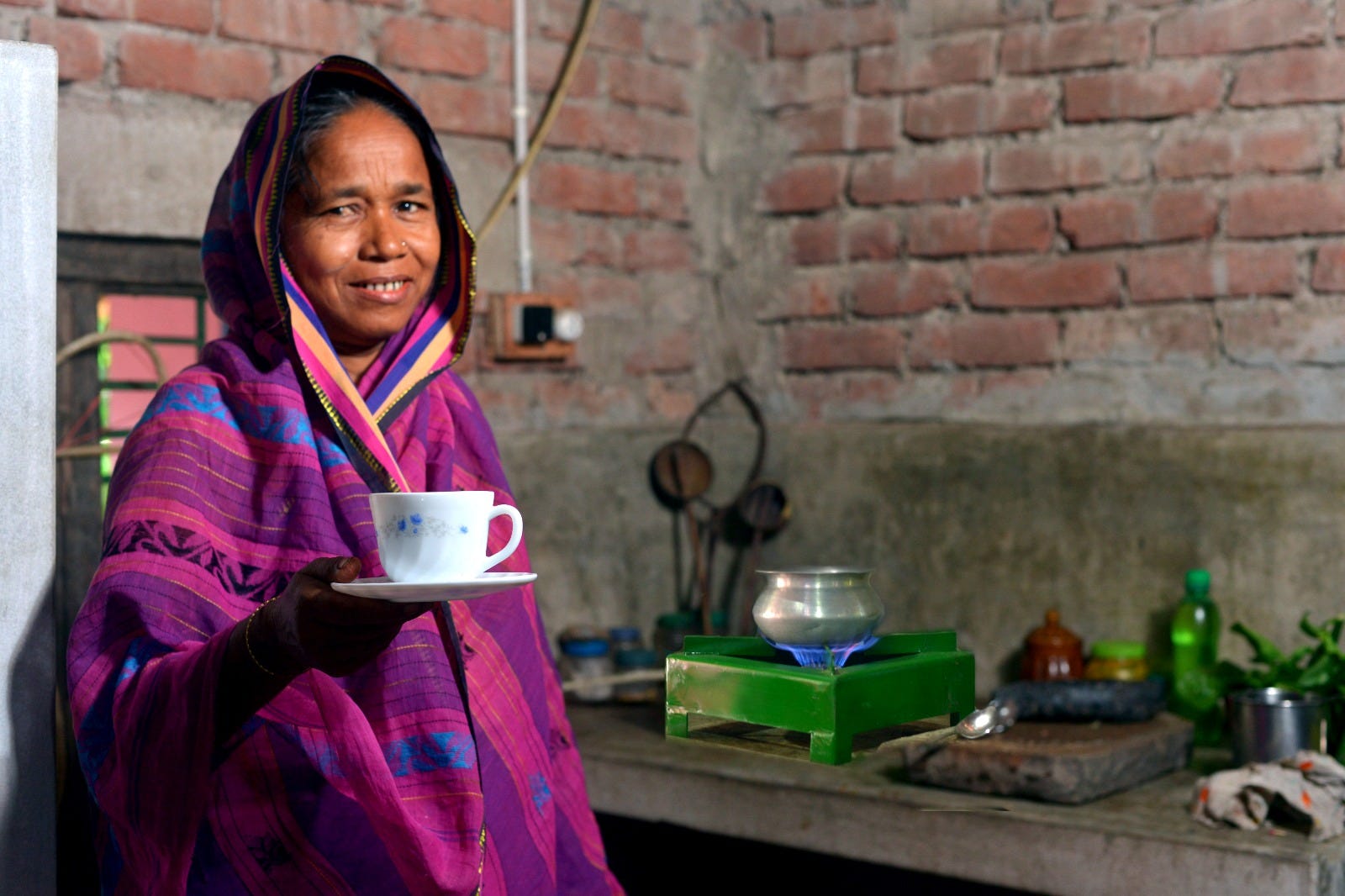
When Meena Begum’s biogas digester was installed and became operational, the first change was simple but profound. She no longer had to leave before dawn in search of firewood. The hours spent gathering fuel disappeared. The smoke-filled kitchen disappeared. The chronic respiratory irritation she had long accepted as the cost of cooking disappeared.
In their place came something far more valuable: time. And what Meena did with that time tells the real story. She reinvested it into her farm, applying bio-slurry from the digester to her crops. Over time, she saw her yields increase while her spending on chemical fertilizers declined. What had once been a subsistence-level operation, barely sustainable and heavily dependent on costly inputs, began to grow into a more stable and profitable livelihood.
“Her story shows that a small intervention at the household level can lead to meaningful improvements in health, income, and overall quality of life,” Ashraf reflects. Yet calling it a “small intervention” understates its impact. What changed for Meena was not just one aspect of her life; it was the underlying structure of her daily routine.
Today, she is no longer just a beneficiary. She has become an example within her community. When neighbours see her thriving garden and step into her clean, smoke-free kitchen, they see a practical and achievable pathway for themselves. This ripple effect is real, and it’s reflected in every new household that adopts the system after witnessing a neighbor’s transformation.
What It Actually Takes: The Lessons Scaling Taught
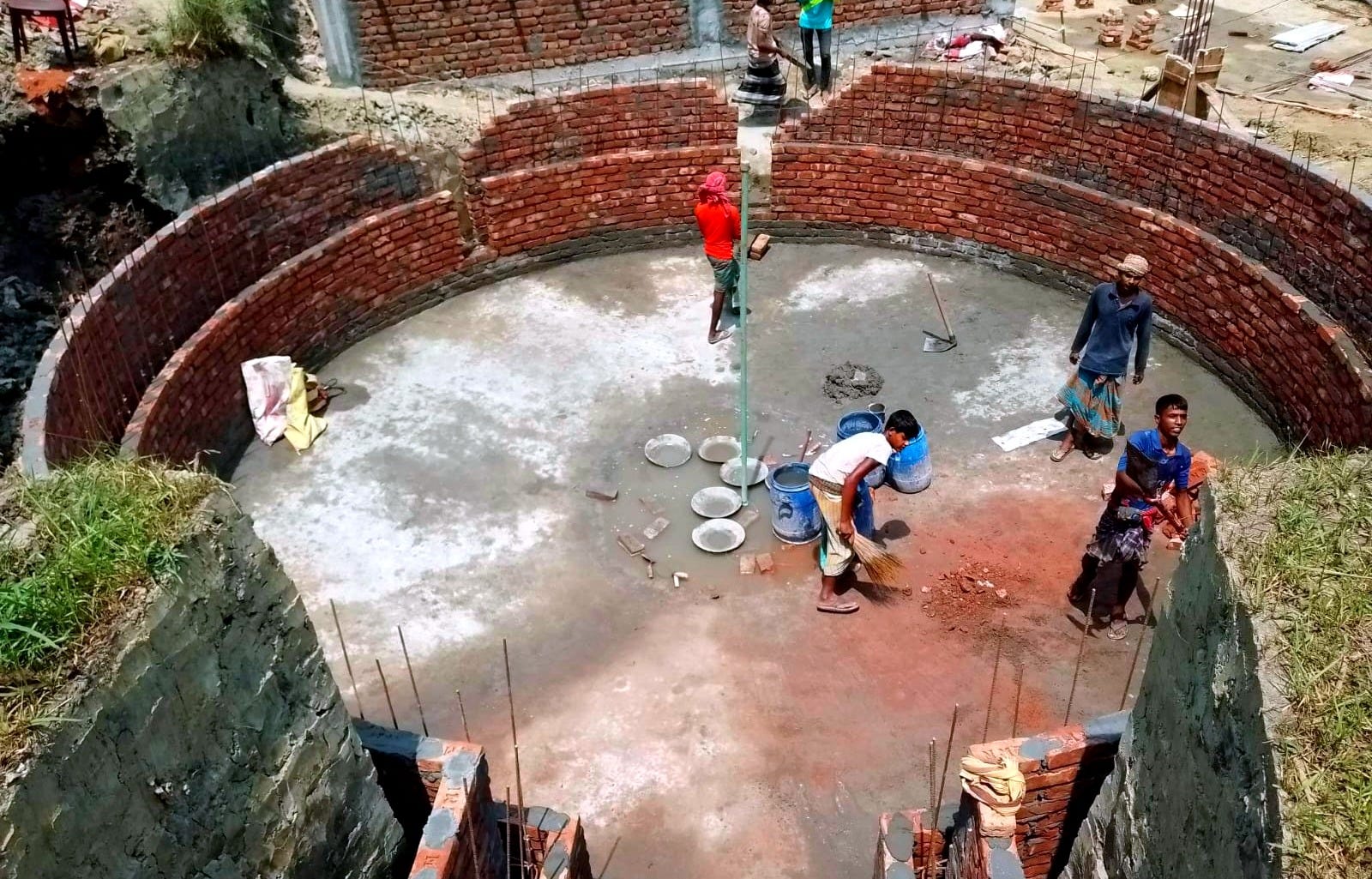
Building more than 4,000 systems across 27 districts is not simply a logistics story; it’s, above all, a story of trust.
When GREIO first began its work, Ashraf assumed that once communities understood the benefits of biogas, adoption would follow naturally. “We quickly learned,” he says, “that building trust within the community was just as important as the technology itself.” Families were initially skeptical. The idea of cooking with gas produced from livestock waste was, for many, unfamiliar and difficult to believe.
Demonstrations helped, but what truly accelerated adoption was visible success within the community. When one household began using the system effectively, neighbours took notice, asked questions, and gradually became more open to adopting the technology themselves.
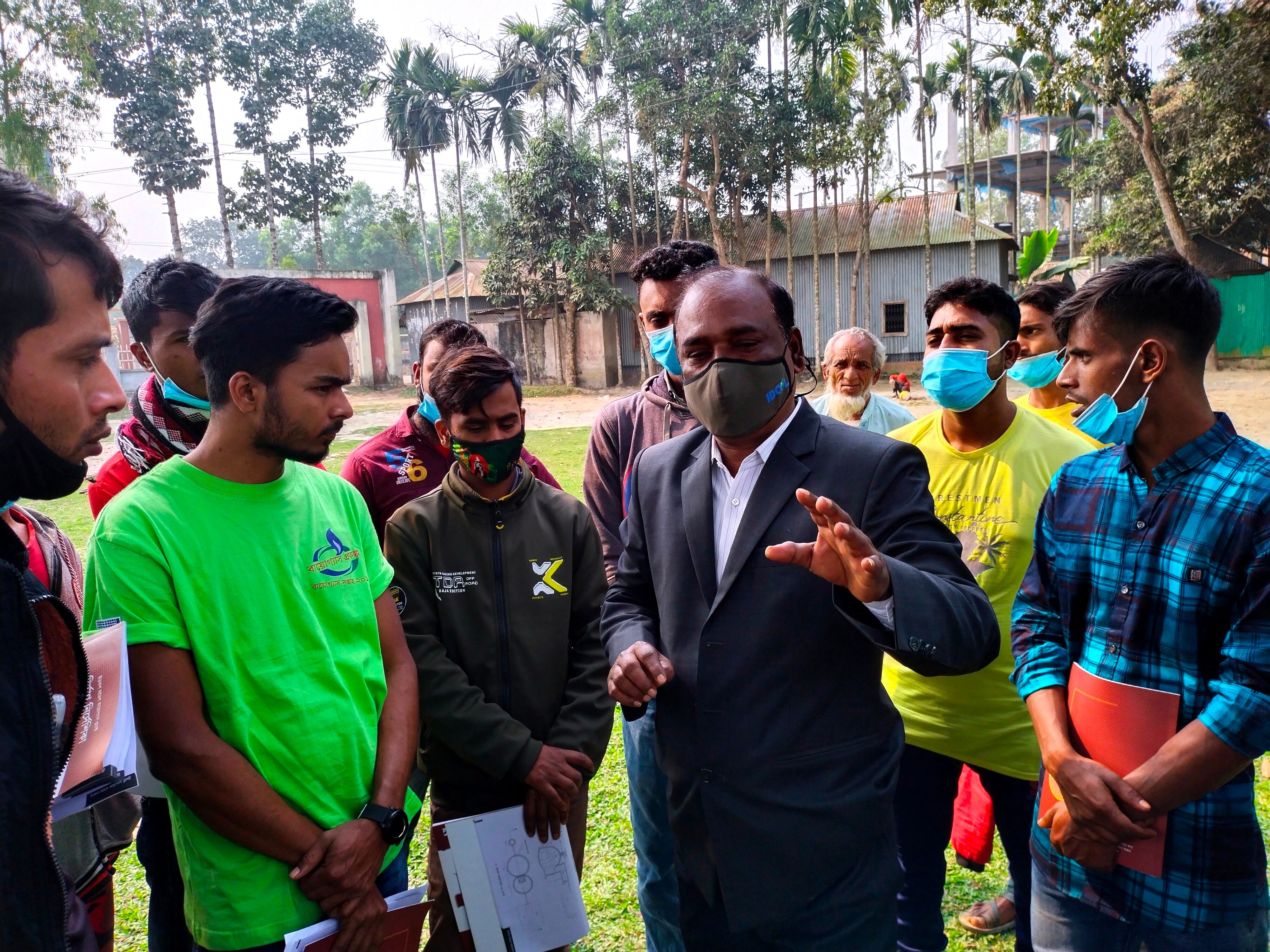
This remains the foundation of the model today. A successful rollout in a new village starts with engagement from community leaders, whose support often determines whether the community is willing to try something new. It then continues with hands-on training to ensure that households can properly operate and maintain their systems over the long term.
Without proper training and follow-up support, system performance can decline, confidence can erode, and the technology itself may be blamed for what is ultimately a gap in implementation. These were lessons GREIO learned early and built into their approach moving forward.
As a result, the rollout process today goes far beyond installation. It combines technical implementation with community engagement: careful site selection, household-level training, ongoing technical support, and the deliberate cultivation of peer learning. Each successful installation becomes a demonstration site, encouraging the next family to take the step forward.
Scaling the Momentum: The E-CoFamily Vision
As GREIO moves into its next phase, the individual household digester is becoming the foundation of something much larger.
The E-CoFamily model transforms standalone household systems into a shared, community-based energy and resource network. Within this model, clusters of households are connected, allowing biogas and bio-slurry to be managed and utilized collectively. This approach maximizes energy efficiency and agricultural productivity at the village level, rather than limiting benefits to individual households.
For example, multiple families can share a coordinated cluster of digesters, where organic waste is managed collectively, gas is distributed through a small local network, and bio-slurry is applied more efficiently across farmland. As a result, both efficiency and resilience increase significantly.
This model is particularly effective in rural communities with small livestock farmers, where resource sharing can unlock greater value from limited inputs.
When integrated with smart monitoring systems and hybrid renewable solutions, such as solar energy, the E-CoFamily model becomes a scalable and adaptable framework. In Ashraf’s view, it represents a replicable blueprint that can extend beyond Bangladesh and be applied in similar agricultural contexts globally.
Pilot clusters are already being developed. The next step is clear: unlocking the partnerships and investment needed to scale this model to its full potential.
The Carbon Bridge: Unlocking What’s Needed
The single greatest barrier between GREIO’s current reach and its full potential is not technology; it’s financing. More specifically, it’s the upfront cost of installation for the rural families who would benefit most, yet are least able to afford it.
Most of these households are low-income small livestock farmers. While the long-term benefits of biogas are clear, the initial investment remains a critical obstacle without external support or subsidy.
This is where carbon markets present a compelling structural solution. The logic is straightforward: household biogas digesters capture methane that would otherwise be released into the atmosphere and significantly reduce reliance on firewood, thereby lowering deforestation pressure. Both outcomes generate measurable and verifiable greenhouse gas reductions.
If these emission reductions can be effectively monetized through carbon credits, the resulting revenue could subsidize or even fully cover the installation costs. This would make biogas systems accessible at scale for low-income households, unlocking rapid expansion.
However, significant barriers remain. Verifying emissions reductions across thousands of small, geographically dispersed systems is complex and costly. Aggregating these systems into a viable carbon project requires coordination mechanisms and digital infrastructure that are not yet fully developed at scale. In addition, existing certification frameworks are largely designed for centralized, industrial-scale projects, making them difficult to apply in rural, decentralized contexts like Bangladesh.
“If carbon credit systems were fully functional and accessible,” Ashraf notes, “scaling household biogas projects over the next decade could be transformative.”
The opportunity is clear, but so is the urgency. As the climate crisis accelerates, delays in unlocking these financing mechanisms carry costs that extend far beyond economics.
A Global Call
The work being done in Bangladesh is no longer a local proof of concept; it’s a scalable model. The circular logic turning waste into energy, energy into fertilizer, fertilizer into healthier soil, and healthier soil into stronger yields and more stable household economies is not unique to Bangladesh. It’s relevant wherever smallholder agriculture, livestock management, and energy poverty intersect. The model is particularly effective in communities where small livestock ownership is common, as it directly converts animal waste into energy and agricultural value.
What GREIO is seeking now is a partnership. This includes carbon finance organizations willing to develop aggregation systems that make small-scale verification viable; research institutions that can enhance bio-slurry applications across different crops and soil conditions; NGOs with strong community networks in new regions; and private sector partners capable of supporting large-scale implementation and logistics.
The E-CoFamily model is ready for expansion. The technology is proven. The human impact is visible and measurable. What remains is the collective decision of the international community to recognize, support, and invest in a model that delivers across energy access, agriculture, and climate goals. The opportunity is time-sensitive. As climate pressures intensify, the need for scalable, community-based solutions becomes more urgent.
Before dawn, in a village in rural Bangladesh, Meena Begum is no longer searching for firewood. She is already in her garden. This is what progress looks like, not as an abstract concept, but as a quiet, tangible change in everyday life.
For information on project collaboration, carbon credit opportunities, or technical data regarding GREIO’s installations, contact Md Ashrafuzzaman Ashraf at greenway.biogas@gmail.com
Learn more about Greenway Renewable Energy Implementation Organisation (GREIO)’s work and impact.